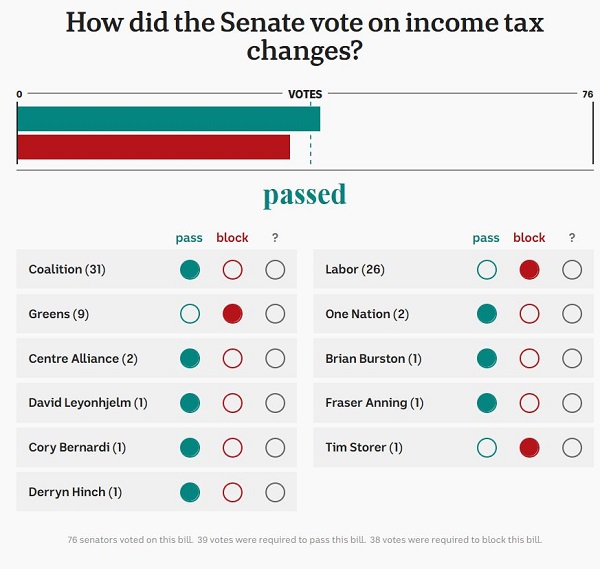
You would have to be living under a rock if you didn’t hear about Fraser Anning’s maiden parliamentary speech, wherein he called for a return the White Australia policy, excluding Muslims and returning to Europe as the main source. The holocaust was evoked by a call for a “final solution”, being a referendum on immigration policy. From his speech:
We as a nation are entitled to insist that those who are allowed to come here predominantly reflect the historic European Christian composition of Australian society and embrace our language, culture and values as a people.
And:
The final solution to the immigration problem is, of course, a popular vote. We don’t need a plebiscite to cut immigration numbers; we just need a government that is willing to institute a sustainable population policy, end Australian-job-stealing 457 visas and make student visas conditional on foreign students returning to the country they came from. What we do need a plebiscite for is to decide who comes here.
About the same as is going to be spent to save the Great Barrier Reef. No-one noticed until someone from the Mitchell Institute (a think tank at Victoria University) happened to be leafing through the budget papers. The Quality Agreement program for early childhood begun in 2009 is to be wound down and conclude from 30 June 2020.
Director of the Mitchell Institute, Megan O’Connell, said Australia was already lagging the rest of the world by offering only one year of preschool for most children when two years was regarded as the international standard.
On 23 August, 2014, Kehazaei presented to the Manus Island medical clinic with flu-like symptoms and a small lesion on his leg. The clinic did not have the basic antibiotic to treat his common tropical infection, and, despite treatment, Kehazaei’s condition deteriorated rapidly.
Doctors on the island urged his immediate transfer to Australia but this was first ignored – including by department of immigration bureaucrats who didn’t read their emails for up to 13 hours – and then rejected by the department. Continue reading Weekly salon 5/8→
Here’s what started the whole business according to Margaret Simons’ report Looking for trouble in May:
Victoria Police executive director of media and corporate communications, Merita Tabain, wrote a confidential email to the editors of Melbourne’s main media outlets expressing concern that aggressive behaviour by journalists might “exacerbate the current tensions.” She used the incident at the Tarneit shopping centre as an example.
The incident, she said, had been provoked by the photographer’s decision to “move in to take close-up photos of a group of African teenagers socialising.” The teenagers, she went on, “had been doing nothing of public interest prior to the photographer’s decision to move in and take the photos and [the group] reacted to the photographer and what he was doing. This led to police being called in and a scuffle ensued in which police were spat on and arrests were made.”
The photographer had apologised for provoking the incident, Tabain reported, but the published article makes no reference to this.
The 2018 Global Slavery Index was released on Thursday. Some 40.3 million people were found to live in slavery, 70 per cent women and girls. The main division is 15.4 million in forced marriages and 24.9 million in forced labour.
North Korea is worst, with one in 10. The Guardian highlights over 400,000 in the USA. However, the Index:
estimates China is by far the largest source of at-risk goods, with the United States importing $122bn of electronics and clothing from the country. Vietnam was the second largest source with $11.2bn, and India third with $3.8bn.
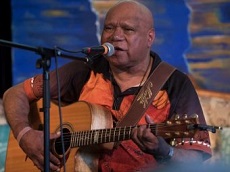
A highlight for me this week was listening to the many segments on ABC RN themed with NAIDOC Week, where the theme was Because of her, we can. Fellahs too, including Archie Roach: a life in song. I loved his cosmology in explaining The Dreaming. We all come from star dust, and to star dust we will return. Straight out of Brian Cox, but he feels it in every molecule of his body, fundamentally feels connected with all living things, and wants to share. Like Buddhism, really. Continue reading Saturday salon 14/7→
As reported in the New Scientist, Frédéric Marin, an astronomer at the University of Strasbourg, France and Camille Beluffi, a physicist who works for Casc4de, a data firm in Strasbourg, have done a thought experiment on the feasibility of reaching the nearest Earth-like planet, which happens to be Proxima b, around 4.25 million light years away, a mere 40 trillion km. Continue reading Saturday salon 7/7→
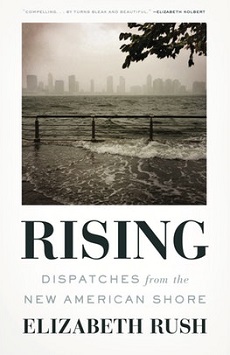
1. Rising: Dispatches from the New American Shore, by Elisabeth Rush
A review by Dave Hage at Star Tribune of Elizabeth Rush’s new book Rising: Dispatches from the New American Shore says it is “a lovely and thoughtful book, so lyrical that you forget how much science it delivers.”
Rush, who teaches creative nonfiction at Brown University, has chosen to examine climate change through the lens of American places and people devastated by rising seas and higher temperatures. Reading her book is like learning ecology at the feet of a poet rather than a scientist.
In the Courier Mail the bold words leapt from the page:
Balls up
Schlamassel
Qué desastre
It was page 2, and a full-page advertisement from Optus, apologising for its soccer coverage, not a front page treatment of Bill Shorten’s backflip on taxing small to middle companies.
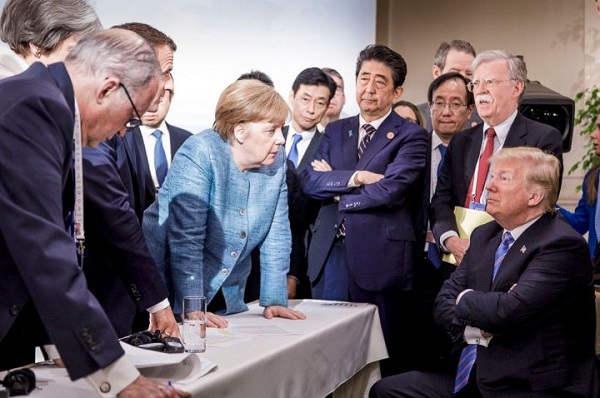
You’ve probably been living under a log if you haven’t seen this photo:
They say Trump does not like G-7 meetings because they are short on people who massage his ego.
According to this account the photo was released by Angela Merkel’s office. Trump looks like a naughty school boy, recalcitrant and unrepentant. The bloke behind him is John Bolton, the National Security Advisor. Not sure what he was doing there. Continue reading Saturday salon 16/6→
When criminal charges were brought against ANZ and investment banks Citi and Deutsche Bank that sounded fair enough to me. Barbora Jedlickova, Lecturer in the School of Law at The University of Queensland says that criminal charges are more effective than fines and:
Charging high-ranking bank executives will potentially make the deterrent more effective still, because high-ranking executives set the cultural tone for their organisations.


 A highlight for me this week was listening to the many segments on ABC RN themed with

 A
A