
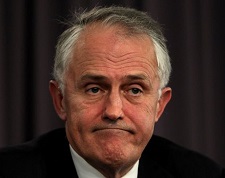
 When Malcolm Turnbull was Minister for Communication he was often refreshingly honest about LNP policies he didn’t agree with, leading to an expectation that when he became PM policies would be modified. Now that politics is alive again after the summer torpor, several well-known commentators have taken a look at what the change to Turnbull means. Continue reading Turnbull: old policies immovable?
All posts by Brian

Saturday salon 6/2
1. Looking forward to a good year for the economy
There’s been a fair bit of economic gloom lately, not shared by respected economics commentator Ross Gittins. When he got his knees back under his desk (look for the January 29 entry) he declared our economic prospects to be in pretty good shape. He reckons if you think you can learn anything from the nightly news, you’re a fool. Media organisations look for new ways of making us feel bad. Continue reading Saturday salon 6/2
Stunning stupidity at the CSIRO
Dr Larry Marshall, former venture capitalist and now head of the CSIRO, has a brief and a vision to turn the organisation into an innovation catalyst. Climate science simply no longer fits, according to him.
He told the ABC:
- The issue for us in all of our business units is we have to be aware of changes in global markets.
So if you look at the climate market, I think after Paris the argument for climate change is pretty much decided, I think that question has been answered.
So that begs the next question, what do we do about climate change? How do we adapt to it? How do we mitigate it?
And it’s inevitable that people who are gifted at you know measuring and modelling climate may not be the same people who are gifted at figuring out what to do about it, or how to mitigate it.
Vale Bob Carter
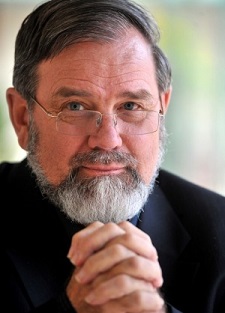 Bob Carter, known to many Australian geoscientists as a former professor and head of the School of Earth Sciences at James Cook University, died on 19 January at age 74. For most of his life he was known to geologists for his work in marine stratigraphy. In recent years he was known to just about everyone for his views on climate change. Here’s what the Australian Institute of Geoscientists said about his scientific contribution: Continue reading Vale Bob Carter

Poll stuff 2/2
Newspoll came out 53-47 in favour of the LNP, so support for Turnbull looks solid and enduring. Bill Shorten’s personal ratings were a smidgeon better but still disastrous at 57 points behind Turnbull. To make matters worse, internal ALP polling on Bill has been leaked. Continue reading Poll stuff 2/2

Climate clippings 162
1. China putting the brakes on coal
China exponentially increased its use of coal in the early part of this century, so that 64% of its energy comes from coal. Now studies suggest that coal use in China declined in 2014 and may have peaked in 2013. No new mines will be approved in the next three years. Continue reading Climate clippings 162

The end of economic growth?
There is a new economic blockbuster out, The Rise and Fall of American Growth: The U.S. Standard of Living since the Civil War by Robert J. Gordon. In brief, his thesis is that 1870 to 1970 was a ‘special century’ of technological change yielding dynamic economic growth that transformed our lives. By contrast in America, nothing much has changed since then, growth has tapered right off and there is little prospect of significant change.
Is he right? Paul Krugman says, “My answer is a definite maybe.” Continue reading The end of economic growth?
Saturday salon 30/1
1. Mitchell Pearce messes up – again
We really didn’t need to see what Mitchell Pearce did with a dog on a couch. But we did, on the evening news, and it wasn’t pretty.
Peter FitzSimons raises some pertinent questions. Continue reading Saturday salon 30/1
Australia, a work in progress
 “Playing and protesting”, that was the headline on the TV news as to how Australia spent its national day.
My brother and his wife hosted a street party where people hailed recently from seven different overseas countries. Yesterday one of my wife’s clients said she knew Aborigines who would just close their doors and cry. Continue reading Australia, a work in progress
The case for the Anthropocene
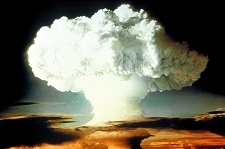
In Goodbye Holocene, hello Anthropocene? I outlined the process being undertaken to consider whether the Holocene should give way to the Anthropocene. Now a few articles have appeared making the case.
Sam Wong in New Scientist give seven reasons: Continue reading The case for the Anthropocene
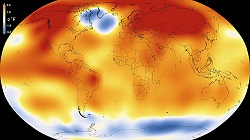
Too hot for comfort (or complacency)
The figures are now official, 2015 was the hottest year on record:
- Global surface temperature in 2015 was +0.87°C (~1.6°F) warmer than the 1951-1980 base period in the GISTEMP analysis, making 2015 the warmest year in the period of instrumental data.
- Global temperature in 2015 was +1.13°C (~2.03°F) relative to the 1880-1920 mean.
Saturday salon 23/1
1. Planet Nine
Scientists have discovered through gravitational effects on other bodies that a ninth planet almost certainly exists in our solar system. It is thought to be 10 times the mass of earth and takes 10,000 – 20,000 years to orbit the Sun.
Computer simulations suggest the ninth planet is located 20 times farther away from the Sun than Neptune. Continue reading Saturday salon 23/1