Category Archives: Climate Change & Sustainability

Posts on aspects of climate science, climate action and climate policy & planning.

Adani – a mirage that will dissolve into mist?
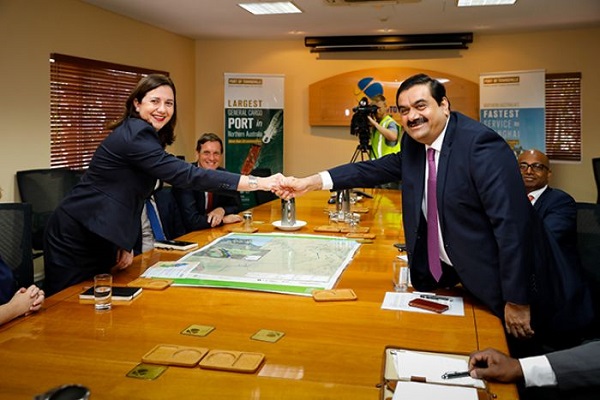
The Adani board has given the nod to the $16.5 billion Carmichael projects which would generate 10,000 direct and indirect jobs, with pre-construction works starting in the September quarter of 2017.

Yet there are some cautionary voices:

Continue reading Adani – a mirage that will dissolve into mist?
Looking forward to Finkel

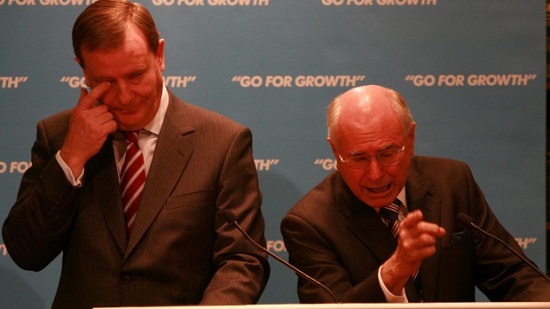
The Finkel review of the National Electricity Market is due to be revealed to the premiers at COAG tomorrow, but is you’ve been reading the Australian Financial Review it’s all done and dusted. There’s really only one horse in the race, and it’s the Low Emissions Target (LET), which Tony Wood of the Grattan Institute says is the third last horse in the race, but picked because it’s better than the other two. That may be harsh, but the visionary scheme was first proposed by John Howard in 2007. Here’s Howard and Costello launching the scheme way back then:

It’s the least-worst, least-best carbon pricing scheme, but has the attraction of giving coal a chance of sticking around for a while. Continue reading Looking forward to Finkel

Are the Chinese doing their share on climate change?

Donald Trump in announcing that the USA will withdraw from the Paris Climate Agreement made a big fuss about the Chinese being able to increase their emissions, and that this was unfair to the US economy.

So what are the Chinese doing, and is it enough? Continue reading Are the Chinese doing their share on climate change?

Trump shoots himself in the foot on climate

Trump has announced that the US will withdraw from the Paris climate agreement and seek to negotiate a ‘better’ agreement. I liked Emmanuel Macron’s reaction – “Lets make the planet great again”. Germany, France and Italy have committed to carry on, China will relish the opportunity to move into the vacuum.

Paul Hawken, who knows more about climate change action than most (post coming up) recently said:

    First of all, let’s be honest: The US has never led in this area. Ever. When they’ve tried on an executive level, they’ve never been supported by Congress. States have led, cities have led, but never the federal government.

Even so, he said people in the US think they lead in “this stuff”. They don’t, it’s Germany, China, France and Denmark. Continue reading Trump shoots himself in the foot on climate

Energy crossroads

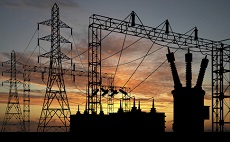
Transformer over orange sky
The initial stimulus for this post was an article in the AFR entitled We are at an energy crossroad (paper version) by Tony Wood of the Grattan Institute, based on a new report Powering through: how to restore confidence in the National Electricity Market and a series of articles mainly at RenewEconomy. I’ll summarise them Climate clippings style, so the story should emerge and you can follow the links for elaboration if you choose. Continue reading Energy crossroads

Turnbull stands naked on climate policy

Giles Parkinson says of the 2017 budget that Turnbull lets [his] fig leaf droop and stands naked on climate policy. Matthew Rose says Turnbull’s budget ignores energy crisis and dodges climate. The Conversation article is headed Budget 2017: government goes hard on gas and hydro in bid for energy security, which is I think misleading. It goes for gas and hydro, but not hard.

Before looking at what the budget has to offer, it is appropriate to remind ourselves that at the UN climate talks in Morrocco last year, Australia’s proposed effort was ranked fifth worst in a list representing 90% of the world’s emissions. Moreover, Frydenberg has been backsliding since then, suggesting we may not achieve zero net emissions until 2100. Continue reading Turnbull stands naked on climate policy

Power tipping point

The Four Corners program Power Failure added to the sense of crisis around our power system, beginning with the breathless comment that there was almost a breakdown of civil order in South Australia when the lights went out in September. The program looked at the difficulties experienced when the power went off for three days. Recently in some places affected by Cyclone Debbie, crews couldn’t get in to start fixing for about double that time. I’ll come back to Four Corners via a series of articles published on the same day.

First, in the AFR tucked away on page 8, Mark Ludlow penned an article Renewables, EIS ‘make gas-fired power redundant’ (paper edition title). Ludlow interviewed Professor Frank Jotzow, director of the Centre for Climate Economics and Policy at ANU, who said gas had been overtaken by renewable energy, including battery storage, in the transition away from coal-fired power. We should skip gas and go straight to renewables with batteries. Continue reading Power tipping point

Climate clippings 206

1. Revival of pathogens as permafrost melts

As linked by zoot on the last CC, pathogens are emerging as the permafrost melts, some capable of becoming active after long periods of time, even millions of years. There has been one case of anthrax becoming active after being frozen in a dead reindeer for 75 years. Continue reading Climate clippings 206

Gas has got to go

The Climate Council issued a report on the future of gas-fired electricity just after Easter – Pollution and Price: The Cost of Investing in Gas.
Gas is often thought of as a ‘transition fuel’ from coal to renewables. Their advice is clear:

    Do not provide policy support for new gas power plants or gas supply infrastructure.

And:

    Existing gas plants should be thought of as a short-term, expensive, emergency backup as renewable energy and storage is rapidly scaled up.

Moreover, we should leave most of our gas reserves in the ground. Continue reading Gas has got to go

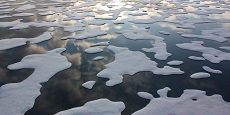
Climate change and the Arctic: we should worry

In the comments thread of the post Is methane hydrate out-gassing going to kill us all? BilB linked to an article The Global Impacts of Rapidly Disappearing Arctic Sea Ice by Peter Wadhams, who is professor emeritus of ocean physics at Cambridge University, a sea ice specialist with 46 years of research on sea ice and ocean processes in the Arctic and Antarctic with more than 50 expeditions to both polar regions under his belt.

He worries about what is happening in the Arctic, and after revisiting my post Reconciling estimates of climate sensitivity, I worry too. Not so much about the extinction of the human race, or about abrupt catastrophic climate change, rather how the earth system is going to end up in the long term after we extract much of carbon sediments deposited over hundreds of millions of years and inject them back into the atmosphere within the space of about a century. Continue reading Climate change and the Arctic: we should worry