Now that the CEOs of the Big Four banks have been questioned by the Parliament’s Economics Committee it’s time to ask, what now? The Committee is a House of Representatives organ. It’s generally acknowledged that the heavy hitters for this kind of exercise are in the Senate. These mega-salaried CEOs are teflon-coated, obviously well-briefed, and it’s reasonable to wonder whether anything will change as a result of the hearings. Not much, I suspect.
David Gallagher of the Centre for International Finance and Regulation, probably a conservative outfit, says:
The government is using the exercise as a classic case of retail political management, being seen to be keeping our major banks accountable while the Opposition calls for a royal commission into the banking industry.
Gallagher is arguing that the wrong-doings of the banks are not substantial or endemic enough to warrant a royal commission, and that our regulatory system is world-class and fit for purpose. I think he should have been listening to talkback radio over the last few days. Continue reading Banks get thrashed with feather dusters→
A UN aid convoy in Syria was bombed, leaving 12 aid workers dead; Kenya is closings the world’s largest refugee camp in Dadaab, pressuring refugees to return to Somalia; and one of the main points of arrival for refugees in Europe, the Moria camp on the Greek island of Lesvos, is burnt down…
She regards 18C as self-evidently unconstitutional, and cites a speech by retiring Chief Justice Robert French as indicating that the High Court would find it so.
“If you want to take offence, that’s your choice. You have the choice of choosing another feeling. Offence is always taken, not given. So if you don’t want to be offended, you, it’s up to you; don’t be offended.”
Apparently this opinion was expressed on the ABC Insiders program, and was fully supported by One Nation’s Malcolm Roberts. Kenny says:
David Leyonhjelm is a boorish, supercilious know-all with the empathy of a besser block. And that new Hansonite conspiracy theorist from Queensland? He’s an absurdist fringe-dweller and fellow hate-speech apologist. It’s a case of wacky and wackier.
Neither of these self-promoting misanthropes would have the first idea about entrenched discrimination. Yet both are experts.
In the past week I’ve tried to get my head around the debate on Section 18C of the Racial Discrimination Act following the spectacular signing up by Cory Bernandi of the Coalition senate backbench to diluting the Act. He says it’s not about challenging Malcolm Turnbull, it’s about reconnecting the Liberals with their base. So it’s about the Liberals’ small “l” liberal values, and hence worth a close look.
Length alert: It’s about 3000 words, but I’ve gone down a lot of rabbit holes.
co-sponsor a bill with his fellow Liberal Cory Bernardi and Senate crossbenchers David Leyonhjelm and Bob Day to remove the terms “insult” and “offend” from section 18C of the act.
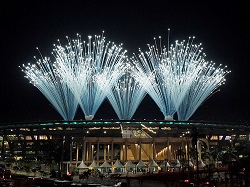
The spectacle of the Rio Olympics has raised a raft of questions, from whether it is at all ethical to spend public money on elite sport, to whether Australia’s performance is bad and getting worse, and the difficulties of being a host city.
The morality of funding elite sport
Rio has brought forth a couple of ads on Gruen that cut to the chase (thanks, John D for the link). Logically the Group Hug video comes first. It introduces us to a thief in Rio dedicated to stealing any gold medals our athletes might win. So they should aim for bronze. The Mr Mumbles video comprises ironic comments from the bereft and the homeless, essentially pointing to the pointlessness of the whole exercise. Continue reading Should we call the whole thing off?→
Politicians have been out there bashing banks again with CBA’s announcement of a record $9.45 billion profit. Of course if the bank keeps up with inflation it will be a record, and because it’s a big company it will be ‘fat’.
The table in the AFR gives the profit as $9.247 billion as against $9.084 billion last year. The true measure is in net earnings per share (eps) which came in at 542.5 cents, actually down from 553.7 cents last year. That’s a drop of about 2%.
The final dividend was maintained at $2.22 per share, so shareholders breathed a sigh of relief that it didn’t go down.
After the ABS Census computer was shut down on Tuesday night, one bright spark on talk-back radio said we wasn’t going to fill in the census data now. What’s the point of giving information to a government that can’t run a census, he asked. If they can’t do a simple thing like that then they can’t provide all the health, education, police, infrastructure services we need.
On radio we were told this morning that the Census needs 95% of us to supply accurate data for the data to be useful in planning future services. We are told the computer system will be up and working today. They may yet pull it off, but significant confidence has been lost and the ABS has trashed its brand. Continue reading Census crash→
British anthropologist Robin Dunbar postulated in the 1990s that, given our brain size, human beings can only maintain 150 stable relationships.
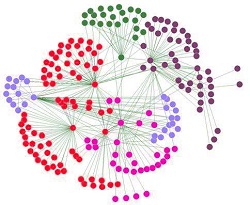
A new study has taken a look at modern and traditional societies, and has concluded that the number is actually 132. But there is another limitation, and that is the small number of close links an individual can maintain. This account states that the maximum number of close links we can maintain is on average about five. Continue reading Dunbar’s number revisited→
While the biggest terrorist attack in recent days was in Kabul where at least 80 were killed and 231 wounded in a suicide attack on a Hazara minority crowd who were demonstrating against inadequate power infrastructure in their home villages, we worry more about attacks in France and Germany, because their societies are more like ours.

 While the biggest terrorist attack in recent days was