
“Increase the use of public transport” is an easy response to Brisbane’s transport problems. However, once I realized that only 10% of car commutes went to the CBD the picture became more complex. Public and active transport was no longer the answer to everything. Continue reading Increasing the Use of Public Transport May be Harder Than We Think
Category Archives: Climate Change & Sustainability
Posts on aspects of climate science, climate action and climate policy & planning.
July 2016 Earth’s hottest month may herald step change in climate
Seasonally planet Earth is hottest in July. Northern summers are hotter because of the greater land mass in the Northern Hemisphere. This July was a scorcher, being the hottest single month since records began:
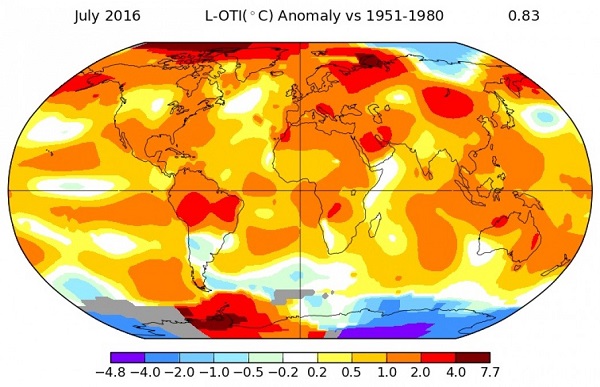
The cool spot below Greenland is now average. Continue reading July 2016 Earth’s hottest month may herald step change in climate

Climate clippings 180
1. Tesla car drives owner to hospital, saves his life
Missouri lawyer Joshua Neally was driving his Tesla Model X home from his office when he suffered piercing pain in his stomach and chest. Rather than call an ambulance he set his Tesla Model X in self-driving mode and headed for a hospital 20 miles (32km) down the road. He was able to park it and check himself in.
He suffered a pulmonary, a potentially fatal obstruction of a blood vessel in the lungs. Very probably, the car saved his life. Continue reading Climate clippings 180
Climate denialism comes to town
 Pauline Hanson’s running mate, Malcolm Roberts, is a climate denialist of some fame, but in joining the Senate he is merely a noisy addition to the climate denialists already there, raising the question of how we deal with the phenomenon in the political sphere. We know that scientific information doesn’t work.
There was a similar problem in the Brexit campaign. John D has passed along to me a fascinating link from Climate Outreach about what they learnt. Continue reading Climate denialism comes to town
State of the Climate 2015
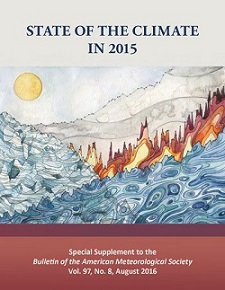
NOAA’s annual State of the Climate report has recently been released, showing the climate change is proceeding apace on all fronts. The 300 page report compiled by 450 scientists from 62 countries confirmed there was a “toppling of several symbolic mileposts” in heat, sea level rise and extreme weather in 2015. From The Guardian:
- “The impacts of climate change are no longer subtle,” Michael Mann, a leading climatologist at Penn State, told the Guardian. “They are playing out before us, in real time. The 2015 numbers drive that home.”
Mobilizing for WWll Push for Climate Action
Brian and I have been saying for years that both the planet and the economy needed was for the world/Australia needed to do was to go on a WWll style war footing to save the planet and boost the economy. Now the US Democrats have endorsed a WW2-scale mobilisation on the climate challenge. Hillary is promising to mobilise a global effort on a scale not seen since the second world war to tackle climate change, if elected US president in November. Continue reading Mobilizing for WWll Push for Climate Action
Keeping the lights on: Josh Frydenberg wants more gas
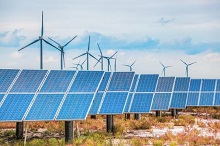 Continuity of electricity supply is no trivial matter. Back in April-May 1996 at our place we had rain on 14 consecutive days. Over the period we had 833 mm or over 33 inches in the old language. A renewable energy electricity supply system needs to survive such a challenge, as do home off-gridders. Imagine not just the lights out, but rotting food in the refrigerator, no pumping of petrol at the bowser, the refrigerators and lights failing at the supermarket, no water coming out the tap. For the whole Brisbane area.
Now with interconnected grids through the National Electricity Market (NEM) established in 1998 South Australia withstood a lesser challenge recently albeit with a huge spike in electricity spot prices, arguably prompting a showdown on where we are going with renewable energy and fossil fuels in this country. Continue reading Keeping the lights on: Josh Frydenberg wants more gas
Climate clippings 179
1. Merkel slows down Germany’s renewable power growth
Angela Merkel has struck a deal with the German states to slow down the growth of green power, capping the expansion of onshore wind power at 2.8 gigawatts in capacity per year. The reason given is:
- Generous green subsidies have led to a boom in renewable energy, such as wind and solar power. But the rapid expansion has pushed up electricity costs in Europe’s biggest economy and placed a strain on its grid.
Stranded assets and subcritical coal
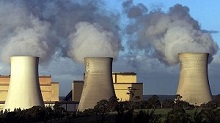 Coal provides 40% of the world’s electricity, with 75% of this capacity deemed “subcritical”, in other words dirty. That’s a little over 1,200 GW of capacity. The IEA believes that we must shut down 290 GW of subcritical generation worldwide by 2020 in order to stay within a 2°C temperature rise.
The Stranded Assets Programme at the University of Oxford’s Smith School of Enterprise and the Environment has identified the power stations, the companies and the countries, so that financers, investors and policy makers can weigh the risks and take appropriate action.
In addition to CO2 production, air pollution and the public pressure to close for that reason, is a risk factor. Finally, subcritical plants use 67% more water. Many are in climatic areas where water scarcity is a risk. Continue reading Stranded assets and subcritical coal
Climate clippings 178
1. Another record temperature month
We’ve now had 14 consecutive record global temperature months:
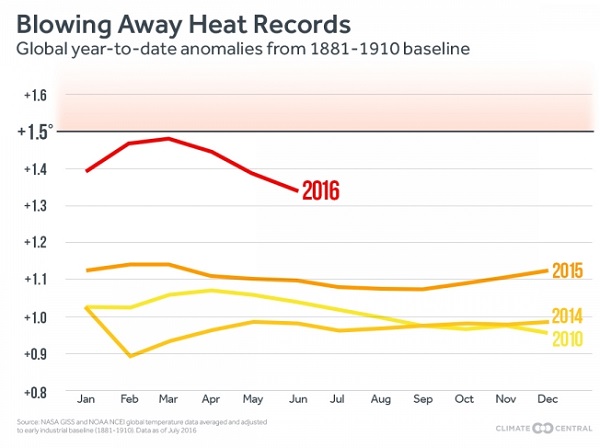
It’s tapering, but when will it end? Continue reading Climate clippings 178
Electricity prices, gas and renewables
In recent days we’ve had two articles – Giles Parkinson’s Coalition’s myth about renewables and high electricity prices at RenewEconomy and Ben Potter’s front page article for the AFR, published in print as Power crisis brings back fossil fuels.
First up, here’s the average monthly spot prices for the mainland states involved in the National Electricity Market (NEM): Continue reading Electricity prices, gas and renewables
Climate clippings 177
1. Potential One Nation senator wants climate scepticism taught in schools
His boss, Pauline Hanson, thinks he has the “true facts”, and in denialists quarters he has gained a reputation for exposing corruption in the IPCC, the CSIRO and elsewhere. Continue reading Climate clippings 177