
There are lots of good health, environmental and economic reasons for using bikes as replacement for other forms of transport and recreation. However, on average, your chances of being killed or injured are much higher when riding a bike than travelling by car. This post looks at some of the advantages and disadvantages of riding a bike instead of travelling by car. Continue reading Parking Spaces to Protected Bike Lanes
Category Archives: Life
Maharishi Mahesh Yogi – cultist, guru or con-artist?
Perhaps all three, in some measure.
In quoting an open letter on anti GM technology co-ordinated by Steven Druker I ended up being called an anti-science troll:
Good God. Steve Druker is the executive vice president of the Maharishi Institute. The Maharishi Institute is of course an Indian mystic cult movement that teaches yogic flying. Clearly you are an anti-science troll and not worth bothering with.
Clearly I should have Googled Druker and the appellation Executive Director, Alliance for Bio-Integrity should perhaps have triggered alarm bells. But then association with Maharishi Mahesh Yogi would not have caused great concern, because I had a mental impression of him that goes back decades.
Time for a bit of investigation and reflection.
Until Sunday I was not aware that Mahesh (to leave off the honorifics) was into yogic flying and the Natural Law Party. Probably about 35 years ago I knew people who had taken the Transcendental Meditation (TM) course and found it personally helpful. There was no brainwashing or ideological lode. There was no cultic aspect in the sense of being members of a group. You paid your money, took the course and walked away.
Later my wife and I attended yoga classes with the Yoga Education Centre, as it then was, in Brisbane. It was hatha yoga, concerned with physical well-being, but it involved several meditation techniques, but not TM. These helped us relax, become poised, centred, and able to deal more effectively with the personal, social and work environment. I think it made both of us easier to live with. There was no readily identifiable ideological content.
One exercise, for example, was called “quietening the mind”. You sat still with eyes closed and as thoughts appeared you saw them out the door. Effectively you emptied your mind. Difficult to do, because the mind is very restless.
In another, called “listening to sounds”, you simply listened to sounds in the ambient environment but did not name them, identify them, associate them with a source or think about them in any way.
We found that the positive effects took some months to appear. I formed the opinion that Mahesh had found one technique that gave early results, as the Western market tends to demand, but was perhaps less valuable in the long run. I can’t be sure because I have not done the course.
One effect of meditation practice was to clear away emotional clutter and make the functioning of calm reason more efficacious.
Our own yogic practice fell apart when we had a child, just on 28 years ago, and we’ve been somewhat off-balance ever since. Later as part of my heart surgery recovery I took an 8-week course on yoga run by the head nurse of the then psychiatric ward of the Wesley Hospital. I looked around for yoga classes, found amazing differences in the styles of yoga offered, but found none that attracted me.
More recently I’ve posted on the concept of emotional style. After 30 years of patient research Richard Davidson has charted the emotional life of the brain and what happens when we meditate. There is no reference to Transcendental Meditation in the index. And that reflects what I think of TM as I know it – of minor importance and basically harmless, does some good in some instances. According to reports, such research as exists is said to be of poor quality but tends not to show significant health benefits.
Incidentally Davidson talks about the massive prejudice there is against terms like “yoga” and “meditation”. He had to use other labels to get research funding.
The Wikipedia article on Mahesh says:
In the late 1970s, he started the TM-Sidhi programme that claimed to offer practitioners the ability to levitate and to create world peace.
With that step he clearly becomes ideological.
I can’t find much on TM-Sidhi, but the Wikipedia article on levitation says this:
The Transcendental Meditation movement claims that practitioners of the TM-Sidhi program of Maharishi Mahesh Yogi achieve what they call “Yogic Flying”. They say that there are three stages of Yogic Flying – hopping, floating, and flying – and that they have so far achieved just the first stage. Transcendental meditation groups have held annual “Yogic Flying Contests” to see who could hop the farthest or the fastest. Proponents say the hopping occurs spontaneously with no effort while skeptics say there is no levitation and they are using their thighs to bounce in the lotus position.
At best, self-deluded, but in any case ridiculous.
Then in 1992 Mahesh founded the Natural Law Party. It seems he always had an ambition to change the world to operate on principles of ancient Vedic science. In order to do his he chose to become direct and political. It’s a free country but I suspect the politics is going nowhere.
So far, however, I’ve seen nothing to suggest that the movement is anti-democratic. The term “cult” is problematic, so you take you pick. It’s a derogatory term which in this case has some warrant.
In my memory banks I have traces of Mahesh having a poor attitude to women. FWIW this was confirmed at the beginning of this YouTube which is very negative about his life and work and carries a Christian message at the end.
One thing is for sure, he made mountains of money.
Saturday salon 11/4 (late edition)
An open thread where, at your leisure, you can discuss anything you like, well, within reason and the Comments Policy. Include here news and views, plus any notable personal experiences from the week and the weekend.
For climate topics please use the most recent Climate clippings.
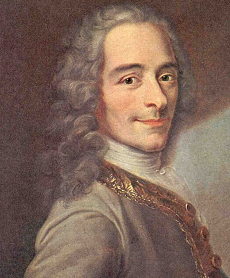
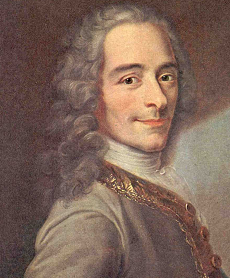
The gentleman in the image is Voltaire, who for a time graced the court of Frederick II of Prussia, known as Frederick the Great. King Fred loved to talk about the universe and everything at the end of a day’s work. He also used the salons of Berlin to get feedback in the development of public policy.
Fred would only talk in French; he regarded German as barbaric. Here we’ll use English.
The thread will be a stoush-free zone. The Comments Policy says:
The aim [of this site] is to provide a venue for people to contribute and to engage in a civil and respectful manner.
Here are a few bits and pieces that came to my attention last week.
1. Richie Benaud passes on
The ABC puts it well:
Cricket icon Richie Benaud, who distinguished himself first as a leg-spinning all-rounder, then as a daring Australian Test captain and later as the ‘voice of cricket’ in the commentary box, has died at the age of 84.
Benaud’s skills, drive and determination took him to the top on and off the cricket field, and made him one of Australia’s most recognised people, instantly identifiable simply as Richie.
He played 63 Tests for Australia, was the first player to score 2,000 Test runs and take 200 Test wickets, and never lost a series as Australian captain.
After hanging up his Baggy Green cap, he spent more than four decades as the king of cricket commentators, a man viewed around the world as one of the best callers, watchers and analysts of the game – and perhaps its best ambassador as well.
While acknowledging his record I’d rate him as a top-flight bowler who was a handy batsman rather than a genuine all-rounder, who would be selected for his batting and his bowling absent the other. Genuine all-rounders are rare. I can think of Garfield Sobers, Keith Miller and Ian Botham, also Adam Gilchrist in a sense.
Benaud, I think, gave some respectability to the Packer circus and was apparently quite influential in giving advice.
2. Opinion polls
In Great Britain Ed Miliband overtakes David Cameron in approval ratings, as Labour pulls ahead in the polls.
Here in Oz Newspoll studied quarterly trends with a larger than usual sample. The headlines and much of the reporting was about Abbott’s poor performance in WA. You had to dig to find the national TPP poll which had Labor ahead 55-45. Also:
Opposition Leader Bill Shorten leads Mr Abbott 44-34 as preferred prime minister.
He is now ranked as better prime minister in all states for the first time.
Roy Morgan now has Labor ahead 53-47 and as does the Essential Report.
If this keeps up Labor could lose the election, because they’ll give Abbott the flick and put in Julie or Malcolm.
Australia’s imprisonment rate at 186 per 100,000 is historically high and getting higher. Moreover:
In contrast to most other developed countries, this rate is palpably high. The rate in Canada is 118 per 100,000. The incarceration rate in Australia is nearly three times higher than in Scandinavian countries.
Standing apart from these trends is the world’s greatest incarcerator, the United States, which imprisons more than 700 people per 100,000 – an increase of more than 400% in three decades.
It’s costing us a pile of money – we spend $A80,000 per prisoner per year compared to $A30,000 in the US. This wouldn’t be so bad if it worked, but it doesn’t:
Sentencing is the area of law where there remains the biggest gap between what science tells us can be achieved through a social institution (criminal punishment) and what we actually do.
In fact
our prisons [are] where the greatest number of human rights infractions occur.
The solution?
The start and endpoint to the solution is to confine jails (almost exclusively) to those we have reason to be scared of: sexual and violent offenders.
Thanks to John D for bringing this article to my attention.
4. Keep an eye on Greece – something unusual is happening
James Galbraith has been to Greece to consult on their problems and reported in an amazing speech to the European Trade Union Institute.
So as these manoeuvres, as I call them, mature, there emerges an interesting possibility. And that is the possibility of a politically stable, anti-austerity government in Europe, led, as I think you probably have observed, by forceful personalities, and presiding over an economy which is so far down that it has no place to go but up. And that may well be, within a short period of time, on a track of some recovery, some improvement in jobs performance and stabilisation of its external debt situation.
This would be in the wake of a crisis that was brought on by the neoliberal financial policies of the early part of the 2000s. Which was then aggravated and prolonged by the austerity ideology that succeeded the crisis, by the profoundly counterproductive policies with which Europe has reacted to the crisis. And so the possibility that an anti-austerity government might lead the beginning of a recovery from the austerity regime is, I think, a present reality and it is, of course, a nightmare in certain quarters.
Finance Minister Yanis Varoufakis and Prime Minister Alexis Tsipras have faced a wall of grief and pain from a hostile media and European finance authorities. If they prevail it will be because in the end Angela Merkel is pragmatic rather than doctrinaire. The stakes are high:
It goes beyond that to the future of Europe and beyond that, to the meaning of the word democracy in our time.
If you have a spare hour, Yanis Varoufakis talks with Joe Stiglitz. I haven’t yet had time for more than the first half hour.
Saturday salon 4/4
An open thread where, at your leisure, you can discuss anything you like, well, within reason and the Comments Policy. Include here news and views, plus any notable personal experiences from the week and the weekend.
For climate topics please use the most recent Climate clippings.
The gentleman in the image is Voltaire, who for a time graced the court of Frederick II of Prussia, known as Frederick the Great. King Fred loved to talk about the universe and everything at the end of a day’s work. He also used the salons of Berlin to get feedback in the development of public policy.
Fred would only talk in French; he regarded German as barbaric. Here we’ll use English.
The thread will be a stoush-free zone. The Comments Policy says:
The aim [of this site] is to provide a venue for people to contribute and to engage in a civil and respectful manner.
Here are a few bits and pieces that came to my attention last week.
1. Birthdays!
Three birthdays to mention.
Larvatus Prodeo was born at Easter 2005, so would be 10 years old if still alive. I started blogging there about three months later.
Secondly, I turned 75 just over a week ago.
I usually don’t make a fuss over birthdays, reasoning that I’m just one day older than the day before. So every day is new. My cardiologist is very happy with me, and I can tell you that since my triple bypass in 2000 he’s the main man!
Third, Climate Plus was born a year ago tomorrow. Some 318 posts later we are still here. It has been an experience – some surprises, some disappointments.
For the foreseeable future I plan to carry on. Political posts are more than twice as popular as climate posts, but our main reason for being here is climate. My aim is to keep the lay reader abreast of important developments in a brief and digestible form.
Feedback is more than welcome.
2. Vale Betty Churcher (1931-2015)
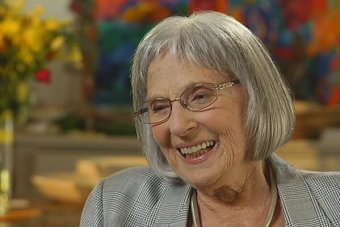
Betty Churcher died during the week, aged 1984. As an artist, as a teacher, as an arts administrator, and as a human being she excelled and attracted nothing but praise.
As a woman she had several firsts, most notably in 1990 she became the first woman at the helm of the National Gallery of Australia, where she was director for 7 years.
While there she earned the nickname “Betty Blockbuster” for presiding over 12 international blockbuster exhibitions, which in turn led to a corresponding growth in the gallery’s attendance numbers and revenue. She also initiated the construction of new galleries for large-scale temporary exhibitions, gave the gallery its current name after dropping “Australian National Gallery” and acquired Arthur Streeton’s Golden Summer, Eaglemont, 1889, for $3.5 million.
Image courtesy of the ABC.
3. Selling ugly produce at low prices
Every year Canadians waste some 40% of their food. A large part of the problem is that “ugly” food, misshapen or marked, is thrown out. Now one large retailer is selling this food at a discount in Ontario and Quebec.
Should happen here.
4. UK elections
The UK election campaign started in earnest. Here’s a prediction of the outcome.
According to that it could be a coalition of Labour, the Scottish National Party and what’s left of the Liberal Democrats.
Ed Miliband seems to have come through the leaders debate OK.
5. Jacqui Lambie starts her own party
Jacqui Lambie has applied to register The Jacqui Lambie Network as a political party.
She’s also got something else to think about.
A PUP statement released on Wednesday threatened to spend up to $3 million on legal fees in a bid to recover $2 million and $7 million from Senator Lambie and Senator Lazarus respectively.
Senator Glenn Lazarus quit the Palmer United Party earlier this year.
Senator Glenn Lazarus quit the Palmer United Party earlier this year.
PUP claims those are the amounts spent helping Senator Lazarus and Lambie get elected under the party’s banner at the 2013 election.
AdvertisementBoth senators have since abandoned PUP and are now sitting as independents.
Lambie says he promised not to sue.
6. Goodnight Goodluck Jonathon
President-elect of Nigeria Muhammadu Buhari told CNN’s Christiane Amanpour that he plans to aggressively fight corruption that has long plagued Nigeria and go after the root of the nation’s unrest.
For the first time in Nigeria’s history, the opposition defeated the ruling party in democratic elections.
Buhari defeated incumbent Goodluck Jonathan by about 2 million votes, according to Nigeria’s Independent National Electoral Commission.
The win comes after a long history of military rule, coups and botched attempts at democracy in Africa’s most populous nation.
Jonathon’s main contribution seemed to be making many billions of oil revenue due to the state magically disappear.
How humans and their dogs drove Neanderthals to extinction
Well strictly speaking Neanderthals are humans too, so for “humans” read Homo Sapiens, that is us.
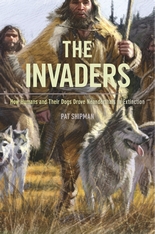
I intended to write a post on taxation policy, but then I heard Phillip Adams’ segment Dogs: not the Neanderthals best friend, an interview with retired anthropologist Pat Shipman on her hypothesis that the domestication wolf-dogs gave us the critical edge to out-compete the Neanderthals. It reminded me of an article by Shipman in the New Scientist. If that’s paywalled there is an excellent exposition of her ideas by Steve Donoghue at Open Letters Monthly.
Anyway Sapiens vs Neanderthalensis won out over tax policy.
Shipman uses the example of Yellowstone National Park to demonstrate the effect a top predator can have on a whole ecosystem.
Though wolves were integral to that ecosystem for millennia, they were wiped out there by settlers by about 1920. The effects of removing the wolf were striking. Coyotes formed larger, more wolf-like packs, while elk populations soared, changing the vegetation close to rivers by eating young trees and shrubs. Pronghorn antelope populations dropped as more coyotes preyed on their offspring; beavers disappeared from the park and songbirds declined in number.
Then:
Reintroducing just 31 wolves in the mid-1950s transformed the ecosystem again. Wolves targeted their closest competitor, killing coyotes in confrontations over carcasses and consuming enough prey to hinder their survival. Coyotes avoided areas favoured by wolves and shifted to smaller prey. Coyote packs fragmented and their overall population declined sharply. More pronghorns survived; elk herds diminished; and riverine vegetation came back, encouraging the return of beavers and songbirds.
Neanderthals survived for about 250,000 years in an environment that presented challenges. Donoghue describes it thus:
Their populations had endured sweeping climate changes over the centuries, and they shared their landscape with animals as monstrous as anything the world had seen since the dinosaurs: massive cave bears, saber-toothed tigers, lions bigger than any in Africa today, cave hyenas, huge woolly mammoths, woolly rhinoceri, wolves, leopards, roving packs of dholes – a world as fearsome and strange as something out of a science fiction novel.
A few thousand years after Sapiens arrived some 45,000 years ago, apart from wolves all these large animals were gone, and the Neanderthals with them.
Shipman says that the common belief was that the Neanderthals moved south to avoid the advancing ice, and lingered until 27,000 years ago. However, she says that modern dating technology shows no southward movement and no trace of Neanderthals after 39,000 years ago.
Sapiens had two big advantages. One was projectile technology to enable killing at a distance. The other was possibly the assistance of the domesticated wolf-dog. Dogs assisted Sapiens in hunting and acted as guards.
It seems likely that Sapiens did not tolerate the presence of Neanderthals in ‘their’ territory. It seems likely also that with projectile weapons Sapiens would win any direct confrontation. If the Neanderthals crept up at night, the dogs would likely smell them and sound the alarm.
The effect of dogs was to increase the ecological niche in which Sapiens could operate. For the Neanderthals there was simply no good place to go, so they were squeezed into areas where they could not support themselves in the longer term. In this, climate change was still certainly a factor.
Shipman says we are “natural invaders, the mammalian equivalent of Burmese pythons, cane toads and Asian carp.”
Shipman stresses that her hypothesis “still requires elaboration and testing.” Nevertheless it is certainly food for thought.
Shipman’s book on the topic is The Invaders: How Humans and Their Dogs Drove Neanderthals to Extinction.
You might also be interested in Neanderthals r us and Sex with Neanderthals was good for us from 2011. Seems like yesterday.
Genetic mapping of Britain
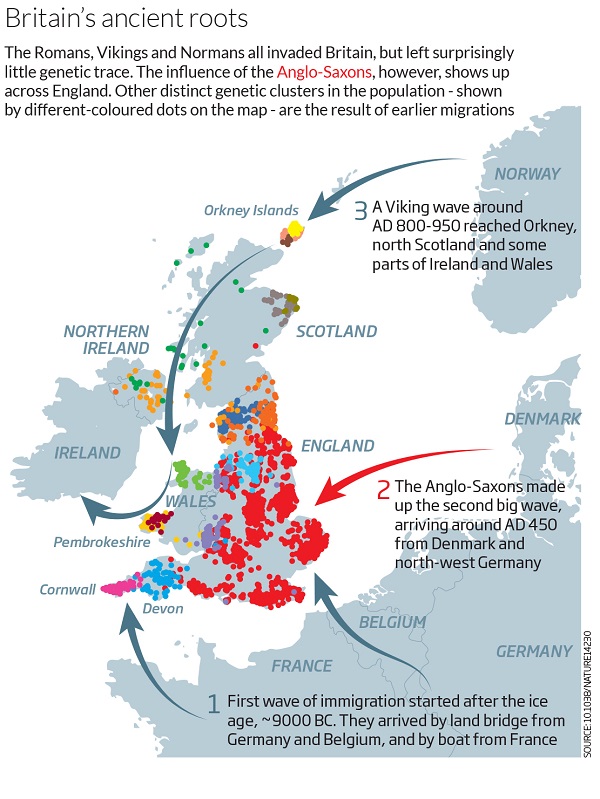
The Romans, came, they saw and they conquered. But they left no genetic imprint. The same goes for the Vikings and the Normans, with the exception of the Orkney Islands, which were Norwegian for 600 years. Nevertheless Viking DNA only accounts for 25% of today’s Orcadian DNA.
The New Scientist reports on DNA mapping undertaken of Britain’s Caucasian population. To qualify for sampling people had to have all four grandparents born within 80 kilometres of each other. So I guess there’d be a bias towards clustering, and clustering is what they got.
There were two main findings. First, the only invaders to leave a distinct genetic genetic footprint were the Anglo-Saxons in the east and the south, who arrived from AD 450. Still the DNA of earlier settlers dominates, with at least 60% deriving from earlier immigrants.
Secondly, there is considerable variety in the DNA of those earlier settlers, especially in the west and the north. In the south and the east the effect of the Romans was to dissolve somewhat the tribal clustering, partly through building roads.
The first immigrants arrived from about 9000 BC, as the ice melted, via land bridge from Belgium and Germany and by boat from France. The overall pattern is captured in this image:
The article does not mention language.
English, of course, is a Germanic language which came with the Anglo-Saxons. German as a language only developed from about 500-0 BC in what is now southern Scandinavia. The Germans emerged from the north onto the main European continent and beyond from about 0 AD. The Celts were already there. But the Celtic language only dates from about 1350-850 BC and appears to have arisen in central Europe. It’s part of the Indo-European family, which arose far away in the steppes north of the Black Sea, probably around 4000 to 3000 BC.
Quite obviously the early settlers of Britain spoke something else. But the Celtic language when it came took over to become the language of the masses. Whether this was a matter of sheer numbers, or cultural influence I don’t know. How this all came to be goes beyond my pathetic knowledge of ancient history.
Saturday salon 28/3
An open thread where, at your leisure, you can discuss anything you like, well, within reason and the Comments Policy. Include here news and views, plus any notable personal experiences from the week and the weekend.
For climate topics please use the most recent Climate clippings.
The gentleman in the image is Voltaire, who for a time graced the court of Frederick II of Prussia, known as Frederick the Great. King Fred loved to talk about the universe and everything at the end of a day’s work. He also used the salons of Berlin to get feedback in the development of public policy.
Fred would only talk in French; he regarded German as barbaric. Here we’ll use English.
The thread will be a stoush-free zone. The Comments Policy says:
The aim [of this site] is to provide a venue for people to contribute and to engage in a civil and respectful manner.
Here are a few bits and pieces that came to my attention last week.
1. Scientists at Large Hadron Collider hope to make contact with parallel universe

The LHC is being fired up again after two years down time when it was refurbished and enhanced. In their first experiment they hope:
a completely new universe will be revealed – rewriting not only the physics books but the philosophy books too. It is even possible that gravity from our own universe may ‘leak’ into this parallel universe, scientists at the LHC say.
As mentioned at Mark’s Facebook, if they want a parallel universe a plane ticket to Australia might be cheaper.
2. Crazy polls
Either opinion is swinging wildly or the pollsters have lost it.
Two weeks ago there was a significant crossover of Newspoll and Morgan. Now they’ve crossed back again.
Morgan has a 2.5% swing to to ALP, putting them on 56/44 TPP.
Newspoll has a 4% swing the other way to leave Labor barely ahead on 51-49.
Essential has a 2% swing to Labor this week to leave it comfortably ahead on 54-46. Essential’s weekly poll has been reasonably steady over a four-week period.
3. ‘Supertide’ at Mont Saint-Michel
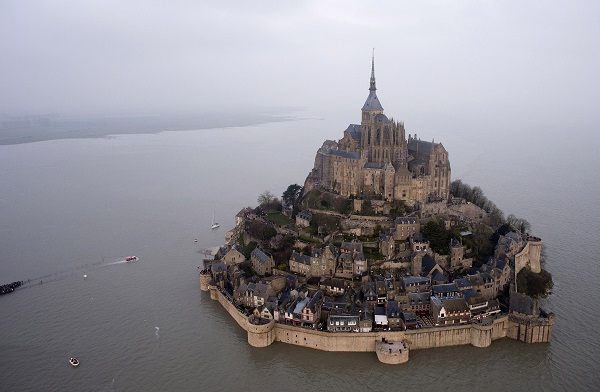
They call it the tide of the century, but it actually happens every 18 years. Mont Saint-Michel is a tidal island off the coast of Lower Normandy. Acessible by a causeway at low tide, the tide comes in at the speed of a galloping horse. Mont Saint-Michel receives over three million visitors each year.
4. Native title threatens Adani’s Carmichael mine
Adani’s Carmichael mine in the Galilee Basin is planned to mine 60,000 tonnes of coal per year, creating 10,000 direct and indirect jobs. Adrian Burragubba as spokesman for the Wangan and Jagalingou Family Council says that under native title they do not approve of mining in any shape or form and no amount of money will change their mind.
We’re concerned that it will devastate the land beyond repair.
It will destroy the waterways and our totemic animals and beings that are on that land and our ancestor dreaming stories and those things that are associated with our culture and heritage.
And it will also destroy it beyond repair to the point where we’ll be displaced forever from that land as the original custodians of that land.
It seems that the native title claim substantially overlaps with another native title claim lodged by the Bidjara people. If the claim cannot be settled between the groups then the Federal Court will test the matter at trial.
Germanwings crash: pilot locked out of cockpit
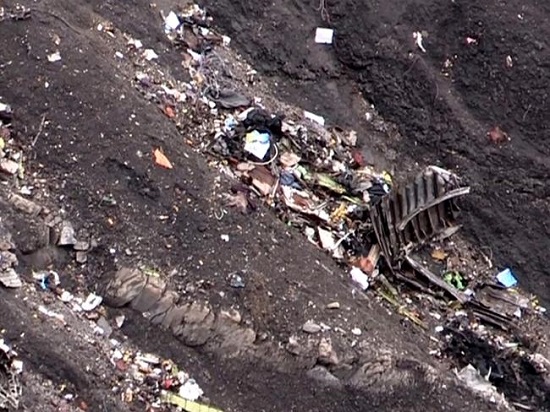
First it was a leak, now officially confirmed, the pilot of the doomed flight was locked out of the cockpit by the co-pilot during the eight-minute descent prior to the crash in the French Alps. Apparently there was repeated knocking on the door without response and then an attempt to smash the door down. The co-pilot can be heard to be breathing to the end.
The co-pilot was a relatively experienced 28-year old officer, who lived with his parents.
On the 7.30 Report we were told that in the US if a pilot leaves the cockpit there must be a second crew member present, typically the chief flight steward. In Europe and indeed Australia that is not the case.
Since 9/11 and Twin Towers unauthorised entry into the cockpit is virtually impossible.
The Airbus A320 plane is designed with safeguards to allow emergency entry to the cockpit if a pilot inside is unresponsive, but the override code known to the crew does not go into effect and indeed goes into a five-minute lockdown if the person inside the cockpit specifically denies entry, according to an Airbus training video and a pilot who spoke to the Associated Press.
The case is looking like a pilot suicide.
Apparently air accidents have been low in the past year, but we’ve had more than usual high-profile events. The chances of something adverse happening are vanishingly small.
Nevertheless, I’m sure protocols and policies will now be reviewed.
Germanwings is a budget airline owned by Lufthansa, a competent air line.

Robots and computer automation will transform work within two decades
My first paid work was in the Automotive Plant division of the PMG – later to become Telstra and Australia Post. I copied figures from operators’ returns onto a summary sheet, added them by hand and had them typed up to be sent off somewhere. I was told they would contribute to the graphs on the wall of a controlling engineer in Melbourne.
There were no electronic calculators. Engineers used slide rules.
That was in 1963. In 1964 I worked in a university library, where they were automating their loan system with punch cards and knitting needles. When I joined the Education Department in 1969 we had small committees because the minutes had to be produced using extra sheets of carbon paper in a typewriter. Photocopiers had not yet arrived.
Since then robotics, automation and communications technology have brought vast changes to the work place in all sorts of fields. Another tsunami of change is about to hit us according to Oxford University expert Michael Osbourne. He said that 47% of jobs in the US were at high risk of being replaced by automation within a generation.
“Increasingly, algorithms are able to perform not just routine manual labour in the way they have done in the past but also cognitive labour in a way that makes it much more difficult to draw that line between what is automatable and not,” he told 612 ABC Brisbane.
Jobs linked to data entry, accountancy and heavy vehicle driving would dramatically decrease and in some cases vanish completely.
Driverless vehicles would be made possible as massive low-cost data storage capacities allowed for the creation of highly detailed 3D maps – an area already being explored by large mining companies, he said.
The more creative you are, the safer you are from automation.
He stresses that he is talking about technological capacity over a 20-year time period. What happens in reality will depend on social acceptability and other factors.
The construction industry is one sector being affected already. Modules of bathrooms and kitchens are being prefabricated offsite. In fact 30 stories of a building can be put up in 15 days as sections come pre-wired and pre-plumbed.
John D has also kindly sent me a link to ABC Fact Check which has detailed 11 ways the Australian workplace has changed. Since the statistics show that readers tend not to follow links, I’ve transported the text here, for your interest.
1.
Fifty years ago the expectation was that a man went to work and a woman stayed at home. But that has changed dramatically. In the years between 1961 and 2011, the proportion of women in the workforce almost doubled from 35 per cent to 59 per cent. Until 1966 married women were not employed by theAustralian Public Service and single women were forced to “retire” when they married.
2.
In the 1960s Australia was moving from being a primary producer still “riding on the sheep’s back” to an economy with a strong manufacturing base. In 1966 more than 25 per cent of the workforce were in manufacturing, but that’s fallen in the past few decades. Now just 8 per cent of workers are in manufacturing.3.
The rise and fall of trade unions in Australia has been dramatic. In 1912, 30 per cent of workers were members of trade unions, by 1961 that had reached 61 per cent, but by 1999 that had fallen to 26 per cent, and by 2011 it had dwindled to around 18 per cent.4.
Child labour was not uncommon for much of the 20th century. In 1940, 6 per cent of all factory workers were under the age of sixteen, fifteen in NSW. The number fell sharply after World War II to 2 per cent of factory workers in 1948 and less than 1 per cent by 1968 as higher levels of employment for adults let them keep their children in school and out of the workforce longer.5.
One in 10 full-time workers in Australia earns more than an average of $2,548 per week, and one in 10 earns $800 per week or less. The rest are somewhere in between.6.
The Australian workforce is split fairly evenly along gender lines. Of the approximately 10 million employees in Australia, 50.5 per cent are women and 49.5 per cent are men. But men still tend to earn a lot more than women – an average of $1,429.80 for male employees, compared with $940.20 for female employees. That in part is due to the number of hours worked: 76.6 per cent of men work full time compared with 43.7 per cent of women.7.
Mining is the best paid industry, where average earnings are $2,499.60 per week, compared with the lowest paid industry, accommodation and food services, where workers make an average of $561.60 per week. The largest industry is health care and social assistance, making up 12.8 per cent of employees.8.
Managing is the best-paid occupation, with average weekly earnings of $2,113.80. Sales workers get the lowest average pay, with just $628.60 per week.9.
The occupations with the highest rates of work-related injuries and illness are machinery operators and drivers, followed by community and personal service workers. The industries with the highest rate of work-related illness or injury are manufacturing, followed by transport/postal/warehousing and agriculture/forestry/fishing.10
Education matters. Of Australians with a tertiary or higher education, 83 per cent have a paid job, compared with 59 per cent of those without an upper secondary education.
11.
Australian jobs are pretty secure compared with other nations. Australian workers have a 4.4 per cent chance of losing their job, which is lower than the OECD average of 5.3 per cent.
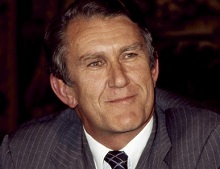
Malcolm Fraser bows out
Former prime minister Malcolm Fraser has died aged 84. Here he is in his prime:
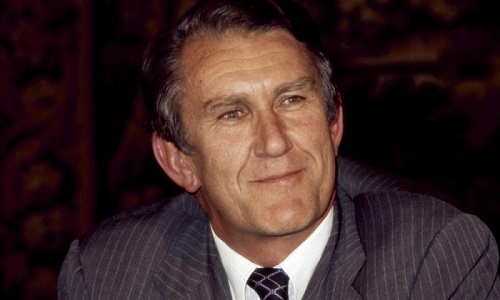
Former PMs have had nice things to say. Here’s Paul Keating:
“I always thought Malcolm would be around a lot longer. I must say, I wished he had been.
“Notwithstanding a controversial prime ministership, in later years he harboured one abiding and important idea about Australia – its need and its right to be a strategically independent country.
“His public life also enshrined other important principles: no truck with race or colour and no tolerance for whispered notions of exclusivity tinged by race. These principles applied throughout his political life.”
The same article summed his contribution as follows:
In office, Fraser was a staunch conservative on economic policies, an opponent of deregulation – and he was was criticised by his colleagues for lacking reform zeal. But he continued many of Labor’s progressive reforms.
In 1976 he established the family court of Australia and federal court of Australia; granted the Northern Territory self-government; passed the Aboriginal Land Rights (Northern Territory) Act; created the position of federal ombudsman and established the ABC’s FM radio service. The next year, he established the National Aboriginal Conference and SBS.
In 1979 the Fraser government established the Australian Refugee Advisory Council to advise it on the settlement of refugees – many of whom had been arriving as “boat people” from Vietnam since 1978.
After criticising the Liberal party’s direction during the years of the Howard government, Fraser finally quit the party when Tony Abbott came to the opposition leadership, unhappy with Abbott’s rejection of emissions trading. He said the Liberal party was no longer a liberal party but instead a conservative party.
Fraser campaigned assiduously for human rights and attacked the party’s stance on immigration and refugees.
Economics was perhaps his weak spot. Richard Holden summarises:
Australia can be justifiably proud of an approach to economics that is squarely between Europe and the United States. The US, on the whole, champions free enterprise despite the social costs; Europe sees a much larger role for the state, even if that inhibits free enterprise. The Australia in which we live today is somewhere in between.
When Malcolm Fraser became prime minister that was all up for grabs. We could have become “old Euope” or veered onto a radically individualist path in response to the debacle that came before. Fraser helped us chart a middle course, and we should be very grateful for that.
Perhaps he wasn’t quite up to the challenge, but he had a steady hand and did no great harm. The Guardian has a suite of articles, the titles of which tell a story:
Malcolm Fraser’s steady hand is in stark contrast to Tony Abbott’s chaotic manoeuvres Lenore Taylor
Malcolm Fraser had no Damascene conversion – he always championed human rights Katherine Murphy
Malcolm Fraser, a leader who believed there is a moral compass in our nation’s life Fred Chaney
Malcolm Fraser dared to dream of a truly original Australian foreign policy Margaret Simons
Fraser’s great conservative achievement: cementing Whitlam’s progress on race Robert Manne
Fraser’s politics didn’t shift much after 1975, but the rest of Australia’s did Julian Burnside
Tributes roll in – a prime minister who won three elections remembered
Malcolm Fraser: Australia’s former prime minister – in pictures
Fraser was ruthless in gaining power, first in the coup that unseated Gorton as PM, then doing over Billy Sneddon for the Liberal leadership and later in the famous dismissal of the Whitlam government. I hated him tribally for that, and disliked him for his apparent aloofness and arrogance, but later came to see him as a man of principle and values.
There’s more on his legacy at the ABC and heaps of articles just about wherever you look!
Probably the best article that takes you to the complexity of the personality and his politics is Guy Rundle at Crikey, unfortunately paywalled.
A remaining mystery is what really happened that night in Memphis, when Fraser turned up in the foyer of a seedy hotel without his trousers.
Update: Must read on Fraser at The Piping Shrike.
Saturday salon 21/3
An open thread where, at your leisure, you can discuss anything you like, well, within reason and the Comments Policy. Include here news and views, plus any notable personal experiences from the week and the weekend.
For climate topics please use the most recent Climate clippings.
The gentleman in the image is Voltaire, who for a time graced the court of Frederick II of Prussia, known as Frederick the Great. King Fred loved to talk about the universe and everything at the end of a day’s work. He also used the salons of Berlin to get feedback in the development of public policy.
Fred would only talk in French; he regarded German as barbaric. Here we’ll use English.
The thread will be a stoush-free zone. The Comments Policy says:
The aim [of this site] is to provide a venue for people to contribute and to engage in a civil and respectful manner.
Here are a few bits and pieces that came to my attention last week.
1. Hockey defamed?
Politicians rate poorly in public esteem, as in fact do journalists and the press. Do you have to have a reputation before you can be defamed? Is it possible to defame a politician? Does anyone place any reliance on what the press say anyway?
I suspect Hockey has done himself some damage by pursuing Fairfax for defamation. Most people don’t read Fairfax, but I’m sure now most people know that he’s been up to something that caused comment.
His lawyers think too that the process has harmed him. They are after maximum damages for what was published, plus extra for the way Fairfax conducted the case.
Essentially they are saying that Fairfax lawyers continued their “smear campaign” against Hockey in court. Fairfax lawyers say their cross-examination of Hockey was “properly conducted” and “robust” but did not “cross any boundaries”.
2. Palmer Coolum resort closes down
One thing is for sure, Palmer Coolum Resort has closed its gates. 40 staff have been sacked. But:
The golf experience will carry on. The Palmersaurus Dinosaur Park, Motorama auto museum and Palmer Grill restaurant will remain open during redevelopment.
A large proportion of the accommodation was time-share. Investors are out of luck, at least for the time being.
This ABC report was positive about refurbishment and new investment, but the TV news on Thursday was negative, suggesting it had plain gone bust.
I keep expecting the whole Palmer phenomenon to blow up in a puff of smoke.
3. Poll news
According to Roy Morgan, Mike Baird will win comfortably on 28 March, 55.5 to 44.5 for the ALP.
In Queensland, however, the ALP under Annastacia Palaszczuk would go down 49-51. However, Palaszczuk is the preferred premier, and for the first time more men (56%) prefer her. Overall she wins 61-39 over Lawrence Springborg.
In Victoria the ALP under Daniel Andrews is surging and would win 56-44 over the LNP.
4. Cooktown dodges a bullet
Cyclone Nathan slammed into the coast north of Cape Flattery, with winds at Cape Flattery in the Category 3 classification. Cape Flattery is well north of Cooktown. The indigenous community of Hopevale, 49 km northwest of Cooktown, was the nearest polulation centre and received no destructive winds. Even their banana farm, flattened by Cyclone Ita last year, escaped this time.
Cyclone Ita hit Cape Flattery as a Category 4 system and mauled Cooktown. This time they escaped.
Cyclone Pam, however, is regarded as one of the worst natural disasters in the history of Vanuatu, and is up there as one of the strongest cyclone ever in the Southern Hemisphere.
Update: This post was originally published as Saturday salon 28/3 in error

The mystery of Flight MH370
About 10 days ago we had the anniversary of Flight MH370, when the Malaysian airliner disappeared from the skies.
There are broadly three categories of theories about the disappearance.
Firstly, something happened technically to the plane, perhaps a fire that rendered the crew unconscious.
Second, the pilot took deliberate and planned action – effectively it was an act of suicide which tragically took a plane load of passengers with him.
Third, any number of conspiracy theories, from the Americans shot it down, to the Russians stole it.
The second seems the likeliest. At the very least, human agency is suggested.
An international team established by the Malaysian government has recently issued a short report supported by 585 pages of supplementary information, which is summarised here. Apparently it offers few fresh insights into the disappearance, and no definite explanation. Heinrich Grossbongardt, an independent aviation expert, told German broadcaster Deutsche Welle:
“As of today there are absolutely no indications of what may have happened on board. What we can say, is that there is no known technical failure mode, which would explain the aircraft’s deviation from its planned flight path. So far as it’s humanly possible to tell, we have to assume that it is the result of deliberate action.”
The report found no unusual behaviour by crew:
Investigators said they found no indications of unusual behaviour by the pilots or cabin crew before the plane took off. “There were no behavioural signs of social isolation, change in habits or interest, self-neglect, drug or alcohol abuse of the captain, first officer and the cabin crew,” said the report. The team looked at CCTV recordings of the captain and first officer and said “no significant behavioural changes” were observed. They added that the captain’s ability to handle stress at work and home was “good” and he had no known history of apathy, anxiety or irritability. “There were no significant changes in his lifestyle, interpersonal conflict or family stresses,” it added. Investigators found no unusual health issues or financial irregularities either.
The last voice transmission came from Captain Zaharie Ahmad Shah, which said “Goodnight Malaysian three-seven-zero” a minute or so before the aircraft’s transponder ceased transmitting.
The report found that the battery for the underwater locator beacon attached to the flight-data recorder expired in December 2012, more than a year before the plane’s disappearance. The report said there was a “definite possibility” that the battery could still operate past its expiry date, but said “it is not guaranteed that it will work or that it would meet the 30-day minimum requirement”.
However, the battery on the locator beacon of the cockpit voice recorder was working.
Last Friday week ago, I think, search co-ordinator Angus Huston told the 7.30 Report that 43% of the designated search area had been searched, some 26,800 square kilometres of the ocean floor. Each day about 1% of the search is completed, so it will cover the entire area sometime in May. The Australian Transport Safety Bureau has a handy site on the MH370 search.
This map indicates the location of the search area:

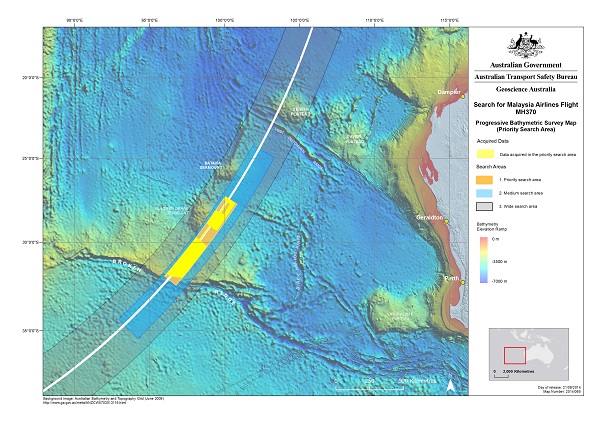
Captain Simon Hardy, a senior Boeing 777 captain with a major commercial airline, spent six months analysing satellite data and came to the conclusion that the missing Malaysia Airlines plane was intentionally landed on the water and sank intact about 100 nautical miles away from where ATSB is currently conducting its search.
He says that the flight path suggests that the pilot was taking a long, last emotional look at Penang.
Aviation commenter Jeff Wise originally argued that MH370 didn’t crash in the Indian Ocean but rather was hijacked by the Russians and flown to a remote airfield in Kazakahstan. Now he is sitting on the fence, and has formulated three categories of theory similar to those I outlined above. He claims that there is evidence for all, but also gaping holes.
“It’s like a baby beauty contest where all the contestants are ugly. The question is, which baby is the least ugly?”
He does suggest, however, that what he calls the Suicide Pilot theory is presently the default theory.
The latest is that a supervising air traffic controller was asleep on the job on the night. The Malaysian authorities have promised a speedy inquiry.
Elsewhere Wikipedia has a comprehensive entry.