Category Archives: Sundries

Posts on sundry matters of life the universe and everything: Culture, Environment, Life, Politics & Government, Science, Social Science and Society, Technology etc.

Teflon-coated politicians – no heart, no brains, no ethics

I must admit I didn’t know in advance that on Tuesday there were rallies all around the country in protest against the overpayment recovery system used by Centrelink which has seen thousands of people wrongfully issued with overpayment notices until I heard the Radio National report in the evening.

Googling, the only other report I’ve found was of the Melbourne rally, which, inter alia, said that over the last five years Centrelink staff have seen 5,000 of their colleagues lose their jobs. Also this item about strike action by staff last December. CPSU National Secretary Nadine Flood said:

    “Medicare, Centrelink and Child Support staff are frustrated and worried by the Turnbull Government’s mean and illogical public sector bargaining policy. These working mums and dads are asking us if they can go on strike again to bring some attention to this unfair situation, as they face their third Christmas without a pay rise.” Continue reading Teflon-coated politicians – no heart, no brains, no ethics

Federer rules, for now


I’m a bit of a sports nut, so we’ve had plenty of tennis watching in the last month. When we were first married we used to get up in the middle of the night and watch Björn Borg play Wimbledon. Can’t do that now, so it’s pretty much the Australian season.

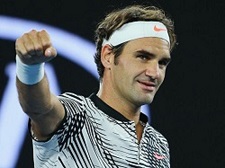
This year was a celebration of the oldies, with no-one under 30 in the men’s or women’s finals. Serena Williams at 35, beating her older sister Venus (36) always looked inevitable, an unstoppable force. Roger Federer and Rafael Nadal was a pure gift. Federer had no right to be there at age 35. Nadal is 30 and shouldn’t be there either. I thought Nadal would win, but I thought the match had nothing to do with who was the best player in the modern era.

The play was amazing. Federer rained down 20 aces to Nadal’s four, but Nadal’s serve was the more consistent. 73 winners flowed from Federer’s racquet to Nadal’s 35, but Federer was also making twice as many unforced errors. However, Federer’s strategy of attack paid off, winning five games in a row in the final set, after looking out of it, down a break at 1-3.

There is no single criterion for judging who is the ‘best player’, but the perception for many was that Nadal was better because he had a better head-to-head record with Federer, and dominance over Federer in Grand Slams since 2008, ignoring the fact that Nadal’s dominance only started when Federer was 27, arguably past his best, and Nadal five years younger was entering his prime. Federer winning has made some people think again, and so they should. Continue reading Federer rules, for now

Saturday salon 28/1

1. Migration and economic activity

The above article (thanks to John D for the link) explains why it’s almost impossible to have a recession when we have high migration. The economy keeps growing, because there are more people operating in it. Governments can boast about economic growth, and it’s good for business, but not necessarily for workers.

Here’s how real net disposable income (per capita income) has been going for the last 20 years: Continue reading Saturday salon 28/1

Centrelink fail: Ashgrove pensioners billed for $45,000

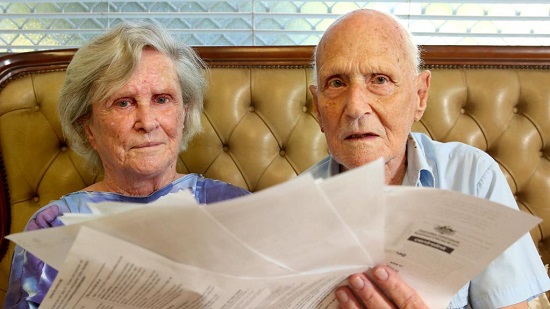
He’s 90, she’s 88. On July 25, 2016 Centrelink sent them a letter demanding that they pay back $22,239.82 each in excess pension payments. They were given 28 days to pay from the date of the letter. If they didn’t they would lose the pension, it would be put in the hands of a debt collector and interest added. In addition they would no longer have access to cancer drugs, costing $2,000 a month. Continue reading Centrelink fail: Ashgrove pensioners billed for $45,000

Australia, you are standing in it

flag_index_250 Last year I said:

    My brother and his wife hosted a street party where people hailed recently from seven different overseas countries. Yesterday one of my wife’s clients said she knew Aborigines who would just close their doors and cry.

And the TV news reported us “playing and protesting”. Nothing has changed this year, but I’m sure eventually it will. Chris Graham, the indigenous editor of New Matilda, asks the simple question:

    If your ancestors were dispossessed, slaughtered and had their land and their children stolen, would you celebrate the date on which that all began?

Continue reading Australia, you are standing in it

How Trump won: the real story

Nate Silver, editor in chief at FiveThirtyEight, has been thinking about this issue for two and a half months, and has come up with perhaps the best analysis I’ve seen to date in The Real Story Of 2016: What reporters — and lots of data geeks, too — missed about the election, and what they’re still getting wrong.

Silver’s primary focus is on how the press covered the election, and how it is reflecting now on what happened. However, he puts his finger on some of the key factors. Continue reading How Trump won: the real story

The dawn of the Trump epoch

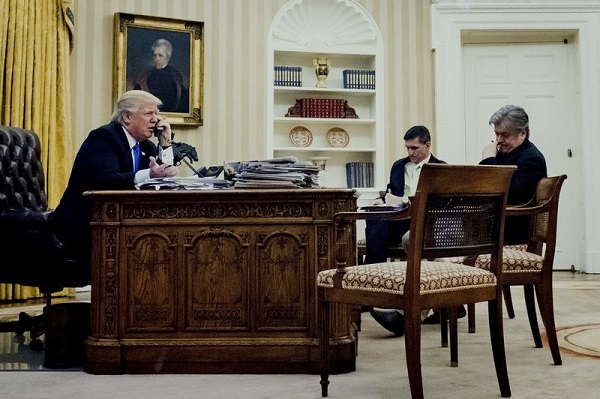
President Trump’s inaugural address was full of sweeping promises:

    Today’s ceremony, however, has very special meaning.

    Because today we are not merely transferring power from one Administration to another, or from one party to another — but we are transferring power from Washington, DC, and giving it back to you, the American people.

Which is counterfactual and ridiculous. He says that no-one listened to the “forgotten people”, but, “Everyone is listening to you now.”

Will he listen to the voters who by a majority of almost 3 million voted for his opponent? Continue reading The dawn of the Trump epoch

Saturday salon 21/1

1. The rich have become gods

According to the latest Oxfam report, the top 1% now own more than the rest of us. In fact, just 62 people own as much wealth as the poorer half of the world’s population. The rich have become like gods. Marx said:

    Money is the supreme good, therefore its possessor is good.

Continue reading Saturday salon 21/1

Vale Zygmunt Bauman

Zygmunt Bauman, sociologist and philosopher, died on 9 January. He had a particular place in my life, which I’ll contextualise later. My introduction was in 1999 through his book Work, consumerism and the new poor.

The message of the book can be simply stated. With the industrial revolution work was deemed intrinsically good, and more was better. It was preached from the pulpits. The poor had utility as a reserve workforce, to keep the cost of labour down.
The modern world, however, is shaped by consumption rather than production, and production could be automated or moved offshore. So the poor no longer have any utility, they are simply defective consumers.

Murphy’s Law: Economic outlook for Australia in 2017

Murphy’s law says that anything that can go wrong will. There is an awful lot that can go wrong with Australia’s economy in 2017, as this article by Michael Janda sent to me by John D shows.

An associated question is how should we react? Should we maintain our optimism, or should we take precautionary action? It’s a serious question, to which I’ll return later. Continue reading Murphy’s Law: Economic outlook for Australia in 2017

Saturday salon 14/1

1. Sussan Ley takes one for the team

Health and sports minister Sussan Ley took one for the team and resigned before inquiries into her expenses had concluded. Apparently while she was there journalists who currently have nothing much else to report on were digging into everyone’s business, like the four ministers attending the PM’s private New Year function.

Earlier Bronwyn Bishop amused everyone by saying that criticism of Ms Ley was socialism on the march. Continue reading Saturday salon 14/1