One of the reasons Mediscare worked, if it did, was because of the Abbott government’s record on broken promises. After being in government for eight months, by May 2014, the Abbott government had chalked up at least nine broken promises. Abbott had promised no cuts to the ABC or SBS, no cuts to education, no cuts to health, no shutting any Medicare locals, no one’s personal tax will go up, no changes to pensions, foreign aid would go up in line with the CPI, on Indigenous affairs Closing the Gap activities would be sustained at former levels, and ARENA (the Australian Reneweable Energy Agency) would have over $2.5 billion in funds to manage. Continue reading Moving beyond Mediscare→
Essentially S&P want to see the budget under control. Explicitly:
There is a one-in-three chance that we could lower the rating within the next two years if we believe that parliament is unlikely to legislate savings or revenue measures sufficient for the general government sector budget deficit to narrow materially and to be in a balanced position by the early 2020s.
This piece by them says that the US official poverty line sees a family of three getting $17 dollars per person per day, that’s $357 per week for the family, or about $18,500 per year. ‘Deep poverty’ according this article, is the term used for the living experience of 22 million Americans, or 6.8% of the population, who have a cash income of half that or less. Continue reading Saturday salon 9/2→
“What Labor is proposing is a huge reckless shock to the market. This is not fine-tuning. This is a big sledgehammer they are taking to the property market,” Mr Turnbull said.
Is Bill Shorten a populist with a thought bubble, or is Malcolm Turnbull shooting from the hip and attempting to defend the indefensible?
Last year in June Labor voted with the government to kill a Greens motion for a royal commission into misconduct in the banking and financial services industry. As Adele Ferguson said in the AFR, then came NAB, IOOF, CommInsure, allegations of bank bill swap rate rigging and a multitude of smaller scandals.
Julia Gillard left the Australian government with a few time bombs. The vision for schools contained in Gonski was fine and good, it just had to be paid for. So too the National Disability Insurance Scheme and the funding of decent hospitals as we age and get sicker.
It was too hard for Joe Hockey and Tony Abbott, so they snipped $80 billion over 10 years off the budget in the out-years. Turnbull agrees and wants to hand access to income tax back to the states. Continue reading Turnbull’s tax train wreck→
There are a few things we need to bear in mind when discussing the effects of proposed changes to negative gearing.
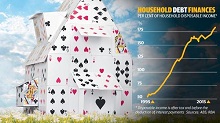
According to the AFR median weekly incomes in Sydney have increased by 17 per cent in the past eight years, while house prices have nearly doubled from $546,000 to more than $1 million. In Melbourne over the past six years median incomes have increased by 10 per cent while house prices have risen by 70 per cent, from $442,000 to $749,999. Prices are high and are due for a correction. Continue reading Negative gearing→
Newspoll came out 53-47 in favour of the LNP, so support for Turnbull looks solid and enduring. Bill Shorten’s personal ratings were a smidgeon better but still disastrous at 57 points behind Turnbull. To make matters worse, internal ALP polling on Bill has been leaked. Continue reading Poll stuff 2/2→
There is a new economic blockbuster out, The Rise and Fall of American Growth: The U.S. Standard of Living since the Civil War by Robert J. Gordon. In brief, his thesis is that 1870 to 1970 was a ‘special century’ of technological change yielding dynamic economic growth that transformed our lives. By contrast in America, nothing much has changed since then, growth has tapered right off and there is little prospect of significant change.




 The release of the Grattan Institute report
 There are a few things we need to bear in mind when discussing the effects of proposed changes to negative gearing.