On Monday and Tuesday this week we are going to have the AFR national Energy Summit in Sydney with everyone there, including Josh, Jay, Bill, Andrew Vesey and a different Malcolm Roberts (Chief Executive, APPEA). Should be fun.
The Weekend AFR had about half a dozen articles, led off by an article by Ben Potter, Angela Macdonald-Smith and Mark Ludlow (no doubt pay-walled) which said our energy has become dirty, expensive and annoyingly unreliable. They reckon something has to be done, it’s just that:
the causes identified by Prime Minister Malcolm Turnbull – or unofficial backbench energy spokesman Tony Abbott – are not the same as the causes power industry experts and regulators highlight.Continue reading Climate clippings 117→
In recent times we have had a number of polls in which the Australian people have shown good sense, though not all the time, as we shall see. However, the politics we deserve better than the politics we get.
On September 28 we had the first anniversary of the dirty big storm the brought down the power pylons in South Australia causing a state-wide blackout, as the Heywood interconnector exceeded capacity and tripped.
Rod Sims’ speech Shining a light: Australia’s gas and electricity affordability problem to the National Press Club certainly established that Australia has a gas and electricity affordability problem which is hurting many consumers and businesses. Electricity prices have more than doubled since 2009 as shown in this graph:
South Australia’s Craigburn Primary School organised a Do It In A Dress fundraising drive with the aim of raising $900 to help girls in Africa who did not have access to education.
Senator Bernardi tweeted his frustration about the idea on Wednesday by writing, “This gender morphing is really getting absurd”.
That tweet prompted a backlash and a flood of donations and in less than 48 hours, the school had hit $200,000.
Mr Vesey spent the bulk of his address explaining how AGL would replace the capacity lost at Liddell, including new wind and solar farms, up to 750 megawatts of new gas-fired plants and a 100-megawatt upgrade to the more modern and larger Bayswater coal plant nearby. A 250 MW battery at Liddell and demand response will also come into play, he said.
Four and a half years ago, at the national conference of the AWU in 2013, general secretary Paul Howes issued a warning:
Howes warned that unless some gas was reserved for domestic use, and limits on coal seam gas extraction were lifted, the massive investment boom in LNG would soon affect the supply and price of domestic gas. And consumers, business and manufacturers would all suffer.
“This is one of the most important resolutions we’ll debate at this conference,” he said.
The Australia Institute has looked at the penetration of renewables required in the electricity market to meet our Paris commitments, and come to the conclusion that we need from 66 to 75% renewables by 2030, rather than the weak 26-28% currently being assumed in relation to the Finkel review.
The basic issue is simple. If we don’t maximise the reductions in the electricity sector, we’ll have trouble meeting our overall Paris commitment, full stop. It will require a large and expensive effort in other areas such as agriculture. Completely decarbonising electricity was always the low hanging fruit. We appear to be ignoring this strategy completely, and the new report does not help all that much. Continue reading Are we serious about our Paris commitments?→
For me the main point of George Monbiot’s article about Hurricane Harvey is that the course we are currently on to achieve 3.5 to 4°C of warming by the end of the century is equivalent in magnitude to the change between the last ice age and the balmy times of the Holocene. To talk about whether this or that extreme weather event was caused by anthropogenically induced climate change seems beside the point.
The short answer is that everything about the climate has changed, so we are experiencing a climate that is different from how it would have been, and it will change much more during the life spans of the next few generations. Generally speaking, as Climate Central’s Climate Extremes Index indicates, extreme weather events are on the increase: Continue reading Storms for our grandchildren→
I’m told Germans have little respect for politicians, rating them at the bottom of the pile. Generally, though, they are said to be courteous, even boring in how they conduct their politics, although it doesn’t altogether look that way from the outside.
All day yesterday I heard that a same-sex marriage campaigner planted one on Tony Abbott, with Abbott and all and sundry saying it’s emblematic of how the Yes campaign is being prosecuted.



 In recent times we have had a number of polls in which the Australian people have shown good sense, though not all the time, as we shall see. However, the politics we deserve better than the politics we get.
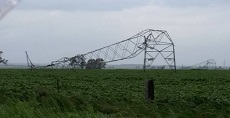 On September 28 we had the first anniversary of the dirty big storm the brought down the power pylons in South Australia causing a state-wide blackout, as the Heywood interconnector exceeded capacity and tripped.
 Rod Sims’ speech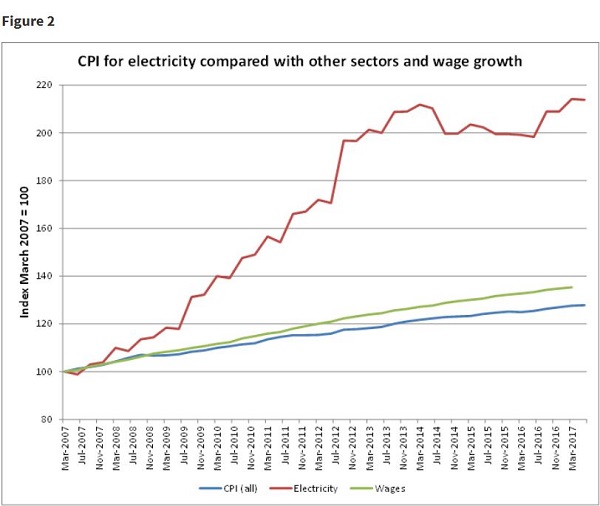
 Four and a half years ago, at the national conference of the AWU in 2013, general secretary Paul Howes
 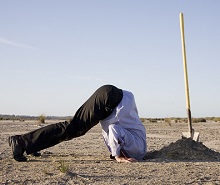 The Australia Institute has looked at the penetration of renewables required in the electricity market to meet our Paris commitments, and come to the conclusion that we need from 66 to 75% renewables by 2030, rather than the weak 26-28% currently being assumed in relation to the Finkel review.
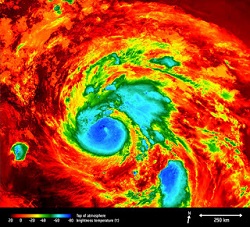 For me the main point of George Monbiot’s
 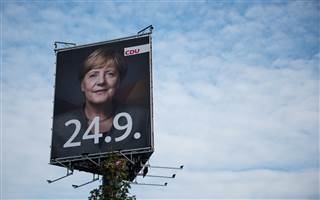 I’m told Germans have little respect for politicians, rating them at the bottom of the pile. Generally, though, they are said to be courteous, even boring in how they conduct their politics, although it doesn’t altogether look that way from the outside.