Turnbull and Frydenberg kept telling us that the review of the national Electricity Market had to serve three ends. We need energy security to keep the lights on, we need cheaper prices, and we need to reduce emissions. In view of the science outlook on climate change, reducing emissions is a sine qua non, literally ‘without which nothing’ – in short an indispensable element.
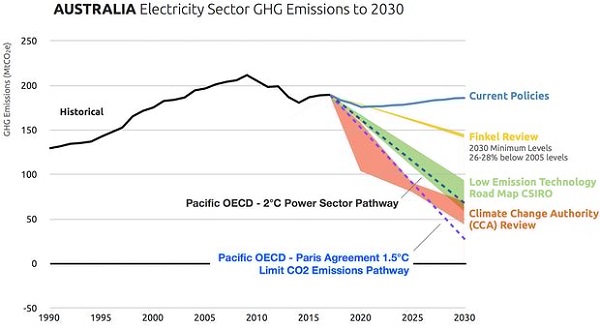
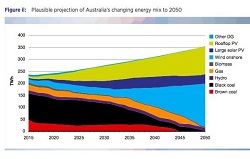
Michael Slezak at The Guardian says that Australia’s policies on climate change have become poisoned by pragmatism. Bill Hare from Climate Analytics took a look and was horrified. The cuts modelled by Finkel stick out like a burning coal stack:
If you can’t beat them, sue them. Citizens are increasingly taking governments to court over climate change inaction, with financial lenders – and possibly big firms – next in the firing line.
Some 894 climate change cases have now been filed in 24 countries, according to a report published last week by the United Nations Environment Programme and Columbia Law School’s Sabin Center for Climate Change Law in New York.
By some distance, most – 654 – have been in the US. Australia sits in second place, with 80 cases, and the UK third, with 49. The number of countries with climate cases has tripled since 2014.
A shocker this week was the fire that destroyed the Grenfell Tower in London, a 24-storey building with 120 apartments. The latest count is 30 dead, but the final toll could be much higher as people were incinerated, many difficult or impossible to identify.
Unfortunately people were told to stay in their units, until it became apparent that the fire was spreading up the cladding on the outside of the building – then it was too late for many. Continue reading Saturday salon 17/6→
The report predicts that half of the world’s identified tipping points – such as the collapse of polar ice sheets and the drying out of the Amazon rainforest – would be crossed under 2C warming, compared with 20% of them at 1.5℃.
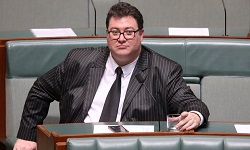
In this post I meant to show how the science has been showing for years now that we need rapid and concerted decarbonisation for a safe climate, and any hope of keeping global warming to 1.5˚C, in order to frame a consideration of the Finkel review. However, Abbott’s climate denialism is dramatically on full show and now George Christensen has thrown a grenade into the ring by saying he won’t vote in favour of Finkel’s Clean Energy Target. He says that most other Nationals won’t vote for it either. Indeed:
He said that, rather than legislating a clean energy target, the government would be better off building high-efficiency coal-fired power stations to replace the ageing coal fleet. Christensen contended that approach would reduce carbon pollution.
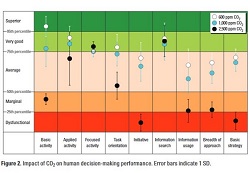
should we be seriously looking at what the safe levels of CO2 in the atmosphere are for human beings?
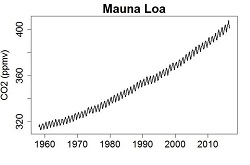
That was in the context of an informed comment that we have not seen CO2 levels above 320 ppm for 27 million years, which predates hominid evolution. Studies indicate that 600 ppm globally, which is where we could be by 2050, might just render us extinct.
To jump to the chase, we don’t really know what the full effects of elevated CO2 will be, or indeed what they are now. However, indications are that as CO2 rises, our brains will work less well and we will become more limp and sluggish. A bit like a frog in a pot of water gradually being heated. Continue reading CO2 is scrambling our brains, but will it kill us all?→
Theresa May did a Malcolm Turnbull, by calling an election to strengthen her position, and scraping back in by the barest of margins. Continue reading Saturday salon 10/6→
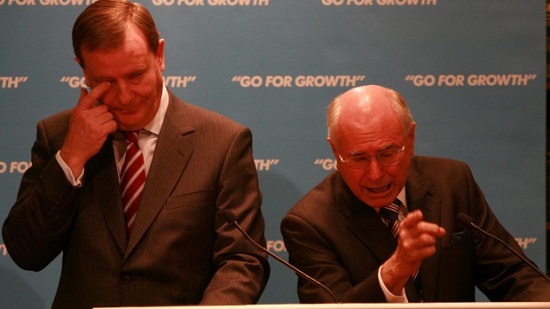
The Finkel review of the National Electricity Market is due to be revealed to the premiers at COAG tomorrow, but is you’ve been reading the Australian Financial Review it’s all done and dusted. There’s really only one horse in the race, and it’s the Low Emissions Target (LET), which Tony Wood of the Grattan Institute says is the third last horse in the race, but picked because it’s better than the other two. That may be harsh, but the visionary scheme was first proposed by John Howard in 2007. Here’s Howard and Costello launching the scheme way back then:
Donald Trump in announcing that the USA will withdraw from the Paris Climate Agreement made a big fuss about the Chinese being able to increase their emissions, and that this was unfair to the US economy.
The major polls currently have Labor ahead 53-47 at bothNewspoll and Essential Report on a Two-Party Preferred basis. Andrew Beaumont has commentary. Labor would have 82 seats to the LNP’s 63, with 5 Other.
Essentially Turnbull and the LNP are going nowhere. However, the leaders approval ratings are dreadful. In Essential Turnbull is net -11 and Shorten -14. In Newspoll Turnbull is -19, and Shorten -20, both up a bit, with Turnbull’s the best since September 2015.
Trump has announced that the US will withdraw from the Paris climate agreement and seek to negotiate a ‘better’ agreement. I liked Emmanuel Macron’s reaction – “Lets make the planet great again”. Germany, France and Italy have committed to carry on, China will relish the opportunity to move into the vacuum.
Paul Hawken, who knows more about climate change action than most (post coming up) recently said:
First of all, let’s be honest: The US has never led in this area. Ever. When they’ve tried on an executive level, they’ve never been supported by Congress. States have led, cities have led, but never the federal government.