Saturday salon 8/10

1. George Brandis grabs centre stage

We all know George Brandis is a pompous git. Bernard Keane writes persuasively (pay-walled) that he is an incompetent pompous git, both as a lawyer and as a politician. Labor says that he should resign for misleading parliament, and the lying about lying. Michelle Grattan says there is talk about him getting the shunt, either to the High Court (unlikely – who would wish that on the court?), or to London as high commissioner, as Alexander Downing’s term is coming to an end in May.

Anyway, there is open warfare between Solicitor-General Justin Gleeson and Attorney-General George Brandis. A senate inquiry is working to sort it out, and may save Brandis by disallowing his directive that the advice from the SG should be sought through him, even if it’s the PM or GG. Continue reading Saturday salon 8/10
Banks get thrashed with feather dusters

Now that the CEOs of the Big Four banks have been questioned by the Parliament’s Economics Committee it’s time to ask, what now? The Committee is a House of Representatives organ. It’s generally acknowledged that the heavy hitters for this kind of exercise are in the Senate. These mega-salaried CEOs are teflon-coated, obviously well-briefed, and it’s reasonable to wonder whether anything will change as a result of the hearings. Not much, I suspect.

David Gallagher of the Centre for International Finance and Regulation, probably a conservative outfit, says:

    The government is using the exercise as a classic case of retail political management, being seen to be keeping our major banks accountable while the Opposition calls for a royal commission into the banking industry.

Gallagher is arguing that the wrong-doings of the banks are not substantial or endemic enough to warrant a royal commission, and that our regulatory system is world-class and fit for purpose. I think he should have been listening to talkback radio over the last few days. Continue reading Banks get thrashed with feather dusters

Carolyn Snyder’s temperature forecasts are just plain wrong!

That’s the judgement of NASA GISS boss Gavin Schmidt, while praising her two million-year temperature reconstruction.

National Geographic reports that other scientists have backed Schmidt’s judgement, while praising her temperature reconstruction. The paper claims that the long-term committed warming from today’s CO2 levels is 5ºC (range 3-7ºC), and that if emissions double the long-term increase will be ~9ºC (range 7-13ºC). She’s talking long-term, over the next few millenia. Continue reading Carolyn Snyder’s temperature forecasts are just plain wrong!

Climate clippings 185

1. Linking extreme weather events to climate change

In what is called ‘attribution science’ climate scientists are getting better at analysing how much climate change has influenced particular extreme weather events.

In short, it is no longer a question of weather there is an influence, rather how much.

It would be useful to know, for example, whether the kind of storm that hit South Australia is still a once in 50 years event. Continue reading Climate clippings 185

Saturday salon 30/9

1. Stupidity over SA blackout

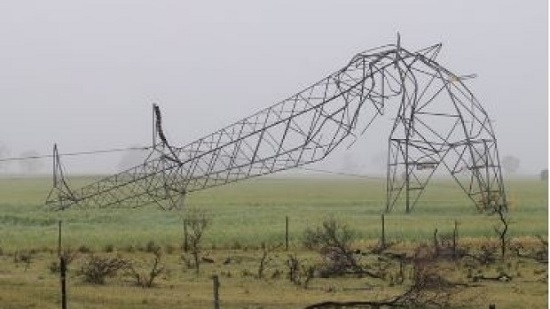
“Ignorant rubbish” is what Victorian Premier Daniel Andrews called Malcolm Turnbull’s initial comments on the SA electricity blackouts. “It’s the weather, stupid”, is more or less what Bill Shorten said, and he was right. The press has reported two ‘tornadoes’ in the north of SA which made pylons look like this:

sa-storm_sept-16_1475185969725_550

The questions to be asked in this case are not about the reliance on renewables, rather on why fractures to the grid 200 km north of Adelaide took the whole state down. Continue reading Saturday salon 30/9

Grattan weighs in on renewables

Tony Wood from the Grattan Institute is one of those lucky people who seems to know everything, and repeatedly sets us all to rights. So when he spoke about the Institute’s new report Keeping the lights on: lessons from South Australia’s power shock (Press Release, where you can download the report) my BS detectors were fully operational. On further investigation, however, the report has value, but there is a twist.

In brief, he points out that we have no climate policy that will reduce emissions in our power system beyond the RET to 2020, and that we need climate change and energy policies that combine to produce reliable, affordable and sustainable clean power. Continue reading Grattan weighs in on renewables

UN has a plan for a plan on refugees

Malcolm Turnbull was at the historic UN Summit on Refugees to tell everyone about our world-class effort, though it is doubtful world leaders took very much notice. Australia has unique circumstances, and thankfully, unique solutions. What we may see as our badge of honour, others may see as our badge of shame. Anyway, undaunted by UNHCR estimates of a burgeoning number, reckoned in 2015 at 65.3 million people displaced from their homes, the UN announced The New York Declaration, enunciating principles, promising aid, and plans to conclude a global compact on refugees and immigration in 2018.

Within hours, says Deutsche Welle:

    A UN aid convoy in Syria was bombed, leaving 12 aid workers dead; Kenya is closings the world’s largest refugee camp in Dadaab, pressuring refugees to return to Somalia; and one of the main points of arrival for refugees in Europe, the Moria camp on the Greek island of Lesvos, is burnt down…

Continue reading UN has a plan for a plan on refugees

Saturday salon 24/9

1. Survey on Muslims

Probably the biggest story of the week was the Essential survey asking people whether they would support or oppose a ban on Muslim immigration to Australia. Overall support/oppose was 49% to 40%, with Labor voters 40-48, the LNP 60-31, the Greens 34-59 and Other 58-35. Essential were so shocked they ran the poll again, with the same result.

Just about everyone is shocked, including the higher than expected support amongst Labor and Greens voters. Peter Lewis, the Essential man, says he was floored by the result. He thought Pauline Hanson represented a rump, but not so. Continue reading Saturday salon 24/9

A ray of sunshine

ford-gt_1474412326938_250A carbon revolution is about to launch itself onto the world. It has nothing to do with carbon emissions, or not much, Carbon Revolution is the name of a company that started in someone’s garage in Geelong about a decade ago. It’s about light-weight carbon fibre wheels for cars. The world-first technology was initially used in Formula One, then in May it won a contract to supply wheels for the Ferrari-fighting Ford GT, the fastest and most expensive Ford supercar ever made. It was a move from the race track to the road.

Now the company is raising $50 million to supply lightweight carbon fibre wheels to Ford Motor Company for the $US450,000 ($600,000) Ford GT and $US63,000 Mustang Shelby GT350R sports cars. Continue reading A ray of sunshine

New attack on 18C – what do anti-18C campaigners really want to say?

Louise Clegg, barrister and lecturer in constitutional law has written a piece which was printed in the AFR as Inevitable demise of 18C can’t come soon enough, and online as Why are politicians defending 18c when the High Court won’t?

She regards 18C as self-evidently unconstitutional, and cites a speech by retiring Chief Justice Robert French as indicating that the High Court would find it so.

She calls the QUT case “monstrous”, says the poor students have had their lives changed forever, and “these boys could be anybody’s sons.” Continue reading New attack on 18C – what do anti-18C campaigners really want to say?

Climate clippings 184

1. Arctic sea ice second lowest extent

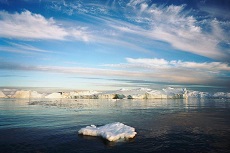
The Arctic sea ice extent has just reached the second lowest ever, tied with 2007. I got the story from The Guardian, but here’s the story at NSIDC:

    On September 10, Arctic sea ice extent stood at 4.14 million square kilometers (1.60 million square miles). This appears to have been the lowest extent of the year and is tied with 2007 as the second lowest extent on record. This year’s minimum extent is 750,000 square kilometers (290,000 square miles) above the record low set in 2012 and is well below the two standard deviation range for the 37-year satellite record. Satellite data show extensive areas of open water in the Beaufort and Chukchi seas, and in the Laptev and East Siberian seas.

Continue reading Climate clippings 184

Climate change, sustainability, plus sundry other stuff