After the ABS Census computer was shut down on Tuesday night, one bright spark on talk-back radio said we wasn’t going to fill in the census data now. What’s the point of giving information to a government that can’t run a census, he asked. If they can’t do a simple thing like that then they can’t provide all the health, education, police, infrastructure services we need.
On radio we were told this morning that the Census needs 95% of us to supply accurate data for the data to be useful in planning future services. We are told the computer system will be up and working today. They may yet pull it off, but significant confidence has been lost and the ABS has trashed its brand. Continue reading Census crash→
Pauline Hanson’s running mate, Malcolm Roberts, is a climate denialist of some fame, but in joining the Senate he is merely a noisy addition to the climate denialists already there, raising the question of how we deal with the phenomenon in the political sphere. We know that scientific information doesn’t work.
NOAA’s annual State of the Climate report has recently been released, showing the climate change is proceeding apace on all fronts. The 300 page report compiled by 450 scientists from 62 countries confirmed there was a “toppling of several symbolic mileposts” in heat, sea level rise and extreme weather in 2015. From The Guardian:
“The impacts of climate change are no longer subtle,” Michael Mann, a leading climatologist at Penn State, told the Guardian. “They are playing out before us, in real time. The 2015 numbers drive that home.”
The vote is in, almost five weeks after we went to the polls. In simple terms, Malcolm Turnbull’s LNP scraped in with a one seat majority in the House of Representatives. In the Senate, with 30 seats and needing 39 to pass legislation, he has three options. He can link with Labor’s 26, or with the Greens 9, or look for 9 of 11 crossbenchers, where the voting blocks of 3 Xenephon (NXT) and 4 One Nation are both unavoidable.
To block legislation requires 38 votes, not 39 as Radio National has been saying. Hence Labor voting with the Greens and the ‘centrist’ Xenophon team can block legislation. Continue reading A gridlocked senate?→
British anthropologist Robin Dunbar postulated in the 1990s that, given our brain size, human beings can only maintain 150 stable relationships.
A new study has taken a look at modern and traditional societies, and has concluded that the number is actually 132. But there is another limitation, and that is the small number of close links an individual can maintain. This account states that the maximum number of close links we can maintain is on average about five. Continue reading Dunbar’s number revisited→
Brian and I have been saying for years that both the planet and the economy needed was for the world/Australia needed to do was to go on a WWll style war footing to save the planet and boost the economy. Now the US Democrats have endorsed a WW2-scale mobilisation on the climate challenge. Hillary is promising to mobilise a global effort on a scale not seen since the second world war to tackle climate change, if elected US president in November.Continue reading Mobilizing for WWll Push for Climate Action→
Continuity of electricity supply is no trivial matter. Back in April-May 1996 at our place we had rain on 14 consecutive days. Over the period we had 833 mm or over 33 inches in the old language. A renewable energy electricity supply system needs to survive such a challenge, as do home off-gridders. Imagine not just the lights out, but rotting food in the refrigerator, no pumping of petrol at the bowser, the refrigerators and lights failing at the supermarket, no water coming out the tap. For the whole Brisbane area.
Malcolm Turnbull, in a captain’s pick after cabinet couldn’t agree has seen fit not to nominate Kevin Rudd for the top job at the UN, as the Hawke Government supported Malcolm Fraser for the post of Secretary General of the Commonwealth, or the Howard Government supported Gareth Evans to be head of UNESCO.
Angela Merkel has struck a deal with the German states to slow down the growth of green power, capping the expansion of onshore wind power at 2.8 gigawatts in capacity per year. The reason given is:
Generous green subsidies have led to a boom in renewable energy, such as wind and solar power. But the rapid expansion has pushed up electricity costs in Europe’s biggest economy and placed a strain on its grid.
Coal provides 40% of the world’s electricity, with 75% of this capacity deemed “subcritical”, in other words dirty. That’s a little over 1,200 GW of capacity. The IEA believes that we must shut down 290 GW of subcritical generation worldwide by 2020 in order to stay within a 2°C temperature rise.
The Stranded Assets Programme at the University of Oxford’s Smith School of Enterprise and the Environment has identified the power stations, the companies and the countries, so that financers, investors and policy makers can weigh the risks and take appropriate action.
In addition to CO2 production, air pollution and the public pressure to close for that reason, is a risk factor. Finally, subcritical plants use 67% more water. Many are in climatic areas where water scarcity is a risk. Continue reading Stranded assets and subcritical coal→
While the biggest terrorist attack in recent days was in Kabul where at least 80 were killed and 231 wounded in a suicide attack on a Hazara minority crowd who were demonstrating against inadequate power infrastructure in their home villages, we worry more about attacks in France and Germany, because their societies are more like ours.

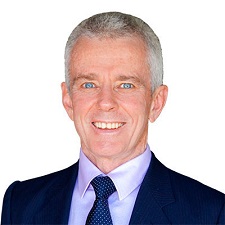 Pauline Hanson’s running mate, Malcolm Roberts, is a climate denialist of some fame, but in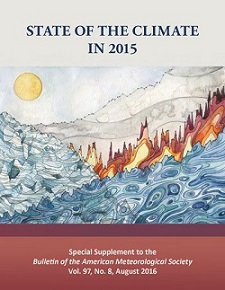


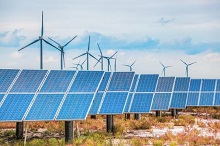 Continuity of electricity supply is no trivial matter. Back in April-May 1996 at our place we had rain on 14 consecutive days. Over the period we had 833 mm or over 33 inches in the old language. A renewable energy electricity supply system needs to survive such a challenge, as do home off-gridders. Imagine not just the lights out, but rotting food in the refrigerator, no pumping of petrol at the bowser, the refrigerators and lights failing at the supermarket, no water coming out the tap. For the whole Brisbane area.
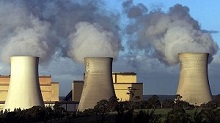 Coal provides 40% of the world’s electricity, with 75% of this capacity deemed “subcritical”, in other words dirty. That’s a little over 1,200 GW of capacity. The IEA believes that we must shut down 290 GW of subcritical generation worldwide by 2020 in order to stay within a 2°C temperature rise.
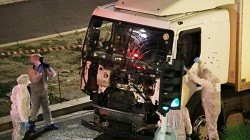 While the biggest terrorist attack in recent days was