In the AFR Fleur Anderson tells us that women are becoming demonstrably disenfranchised from the Coalition. Only 13 out of the 76 or 77 LNP MPs elected to the House of Representatives are women. There’s only one, Robertson’s Lucy Wicks, in the 35 seats of Australia’s most populous region, the Sydney basin. Three Liberal women were turfed out in favour of Labor women.
Malcolm Turnbull was talking up his victory, saying the people had put its faith in his team, just as Labor took the lead by eight votes in Herbert (I think there are a few hundred votes to count, before the recount) and the Senate was far from settled.
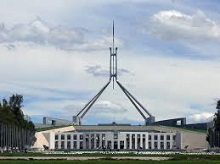
He said the next term would be a term of “delivery” of his “strong plan”. He’ll have to shake a leg, because parliament won’t meet until 30 August, which could give him around two years. More about that soon.
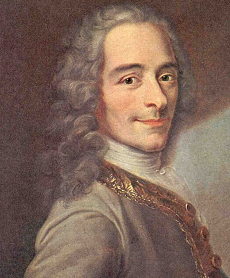
It was the mother of many things, including the principles of liberté, égalité, fraternité, the concept of human rights, the notion that everyone was born equal, and the secular state.
Voters wanting to elect a party of an independent other than the LNP or Labor, or indeed the Greens, are more likely to do so in the senate. Kevin Bonham says:
Nationally, the overall “Others” vote is up only slightly in the Reps (12.88% from 12.42%) but it is up from 23.54% to 25.70% in the Senate.
Tim Colebatch points out that we had 54 parties or combinations of parties running for the senate, and 631 candidates for the 76 seats. People voting for something different want their vote to mean something, so how is the new senate shaping up?
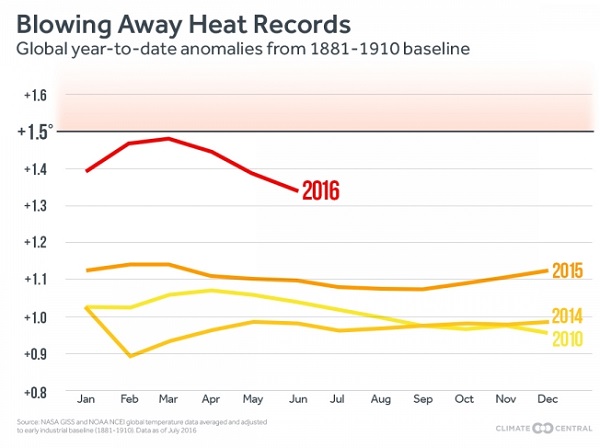
His boss, Pauline Hanson, thinks he has the “true facts”, and in denialists quarters he has gained a reputation for exposing corruption in the IPCC, the CSIRO and elsewhere. Continue reading Climate clippings 177→
One of the reasons Mediscare worked, if it did, was because of the Abbott government’s record on broken promises. After being in government for eight months, by May 2014, the Abbott government had chalked up at least nine broken promises. Abbott had promised no cuts to the ABC or SBS, no cuts to education, no cuts to health, no shutting any Medicare locals, no one’s personal tax will go up, no changes to pensions, foreign aid would go up in line with the CPI, on Indigenous affairs Closing the Gap activities would be sustained at former levels, and ARENA (the Australian Reneweable Energy Agency) would have over $2.5 billion in funds to manage. Continue reading Moving beyond Mediscare→
Essentially S&P want to see the budget under control. Explicitly:
There is a one-in-three chance that we could lower the rating within the next two years if we believe that parliament is unlikely to legislate savings or revenue measures sufficient for the general government sector budget deficit to narrow materially and to be in a balanced position by the early 2020s.
This piece by them says that the US official poverty line sees a family of three getting $17 dollars per person per day, that’s $357 per week for the family, or about $18,500 per year. ‘Deep poverty’ according this article, is the term used for the living experience of 22 million Americans, or 6.8% of the population, who have a cash income of half that or less. Continue reading Saturday salon 9/2→
Bob Brown said on several occasions “We don’t want to keep the bastards honest, we want to replace them.” It may be a time to reflect whether this is a realistic prospect, or whether the Greens will settle into being a niche party of the left.
I’d suggest the the Greens are no longer primarily a protest party for those disaffected by Labor, and to a lesser extent the LNP. Rather they a party with an ideology in their own right, based on values related to the environment, sustainability, human dignity and social justice. As such they have become an enduring part of the political furniture. But the question now is whether their trajectory to replace Labor as the main party on the left is still on course, or whether it has seriously stalled. Continue reading Whither the Greens?→
Climate change, sustainability, plus sundry other stuff