Brian Bahnisch, a survivor from Larvatus Prodeo, founded Climate Plus as a congenial space to continue coverage of climate change and sundry other topics.
As a grandfather of more than three score years and ten, Brian is concerned about the future of the planet, and still looking for the meaning of everything.
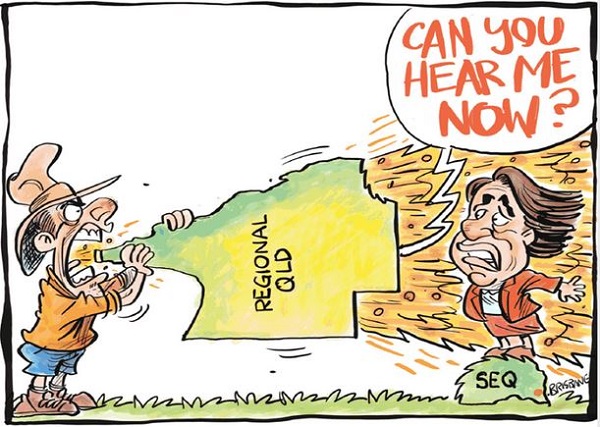
I pinched that cartoon from the Townsville Bulletin from Facebook, where it was doing the rounds. I think it’s tragic rather than funny, but may go some way to explain why Labor, in Queensland and federally, is over-reacting to the ‘message’ that was sent on Adani, and the prospect of jobs flowing from the resources industry as against climate change and saving the planet. Both Queensland and federal Labor appear to be caving in to coal interests, and both appear to be clueless about the urgency of the climate emergency. Continue reading Labor needs to rethink the climate emergency→
Race is a social construct, largely based on culture and language. In biological and genetic terms it simply does not exist. Looking at the genes, scientists simply cannot form racial categories. Angela Saini, of Indian heritage and living in England, has been investigating the issue in her recently published book Superior: The return of race science. See her New Scientist article and in The GuardianWhy race science is on the rise again.
In the 19th century there was a common assumption that a hierarchy existed with the European male at the pinnacle. Yet modern science shows that:
There is no gene that exists in all the members of one racial group and not another. We are all a product of ancient and recent migration.
When you are my age, making your will, and the lawyer asks you how you want your body disposed of, it is not just a box to tick. Basically I don’t much care, I won’t be around to take any responsibility, the executors of my will and remaining close family can do what the like.
However, I don’t like the idea of taking up space. So the idea of being incinerated and ashes sprinkled in a rain forest has some attraction. Yet there is irony in using a blast of gas to add however minimally to atmospheric greenhouse emissions.
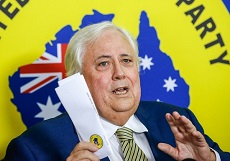
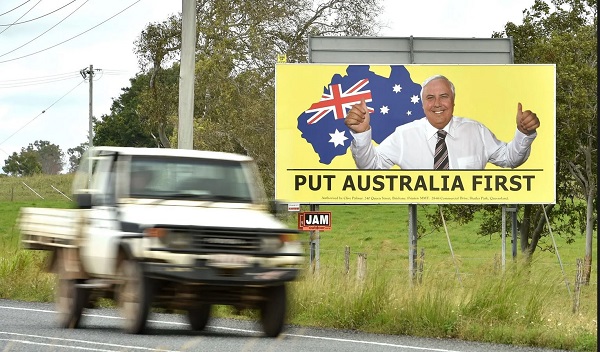
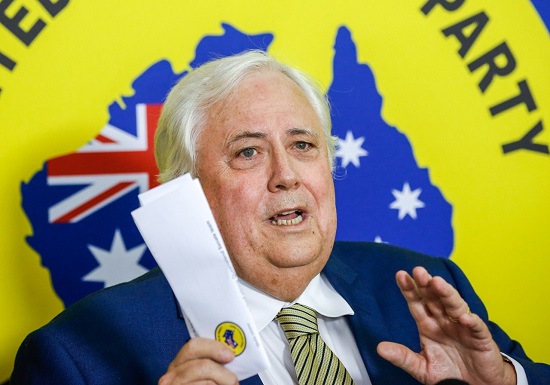
Palmer says he is just doing what he can to make Australia a better place. The question is, for whom? Making Australia a better place apparently necessitated spending all that money to suppress the Labor vote to save the country from ‘Shifty Shorten’. Continue reading Clive Palmer: a threat to democracy→
The sun came up on Sunday morning after the election, and has continued to do so ever since. So perhaps there was not a fundamental tear in basic fabric of reality as seemed to be the case on Saturday the night. So how is the rest of the world getting along?
The latest Newspoll, according to Twitter, so it must be right, was Federal Primary Votes: L/NP 38 (-1) ALP 37 (0) GRN 9 (0) UAP 4 (0) ON 3 (-1). Seriously, Kevin Bonham said on Twitter, that with those numbers, Labor would be unlucky to lose. The Newspoll site has Labor in front 51.5-48.5.
Bludger Track has Labor gaining 11 since 2016 to land on 80, with the LNP on 65 and Others on 6.
The suggestion is that the LNP’s primary vote of 38 going into the election is the lowest ever on Newspoll.
Mr Hawke announced Medicare in February 1984, bringing the scheme into line with the Medibank model originally introduced by Gough Whitlam but partially dismantled by Malcolm Fraser’s government.
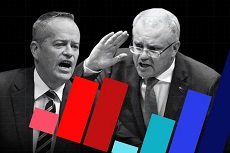
During the weekend before last Dennis Atkins In the Courier Mail said that while authenticity in leadership was important, both our main party leaders lacked authenticity, but Scott Morrison was better than Bill Shorten at faking it. Atkins is usually on the money, but that time he was wrong. One has it, and the other doesn’t. Continue reading Shorten, ScoMo and authenticity in leadership: Election 2019 follies 4→
Clive Palmer wants balance of power in the senate. Why? He wants a future for coal mining, and the development of his Galilee Basin tenement. Simple as that.
So I’ll take a look at Palmer’s impact on the campaign and how the senate is likely to turn out.
Thailand is happy about being the least miserable country in the world in the in the Bloomberg Misery Index, which is an economic indicator devised by Arthur Okun, and is derived by simply adding the forecasts of unemployment and inflation for the following year.
However, Thailand’s performance in the index is due to the Thai government’s unique way of tallying unemployment. More noteworthy are the performances of Switzerland, Japan and Singapore. For what it’s worth, here are the 10 least miserable: Continue reading Weekly salon 4/5→
Climate change, sustainability, plus sundry other stuff