1. Australia worst among G20 on climate action
Climate Transparency have prepared a report Green to Brown: Assessing the G20 transition to a low-carbon economy ahead of the 2016 G20 meeting in China last weekend. There is a handy summary at The Climate Council.
The countries’ 2030 emissions reduction targets (otherwise known as its INDCs) were about half ‘inadequate’ and half ‘medium’. The categories ‘sufficient’ and ‘role model’ were nowhere to be found. Australia was ranked ‘inadequate’. Continue reading Climate clippings 182
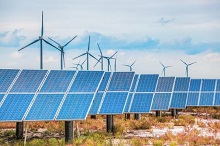 Continuity of electricity supply is no trivial matter. Back in April-May 1996 at our place we had rain on 14 consecutive days. Over the period we had 833 mm or over 33 inches in the old language. A renewable energy electricity supply system needs to survive such a challenge, as do home off-gridders. Imagine not just the lights out, but rotting food in the refrigerator, no pumping of petrol at the bowser, the refrigerators and lights failing at the supermarket, no water coming out the tap. For the whole Brisbane area.
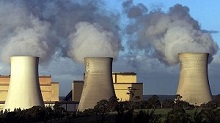 Coal provides 40% of the world’s electricity, with 75% of this capacity deemed “subcritical”, in other words dirty. That’s a little over 1,200 GW of capacity. The IEA believes that we must shut down 290 GW of subcritical generation worldwide by 2020 in order to stay within a 2°C temperature rise.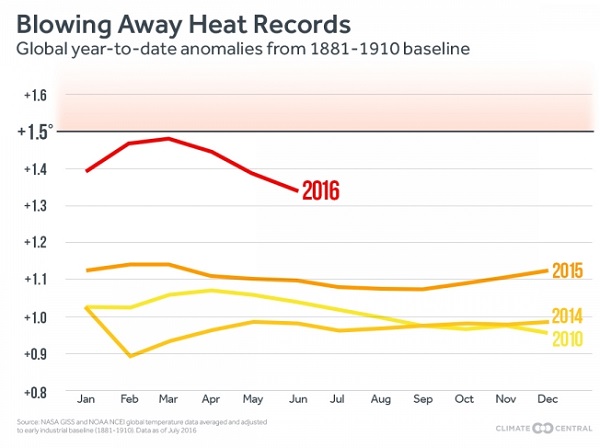
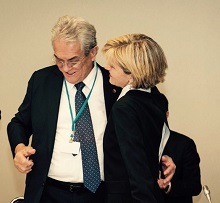 In spite of information that Turnbull had done a deal on climate with the denialist Nationals in return for their support of the Coalition, hopes lived on that the Government would begin to take climate change seriously. At the Paris conference last December Greg Hunt,