
My idea of a driverless car is that you can sit back and read a book. In fact it may be more like this:
Category Archives: Climate Change & Sustainability
Posts on aspects of climate science, climate action and climate policy & planning.

The great EU biomass scam
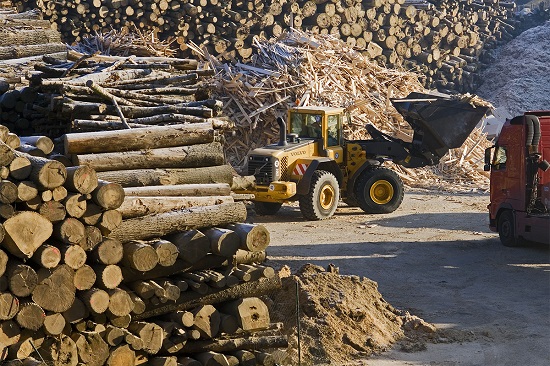 Most people don’t realise that 64% of the EU’s renewable energy is in fact biomass. The scam starts with UN and EU rules that say if you cut down a tree you don’t count the carbon it emits when you burn it. The assumption is that the tree will grow back again. The New Scientist (probably paywalled) has the story. Continue reading The great EU biomass scam
After the blackout, a new dawn for renewable energy
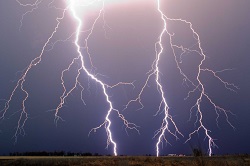 One of the more eye-catching comments on the SA blackouts was from AGL Energy’s CEO Andy Vesey telling the All Energy conference in Melbourne that a secure power system would be rooftop solar and batteries in a distributed power system with power being generated at the point of consumption. He also said that politicians were blaming the South Australian blackout on renewable energy because technological disruption was confounding their “mental models”.
Greg Hunt, a man clearly in a muddle, went in hard, as reported by Giles Parkinson at RenewEconomy:
- In an opinion piece written for the Australian Financial Review, and reported as the front page lead “SA blackout could have been avoided” – Hunt claimed that a coal-fired generator could have kept the lights on in Olympic Dam and Whyalla and avoided much of the damage, and he also chastised the states for chasing unrealistic targets.
Continue reading After the blackout, a new dawn for renewable energy
Hansen’s new temperature graph heads north
James Hansen and Makiko Sato have just released a new temperature graph, which highlights the underlying trend, and is more than a little alarming:
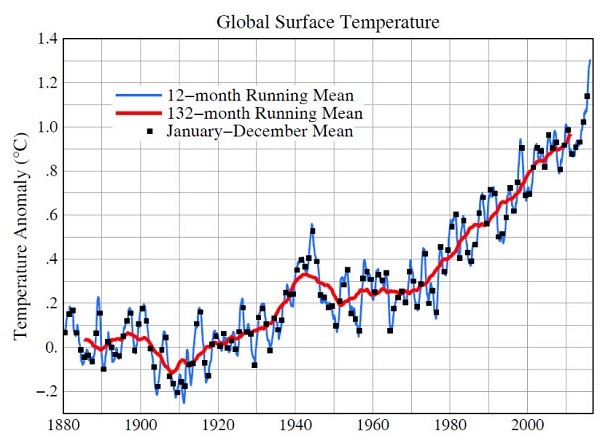
See also his blog post that looks at the implications and what we need to do. Continue reading Hansen’s new temperature graph heads north
Carolyn Snyder’s temperature forecasts are just plain wrong!
That’s the judgement of NASA GISS boss Gavin Schmidt, while praising her two million-year temperature reconstruction.
National Geographic reports that other scientists have backed Schmidt’s judgement, while praising her temperature reconstruction. The paper claims that the long-term committed warming from today’s CO2 levels is 5ºC (range 3-7ºC), and that if emissions double the long-term increase will be ~9ºC (range 7-13ºC). She’s talking long-term, over the next few millenia. Continue reading Carolyn Snyder’s temperature forecasts are just plain wrong!

Climate clippings 185
1. Linking extreme weather events to climate change
In what is called ‘attribution science’ climate scientists are getting better at analysing how much climate change has influenced particular extreme weather events.
In short, it is no longer a question of weather there is an influence, rather how much.
It would be useful to know, for example, whether the kind of storm that hit South Australia is still a once in 50 years event. Continue reading Climate clippings 185
Grattan weighs in on renewables
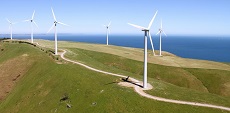
Tony Wood from the Grattan Institute is one of those lucky people who seems to know everything, and repeatedly sets us all to rights. So when he spoke about the Institute’s new report Keeping the lights on: lessons from South Australia’s power shock (Press Release, where you can download the report) my BS detectors were fully operational. On further investigation, however, the report has value, but there is a twist.
In brief, he points out that we have no climate policy that will reduce emissions in our power system beyond the RET to 2020, and that we need climate change and energy policies that combine to produce reliable, affordable and sustainable clean power. Continue reading Grattan weighs in on renewables
Climate clippings 184
1. Arctic sea ice second lowest extent
The Arctic sea ice extent has just reached the second lowest ever, tied with 2007. I got the story from The Guardian, but here’s the story at NSIDC:
- On September 10, Arctic sea ice extent stood at 4.14 million square kilometers (1.60 million square miles). This appears to have been the lowest extent of the year and is tied with 2007 as the second lowest extent on record. This year’s minimum extent is 750,000 square kilometers (290,000 square miles) above the record low set in 2012 and is well below the two standard deviation range for the 37-year satellite record. Satellite data show extensive areas of open water in the Beaufort and Chukchi seas, and in the Laptev and East Siberian seas.
Climate clippings 183
1. Preparing for driverless cars
Leaders from federal and state road and transport agencies, motoring clubs, local government and engineering and industry groups met in Brisbane in August to consider how government and industry can better collaborate to ensure a smooth transition to the world of connected and automated vehicles.
They are expecting partially automated vehicles on public roads before 2020, and highly automated and driverless vehicles within the ensuing decade. Continue reading Climate clippings 183
Climate clippings 182
1. Australia worst among G20 on climate action
Climate Transparency have prepared a report Green to Brown: Assessing the G20 transition to a low-carbon economy ahead of the 2016 G20 meeting in China last weekend. There is a handy summary at The Climate Council.
The countries’ 2030 emissions reduction targets (otherwise known as its INDCs) were about half ‘inadequate’ and half ‘medium’. The categories ‘sufficient’ and ‘role model’ were nowhere to be found. Australia was ranked ‘inadequate’. Continue reading Climate clippings 182
Behold the dawn of the Anthropocene
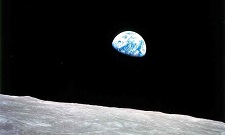
It’s not quite done and dusted, but the scientists on the official working group have overwhelmingly declared that the new ‘epoch’ of the Anthropocene has begun in the geological time scale.
Years ago I recall a caller on talkback radio saying that in 50 million years time the only sign of humans will be a layer of toxic slime in the geological record. Stratigraphy is what we are talking about here, so it’s serious. Humans are leaving an imprint on the earth’s crust that will be there forever, or until the dying sun expands, and burns the planet to a crisp. Continue reading Behold the dawn of the Anthropocene
Climate clippings 181
1. Solar delivers cheapest electricity ‘ever, anywhere, by any technology’
Half the price of coal!
- In last week’s energy auction, Chile accepted a bid from Spanish developer Solarpack Corp. Tecnologica for 120 megawatts of solar at the stunning price of $29.10 per megawatt-hour (2.91 cents per kilowatt-hour or kwh). This beats the 2.99 cents/kwh bid Dubai received recently for 800 megawatts. For context, the average residential price for electricity in the United States is 12 cents per kilowatt-hour.