Category Archives: Life

Saturday salon 24/1

voltaire_230

An open thread where, at your leisure, you can discuss anything you like, well, within reason and the Comments Policy. Include here news and views, plus any notable personal experiences from the week and the weekend.

For climate topics please use the most recent Climate clippings.

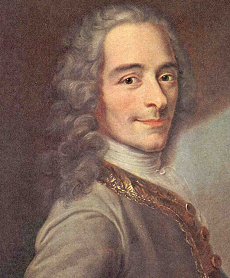
The gentleman in the image is Voltaire, who for a time graced the court of Frederick II of Prussia, known as Frederick the Great. King Fred loved to talk about the universe and everything at the end of a day’s work. He also used the salons of Berlin to get feedback in the development of public policy.

Fred would only talk in French; he regarded German as barbaric. Here we’ll use English.

The thread will be a stoush-free zone. The Comments Policy says:

The aim [of this site] is to provide a venue for people to contribute and to engage in a civil and respectful manner.

Here are a few bits and pieces that came to my attention last week.

1. Stuart MacGill sues Cricket Australia

Stuart MacGill would have been among the greats as a test bowler, had his career not largely coincided with Shane Warne’s. Still 208 wickets in 44 tests at an average of 29.02 is far from shabby. Now he is making waves legally, suing Cricket Australia for $2.5 million:

In a writ filed in the Victorian Supreme Court, 43-year-old MacGill claims the sports body failed to pay him injury payments after his retirement from Test cricket in May 2008.

MacGill’s lawyers say the cricketer suffered multiple injuries during his career, including broken bones and had ongoing problems as a result.

MacGill claims numbness in his hands, swelling and pain in a knee as well as shoulder pain ended his Test career.

2. Now, n-n-n-now!

I’ve always been interested in time. The past doesn’t exist. It’s done with, except as remembered and represented in the present. The future only exists as a possibility, contained in the present. But then which nanosecond of the passing kaleidoscope is ‘now’?

It turns out to be a package, created by the brain, about 2.5 (2-3) seconds long. You might call it, the experienced moment.

According to Laura Spinney in the New Scientist (paywalled) the brain reacts in terms of milliseconds but organises what it sees in meaningful packages. If you take a movie of say a baton change in running and shuffle the images within a 2-3 second envelope your brain corrects them, rearranges them and smooths the movement out according to contextual meaning. You don’t notice the jumble, you ‘see’ a smooth baton change.

The contextual meaning is taken from what is held in short term memory up to 30 seconds.

So we all fudge it a bit at times – see what we want to see.

Our sense of self is an abstraction made up of a series of snapshots of imperfect self-observation.

Then there is this Yugoslav aphorism, which comes via Immanuel Wallerstein:

“The only absolutely certain thing is the future, since the past is constantly changing.”

3. Living to 150: a quick reality check

John Quiggin does some mental gymnastics on life expectancy in response to Joe Hockey’s brain fart concern about living to 150 and the affordability of Medicare.

The short story is that we are living longer, but not as much as the stats would superficially indicate. The average life expectancy at birth has improved in part because we are better at surviving the first five years.

Life expectancy is 80/84 (for men and women respectively) today. In 1910 it was 55/59. The improvement is 25 years.

But in 1910 at age 65 you could expect to live to 76/78. Now that has become 84/87, an improvement of only 8-9 years.

Hockey worries too much! Quiggin says the bigger worry underemployment of prime-age workers.

4. Wallerstein worries about 2015

Speaking of underemployment, sociologist Immanuel Wallerstein reckons that, in a world of pain, the best indicator to measure the well-being of the world-economy and the well-being of the vast majority of the world population is employment rates.

Unemployment, he says, has been abnormally high for some years and has steadily crept upwards over the last 30-40 years.

The reality is, he says, that we are living amidst a wildly oscillating world-system, and this is very painful. The world system is gradually self-destructing.

Certainly inequality is increasing according to a new Oxfam study. By next year the richest 1% will own more stuff than the other 99%.

The charity’s research, published on Monday, shows that the share of the world’s wealth owned by the best-off 1% has increased from 44% in 2009 to 48% in 2014, while the least well-off 80% currently own just 5.5%.

5. Russia’s plans for Arctic supremacy

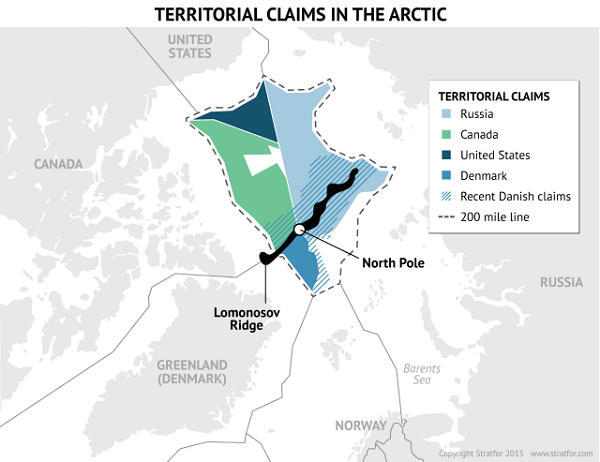
This map from Stratfor sketches in the claims:
arctic_territory_600

Remember that the U.N. Convention on the Law of the Sea regulates ownership of the Arctic, allowing for exclusive economic zones stretching 200 miles from land and even further if undersea resources sit on a continental shelf. The claims beyond this limit are becoming increasingly relevant, as the ice thins and clears in the summer.

Soviet-era bases in the Arctic are being reactivated. A third of the Russian navy is based there.

Going into 2015, it is estimated that the Russian armed forces have around 56 military aircraft and 122 helicopters in the Arctic region. Russian Defense Minister Sergei Shoigu stated that 14 military airfields on Russia’s Arctic seaboard would be operational by the end of the year. The Ministry of Defense also said some of the 50 modernized MiG-31BM Foxhound interceptors expected by 2019 will be charged with defense duties over the Arctic.

Defense spending was the only sector escaping budget cuts. In fact it increased by 20%.

Russia’s interest is in part economic. The region is said to host 30% of the world’s undiscovered oil and 13% of its gas.

On the political side, of the eight countries in the Arctic Council, five are members of NATO, fuelling Russia’s suspicion that opposing forces are massing against it.

Saturday salon 17/1

voltaire_230

An open thread where, at your leisure, you can discuss anything you like, well, within reason and the Comments Policy. Include here news and views, plus any notable personal experiences from the week and the weekend.

For climate topics please use the most recent Climate clippings.

The gentleman in the image is Voltaire, who for a time graced the court of Frederick II of Prussia, known as Frederick the Great. King Fred loved to talk about the universe and everything at the end of a day’s work. He also used the salons of Berlin to get feedback in the development of public policy.

Fred would only talk in French; he regarded German as barbaric. Here we’ll use English.

The thread will be a stoush-free zone. The Comments Policy says:

The aim [of this site] is to provide a venue for people to contribute and to engage in a civil and respectful manner.

Here are a few bits and pieces that came to my attention last week.

1. Australia’s internet speeds have slumped to 44th in the world

The State of the Internet Report from cloud service provider Akamai ranks Australia 44th for average connection speed.

One of the reasons why we’re falling down the list is that we’re moving towards utilising a copper based access network. Whereas previously, under the Labor government, we were moving towards an all fibre-based network, which is what most of our competitors are now doing. And we’re also seeing this drop because, as we keep changing direction with the NBN, we’re putting in large delays before the roll-out is actually occurring.

NetFlix which is meant to be coming online towards the end of March may not be able to be accessed everywhere and will be of poorer quality than in other countries. Many of our competitors are looking at gigabit broadband download speeds. Thanks to the Abbott government we’ll be in the Dark Ages.

2. Morgan poll

The Morgan poll ploughs on over the festive season. On LNP leadership:

Former Liberal Party Leader Malcolm Turnbull is preferred as Liberal Leader by 36% of electors (down 2% since September 30-October 2, 2014) but still well ahead of Deputy Leader Julie Bishop (26%, up 10%) and Prime Minister Tony Abbott (14%, down 5%). Bishop is now ahead of Abbott for the first time as preferred Liberal Leader. No other candidate has more than 4% support.

However, L-NP voters just narrowly prefer Prime Minister Tony Abbott (30%, down 11%) as Liberal Party Leader ahead of Deputy Leader Julie Bishop (28%, up 11%) and Malcolm Turnbull (26%, up 2%). Treasurer Joe Hockey has lost significant support and is now at only 4% (down 4%).

Hockey seems to have evaporated after announcing that poor people don’t drive cars. Meanwhile Bishop is surging.

3. MYEFO disappears

Speaking of Joe Hockey, the Mid-Year Economic and Fiscal Outlook, coinciding with the Sydney siege, has disappeared from view. John Quiggin has a neat summary of why it undercuts the LNP policy narrative:

Key elements of that narrative are:

* Debt and deficits are always bad, are now at catastrophic levels and are the product of Labor profligacy
* More labour market reform is needed to prevent a wages explosion resulting in higher unemployment
* The mining sector is the key to Australian prosperity and was unfairly burdened by the carbon and mineral resource rent taxes

Debt and deficits are growing as a result of weaker revenue, exactly as happened under Labor, and in any case do not constitute a serious problem.

As regards wages, not only does MYEFO note that wage growth (low and stable for many years) has been weaker than ever, this is noted as one of the main factors leading to the decline in revenue growth.

The mining industry was never a large employer and is now shedding jobs rapidly.

The good side of this is that the overvaluation of the $A driven by the mining boom is finally fading, with the result that the net impact of the end of the boom is forecast to be quite small. We have much more to fear from a renewed global financial crisis than from a decline in mineral prices.

4. The old guard still controls the grand slam court

Greg Jericho turns his analytical mind to tennis, well male tennis, suggesting that the old guard are still in control and don’t write Federer off – Jimmy Connors played until he was 39 and Andre Agassi until he was 36. Federer is only 33. He didn’t mention Ken “Muscles” Rosewall, who won his last tournament at the age of 43.

I’ve always thought that most grand slams are won by people in the age bracket 24-28. Jericho suggests 27 as the age beyond which winning becomes tough. Novak Djokovic and Andy Murray are 27, Nadal is 28. They are not true contemporaries of Federer.

I have no idea who is going to win, but I think it’s a bridge too far to expect Federer to win seven best-of-five matches in a row.

But Sarina Williams at age 33, you wouldn’t bet against her! Of course she only plays the best of three, but that’s another story!

I do think Djokovic, Nadal and Federer are a cut above the rest, with Andrew Murray also in the mix. They may stay in charge for another year or two.

Awkward questions about the Sydney siege

While we await an internal police review and coroner’s inquiry into the siege of the Lindt Café by gunman Man Haron Monis last month evidence has been seeping into the press and questions are being raised about police tactics and what happened. Earlier media reports are reflected in the Wikipedia entry:

It was reported that hostage Tori Johnson’s attempt to wrest the gun from Monis may have triggered the police response.[41] However, a survivor told his family that the shot that prompted the police response was a warning shot fired when the hostages kicked down a door in an attempt to escape. Video evidence appears to show that Johnson was shot by Monis after police stormed the café. Police said they would not be commenting until the investigation was over.[42]

Hostage Katrina Dawson was killed by a police bullet, probably a ricochet,[43][40] although initially a police spokesman reported that she died of a heart attack on the way to hospital.[44]

Last Saturday Nick Ralston in the SMH advised that “multiple police sources have told Fairfax Media that Ms Dawson, 38, was struck by police fire that was not a direct shot and possibly a ricochet, when they stormed the cafe…” (emphasis added).

On Monday Rick Feneley reported that there was division over police tactics.

Early in the piece police devised a direct action plan to storm the building and take Monis by surprise. The suggestion is that this was countermanded, with such action to be reactive only.

Despite the risks, the advantage of a direct action plan is that police seize control and decide the time rather than react in split seconds to the gunman’s action.

Fairfax Media has learned there is some anger among police at the front line of the siege about the decision not to proceed with the direct action plan.

Also:

Police rejected the offers of many in the Muslim community to help them negotiate with the gunman. It is understood they would be loath to allow third parties, with no experience in hostage negotiations, to talk to a gunman – because they may be unable to control what they say or how the hostage taker might react.

Among those to offer their services were the Grand Mufti of Australia, Dr Ibrahim Abu Mohammad, but he was not called in – neither to help negotiate nor to advise police.

Feneley further reports that the police had little or no contact with Monis – “in fact we’re not dealing directly with him” and “At this stage we do not have direct contact with the offender.”

Guy Rundle at Crikey takes up these and other issues.

Rundle is concerned that the apparent lack of effort to communicate with Monis may have stemmed from his self-proclaimed status as an IS representative. Police may have taken a “we don’t negotiate with terrorists” attitude, in effect militarising the situation.

Were any professional hostage negotiators even summoned? How many of these do Australian police forces have, and how good is their training? Are there clear protocols for hostage situations in place and do they categorise purportedly political events differently to “civil” situations? Do they differentiate between rational, purposeful violent political acts, and disorganised and confused political or pseudo-political acts and actors?

Why were the offers from Muslim community leaders to speak to Monis rejected, when it is a common practice to use in that way figures whom a hostage-taker might respect? Did police distrust the bona fides of Australian Muslims, believing their loyalties would be to Muslims, including Monis, rather than to the wider community?

Rundle also asks whether there was any political interference in the operation, formal or informal.

Finally:

Political opportunists tried to enrol Johnson as a “hero” who had tried to grab Monis’ gun, and died for it. He may simply have been executed — and that may have occurred because of compromised or incompetent police procedure. That Dawson died laying her body over that of a pregnant fellow hostage appears established. That she died from a police bullet does not alter that. But if it resulted from needlessly compromised procedure, then the police are partly culpable for a needless death. To turn anyone killed into a “hero” is a denial of the possibility of victimhood, of innocence, and thus of unconditional worth of any human being. To do so on the basis of clearly false information is an act of disdain. To use it as a means by which future such crises will be shaped and distorted, is actively evil. The unscrupulous love to wrap themselves in a flag whatever the event. They’re happy to use it as a shroud for any number of us, if that’s what it takes.

As you can see Rundle really bores in, but he is demanding that the facts be established by meticulous examination of the details of the last minutes before wider meaning is assigned to events.

Our earlier post on the siege is here.

Saturday salon 10/1

voltaire_230

An open thread where, at your leisure, you can discuss anything you like, well, within reason and the Comments Policy. Include here news and views, plus any notable personal experiences from the week and the weekend.

For climate topics please use the most recent Climate clippings.

The gentleman in the image is Voltaire, who for a time graced the court of Frederick II of Prussia, known as Frederick the Great. King Fred loved to talk about the universe and everything at the end of a day’s work. He also used the salons of Berlin to get feedback in the development of public policy.

Fred would only talk in French; he regarded German as barbaric. Here we’ll use English.

The thread will be a stoush-free zone. The Comments Policy says:

The aim [of this site] is to provide a venue for people to contribute and to engage in a civil and respectful manner.

Here are a few bits and pieces that came to my attention last week.

1. Somewhat distracted

For one reason or another I’ve been more than usually separated from my computer lately.

Last night I had to go to bed early so that I could drive down to Coolangatta airport to pick up Mark and his partner. They finally made it back from Surat Thani in Thailand after they decided they didn’t want to get on their booked flight with Asia Airlines after the plane hit the drink during a storm. Dealing with travel agents who would sell you a train ticket to somewhere even though you knew the line was cut by floods was not fun.

My sister and brother-in-law are also down from the country. Unfortunately it’s not a social visit, rather accessing medical facilities only available in the big smoke.

Then we’ve had about average rain for this time of the year, so the grass is as high as the elephant’s eye on some of the properties where I work. Well almost.

meanwhile there’s nothing but cricket on the radio, which I don’t half mind, and repeats of QI for the umpteenth time on the TV, which I do!

So apart from terrorist action in France and the Queensland election I haven’t been aware of too much that’s topical.

2. Charlie Hebdo attack

Speaking of which, the BBC has a detailed outline of what happened. They end up with the brothers Said and Cherif Kouachi holed up in a printing firm called Creation Tendance Decouverte on an industrial estate on the outskirts of at Dammartin-en-Goele, 35km (22 miles) from Paris. Apparently a hostage is involved.

Also from The Telegraph:

A second hostage situation was underway in France on Friday as a gunman linked to the killing of a policewoman a day earlier took five hostages at a grocery in eastern Paris.

Shooting was heard and one person reported wounded at the kosher grocery in the eastern suburb of Porte de Vincennes early on Friday afternoon.

Also from The Telegraph:

The man suspected of killing a policewoman in a southern suburb of Paris on Thursday before fleeing the scene was a member of the same jihadist group as the two suspects in the attack at weekly newspaper Charlie Hebdo, a police source told Reuters.

The Economist reflects on the underlying issues.

Brisbane Times has a running commentary.

3. Smoke taint in wine

The Australian Financial Review ran an article on the problem of smoke taint in wine grapes from bushfires and burning off. Smoke impregnates the skin which affects the taste of the wine in fermentation.

Tasters commonly liken the resulting wine to an ashtray, burnt rubber and hospital disinfectant.

It can ruin a whole harvest.

This article from last year talks about research but the Fin Review article says that the Abbott government has no funds for such trivial stuff and a modest grant from the Victorian government runs out in 2015.

4. When too much sport is barely enough

Ange Postecoglou’s record with the Australian soccer team is about 2 wins out of 11, from memory. He’s tried out about 50 different players. It may be a sign that he’s finally got it right, but the 4-1 win over Kuwait is a welcome surprise.

Emotional style: the concept

When I looked up the word “emotion” in my Australian Oxford Dictionary the explanation referred to strong feelings. The word “feeling” has several meanings, but the relevant one gave an explanation in terms of emotions. So we all know what it means, right? In our binary habits of thinking we know that it is pretty much the opposite of reason, that emotions disrupt rational thought, that reasoning takes place in the pre-frontal and cerebral cortex while emotion bursts forth from the limbic system and the hypothalamus.

Wrong, says brain researcher Richard Davidson, who with help from science writer Sharon Begley has written a book The emotional life of your brain.

Saturday salon 3/1

voltaire_230

An open thread where, at your leisure, you can discuss anything you like, well, within reason and the Comments Policy. Include here news and views, plus any notable personal experiences from the week and the weekend.

For climate topics please use the most recent Climate clippings.

The gentleman in the image is Voltaire, who for a time graced the court of Frederick II of Prussia, known as Frederick the Great. King Fred loved to talk about the universe and everything at the end of a day’s work. He also used the salons of Berlin to get feedback in the development of public policy.

Fred would only talk in French; he regarded German as barbaric. Here we’ll use English.

The thread will be a stoush-free zone. The Comments Policy says:

The aim [of this site] is to provide a venue for people to contribute and to engage in a civil and respectful manner.

Here are a few bits and pieces that came to my attention last week.

1. Changing skivvies on the Wiggles

Tim Dunlop has done a great piece on the reshuffle. He reckons it’s

like changing who wears which colour skivvy in the Wiggles: it doesn’t make any difference, and they all end up singing the same old tunes.

Tony Abbott is still the Prime Minister. Joe Hockey is still the Treasurer. They are still committed to their budget and its underlying philosophy of market liberalism and a wholesale attack on the pillars of the welfare state.

Let’s focus on that, not which Wiggle is wearing which skivvy.

Dunlop’s big idea, though is that “both major parties have drained the office of prime minister of authority by converging on an economic program that subsumes economic sovereignty into the vagaries of a globalised economy.” Hence:

The office of prime minister is thus less about leading the country than about managing the electorate’s disappointments within that system, and Mr Abbott inherited an electorate hip to the tricks of a political class who have been selling us moonshine – privatisation, deregulation and the rest of it – for the best part of four decades now.

Given that structural issue, though, Abbott has brought his own particular brand of stupid to the role, says Dunlop.

2. 2015 will be basically grim

Mungo MacCallum looks at the political/policy prospects for 2015, and doesn’t like what he sees.

What seems inevitable is that 2015 is unlikely to be any better than 2014: basically grim. The only real question is just who ends up bearing the cost. It may be Abbott himself and it may be the government as a whole. But one way or another we are all going to cop at least a bit of collateral damage.

It all depends on the next budget. If it is verse 2 of the last budget then Abbott is in trouble. He needs a fix “which is dramatic, equitable and above all plausible.” Problem is he won’t shirtfront the rich and powerful. So the rest of us cop it, while being encouraged to spend like blazes to save the economy from recession. Before Christmas they announced cuts in the area of the homeless. Morrison reckons he needs to make welfare sustainable by cutting the bejesus out of it.

So the result is confusion, and pain.

3. Child shoots mum in Idaho Walmart

This has already been linked to elsewhere by Geoff Genderson and zoot, but in case you missed it, a two year-old child has shot and killed his mum in an Idaho Walmart. The boy unzippered her purse, a Christmas gift from her husband with a special pocket to conceal the weapon.

4. Carmichael mine to go ahead

Those hoping that falling coal prices will put an end to the development of the Galilee Basin mega-mine Carmichael will be disappointed.

Sydney-based engineering firm Downer EDI announced late last month it had received two Letters of Award from Adani to build and operate the Carmichael mine.

“The contracts are expected to have a combined value in excess of $2 billion over seven years,” Downer EDI said in a statement.

Adani expects to start building the rail line within the next few months despite not having a mining lease.

Adani reckon that cash costs would fall below $US50 a tonne, making Carmichael one of the cheapest mines in the world.

The mine has:

attracted a conditional debt funding of $1 billion from the State Bank of India and a promise of equity funding of up to $300 million from the Queensland Government for the rail line to Abbot Point.

Adani has also recently attracted an equity partner, POSCO, a Korean company that will build its railway and port as well as hold a stake in the infrastructure.

5. Civil society – more activity, less effect

Michael Edwards is pessimistic about the effect of civil society organisations. The numbers of organisations is impressive and continues to grow, but he thinks civil society organisations are becoming less effective. Problems include co-option, the corporatisation of civil society groups themselves and a lack of carry-through to the structures of power and influence in society.

Some progress is being made around the edges of poverty and injustice.

But there’s no sign that the underlying structures of social, political and economic violence and oppression are being shaken to their roots.

As a result, fewer people in the world are dying young, and basic indicators of health and education, income and employment are getting slightly better – at least for most people in most countries. However, economic inequality is rising, democracies are being hollowed out, climate change is worsening, and discrimination based on race, gender, ability and sexual orientation remains endemic.

Participation in voting and labour unions is falling. Social media and professional advocacy groups have strong messages, but less purchase where it counts.

Sorry!

Sorry about the gloomy line-up above. Maybe I should just pull a blanket over my head and wait the year out!

I did hear today on our ABC a riveting discussion about whether the meat pie typified the Australian cuisine!

Charting the progress of Sapiens

Vivek Menezes puts the question:

    In 1974, a grey-haired indigenous leader of Papua New Guinea asked a visiting American ornithologist something like, “How come you people dominate the world, while we have so little?”

Jared Diamond has been answering that question ever since. Israeli historian Yuval Noah Harari has moved into the space opened up by Diamond, essentially asking why a seemingly inconsequential ape that divided from chimpanzees some six million years ago ended up with a species of Homo, namely Sapiens, which has come to dominate the planet. Harari’s book Sapiens: A Brief History Of Humankind concentrates on the last 70,000 years, which as Galen Strawson points out, is more than enough for a mere 400 pages. Continue reading Charting the progress of Sapiens

Saturday salon 27/12 late edition

voltaire_230

An open thread where, at your leisure, you can discuss anything you like, well, within reason and the Comments Policy. Include here news and views, plus any notable personal experiences from the week and the weekend.

For climate topics please use the most recent Climate clippings.

The gentleman in the image is Voltaire, who for a time graced the court of Frederick II of Prussia, known as Frederick the Great. King Fred loved to talk about the universe and everything at the end of a day’s work. He also used the salons of Berlin to get feedback in the development of public policy.

Fred would only talk in French; he regarded German as barbaric. Here we’ll use English.

The thread will be a stoush-free zone. The Comments Policy says:

The aim [of this site] is to provide a venue for people to contribute and to engage in a civil and respectful manner.

Here are a few bits and pieces that came to my attention last week.

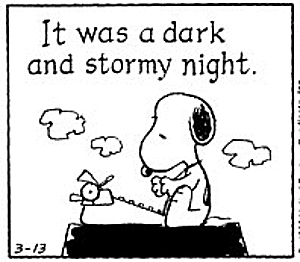
1. It was a dark and stormy night

darkandstormy_5013

Actually we’ve had gentle rain tonight, easing. Probably about 15 to 20 mm. Enough to keep the grass, shrubs and trees interested, but not enough to run water into any of the dams on properties where I work.

Other than Christmas, not too much has happened that impinged on my consciousness, but then we’ve intentionally missed the news on telly a couple of times. With Christmas midweek I lost a sense of what day it was. Tomorrow’s Sunday, when I normally work on a 50-acre property with possibly an acre of kept gardens. If it’s raining in the morning I’ll put the cue in the rack which means for sure the sun will come out to a bright shiny day!

The idea of the image above came from son Mark’s Facebook. He’s holidaying in southern Thailand where I gather the weather is bad!

2. Tsunami anniversary

Mark will be here next week. I must ask him whether Koh Samui was affected by the Boxing Day tsunami.

Of course, Boxing Day was the tenth anniversary of the tsunami that destroyed large tracts of Aceh province in Sumatra, also affecting Thailand and Sri Lanka, killing some 230,000 people. See reports at the the ABC and the BBC.

3. Putin needs new annexations

Looking further abroad the German magazine Der Spiegel ran an interview with the Ukrainian Prime Minister Arseniy Yatsenyuk, who thinks that Putin needs new annexations to feed his popularity at home. Yatsenyuk is plainly pessimistic about any resolution of the situation, which is a worry for the whole world in 2015.

This article by Anatole Kaletsky is reasonably optimistic, pointing out that the formal truce struck in September is holding and that the situation should evolve into

a broadly stable “frozen conflict,” similar to the stalemates that have prevailed for years, even decades, in Georgia, Moldova, Armenia, Azerbaijan, Kosovo, Cyprus and Israel, to name just the frozen conflicts closest to Europe.

Kaletsky thinks Ukraine will never make it into the EU or NATO. He thinks:

an EU association agreement, similar to Turkey’s, could help reduce corruption and encourage economic reform. A dual trading relationship with both Europe and Russia could ultimately offer Ukraine the only possible route to economic viability. This sort of relationship should become possible once this year’s conflict is definitively “frozen.”

4. Heightened terrorist “chatter”

There is always a possibility that Abbott’s warning of heightened terrorist chatter is playing politics. I’d be inclined to give him the benefit of the doubt.

Professor Jeff Lewis, terrorism expert at RMIT, said:

predictions were “very, very difficult” but believed an attack would occur in the following year.

“While we engage in war against ISIS it makes us vulnerable,” he said.
Advertisement

“I wouldn’t want to put a percentage on it, but I think in the next 12 months something else will happen, either in Australia or in Indonesia directed at Australians.”

Not good!

Season’s greetings!

Christmas-Bells-2_175

Climate Plus wishes you a pleasant Christmas/New Year and health and happiness for 2015.

Personally it’s been an up and down year. I’m rather looking forward to 2015!

For the blog it has been up and down too. I’ve been grateful for your support. We’ve struggled a bit since I took a holiday, but have just had the best day traffic-wise in months! I think Hockey’s budget was a great blessing for us. Now if Abbott would only do the decent thing and resign!

I had originally thought to have a blogging hiatus for a few weeks over the festive season. I need to do my tax, which is a major production – much ado about almost nothing, really – and some other personal stuff. On reflection, I think I’ll keep the blog open but at reduced volume. I’d hate to miss out if Abbott really did make an honest man of himself.

So as it stands I hope to get back to full production by about the third week in January. Certainly I plan to carry on from there, health permitting, while foreshadowing that we have booked a European holiday and river cruise down the Danube in October. We’ll certainly be back for the Paris climate conference in December.

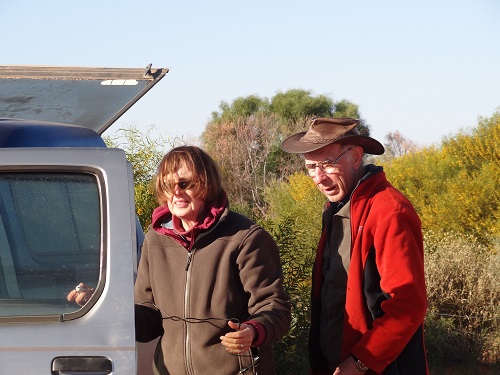
I’ll leave you with this photo, packing up at Purni Bore in the Simpson Desert, which captures some of my mixed feelings about the year:

11_DSC04691_500

Simpson Desert crossing 10: Cooper’s Creek to Emerald

Len remembered a perfect camping place on Cooper’s Creek from a trip he’d taken with a friend a few years ago, so we eschewed the main camping area and headed down a side-track on the left. When we got there it just didn’t look right. We decided to walk through the bush along the river bank looking for the spot. After about 10 minutes we found it. Continue reading Simpson Desert crossing 10: Cooper’s Creek to Emerald

Saturday salon 20/12

voltaire_230

An open thread where, at your leisure, you can discuss anything you like, well, within reason and the Comments Policy. Include here news and views, plus any notable personal experiences from the week and the weekend.

For climate topics please use the most recent Climate clippings.

The gentleman in the image is Voltaire, who for a time graced the court of Frederick II of Prussia, known as Frederick the Great. King Fred loved to talk about the universe and everything at the end of a day’s work. He also used the salons of Berlin to get feedback in the development of public policy.

Fred would only talk in French; he regarded German as barbaric. Here we’ll use English.

The thread will be a stoush-free zone. The Comments Policy says:

The aim [of this site] is to provide a venue for people to contribute and to engage in a civil and respectful manner.

Here are a few bits and pieces that came to my attention last week.

1. Eight children dead

What can one say?!

Eight children from the same family are dead following a stabbing incident which has left the Cairns community in shock.

The 34-year-old mother of seven of the children is in hospital with chest and neck injuries and police say there is no safety threat to the public.

The victims are aged between 18 months and 15 years.

The injured woman is helping police with their inquiries.

Cairns children_2a9e6404-9727-4964-96d6-7b7f788e285e_500

There’s more at the BBC and The Guardian.

I heard initially that the woman called the ambulance, who alerted the police. There’s a story now that a 20 year-old sibling came to the house and called the police.

We are told that there are no suspects, but there is nothing to fear. It doesn’t make sense.

2. 132 children dead in Peshawar

And nine teachers.

The Pakistani city of Peshawar is burying its dead after a Taliban attack at a school killed at least 132 children and nine staff.

Seven Taliban attackers wearing bomb vests cut through a wire fence to gain entry to the school, before launching an attack on an auditorium where children were taking an exam.

Gunmen then went from room to room at the military-run school, shooting pupils and teachers where they found them in a siege that lasted eight hours, survivors say.

Prime Minister Nawaz Sharif declared three days of mourning over the massacre, which has sparked national outrage.

Mr Sharif pledged to avenge a “national tragedy unleashed by savages”.

Ken Fraser says that the attacks, while repellent and unforgivable, were not the work of mindless monsters. He explains the complex web of political interests and and cultural factors at play.

Samina Yasmeen warns against the danger of desensitisation. She says:

unless the resolve is sustained, with active participation from all political parties in supporting the moves by the military to eliminate terrorism, the situation will not change.

This requires an end to the oppositional politics being played out in Pakistan by PTI but also requires the government to take solid measures to train national law enforcement agencies, and strengthen counter-terrorism agencies.

But:

The religious fraternity needs to promote the message of peace, openly counter the reading of religious edicts as justifying offensive and indiscriminate killings of citizens and soldiers in Pakistan and elsewhere.

3. ‘Shirtfront’ is word of the year

The runner up, apparently, was “Team Australia”. Frankly, either we have been particularly unimaginative or the Australian National Dictionary Centre has lost the plot.

4. Early Christmas present for Bill Shorten

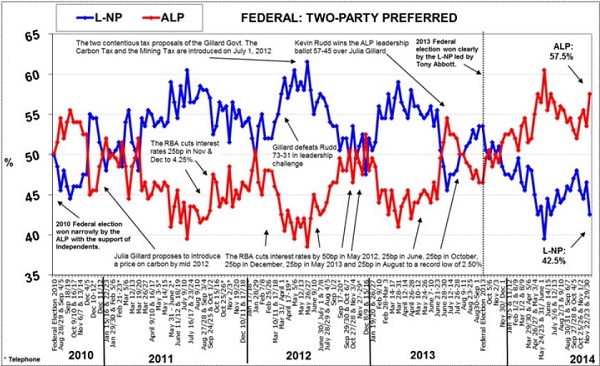
I think Newspoll didn’t bother, but Roy Morgan did and found that ALP support had surged to 57.5% (up 4%), well ahead of the L-NP 42.5% (down 4%) on a two-party preferred basis. This is what it looks like:

Morgan D 2014_cropped_600

5. Gillard cleared of criminality

Gillard was cleared of criminality by the Royal Commission into Trade Union Governance and Corruption although they found some issues with her professional judgement and her evidence.

You might recall that this was a big issue late in 2012, when the Roy Morgan poll above shows that Labor under Gillard was competitive in the polls. Julie Bishop led a merciless campaign in Question Time on Gillard’s credibility with Abbott eventually making a direct accusation of criminality.

Gillard says she is owed an apology. She is right.

6. Crook’s a crook

OK, there is the presumption of innocence, but things look a bit crook for Andrew Crook:

Clive Palmer’s media adviser and confidant Andrew Crook has been granted bail after being charged over the alleged kidnapping of a National Australia Bank executive on an Indonesian island.

Palmer reckons it’s a plot to embarrass him politically.

We do these things in Queensland to keep the nation amused.

Sydney siege

By my count we are now going to have four inquiries into the Lindt Cafe siege – a coroner’s inquiry, internal incident reviews by the NSW and Commonwealth police and a federal-state review undertaken by the Prime Minister’s department and the NSW Premier’s Department.

The latter will include an an investigation of how gunman Man Haron Monis slipped through state and federal security and legal nets, at his arrival in Australia, the decision to grant him of asylum, permanent residency and citizenship, as well as the social security support he received. I can’t see what social security support has to do with anything. I’m more interested in how he came by a pump-action shotgun.

Greg Barns believes bail laws are already an infringement on our liberty. The possession of personal freedom and the presumption of innocence are important principles in our society. New laws in NSW appear to contain a presumption against bail.

It is inappropriate for us to be second guessing what the magistrates had before them and we tend to be wise after the event about the risk that Monis constituted.

New Matilda details what we know officially. Listening to media reports there is a fair bit we know beyond that, but I’m happy to wait for the official reports.

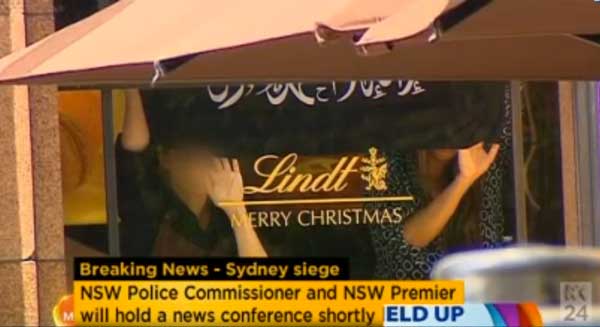
I’ve yet to get a clear idea of what the gunman’s motivation was. What demands was he making to police, or was he just creating an incident and waiting to be shot one way or another? It’s possibly significant that the cafe was opposite Channel 7. There is a suggestion this morning that he wanted to talk to the Prime Minister. What were we supposed to make of the banner held up to the window?

Lindt1L_0

Rachel Kohn discusses the inadequacy of the lone wolf theory. Monis was bad as well as mad and had a record that should have given concern. It does seem as though Monis may have written off as a harmless fruitcake when he was dropped from the watch list. It has been pointed out that resources to monitor individuals are always limited, so judgements need to be made.

Randa Abdel-Fattah asks whether we take crimes against women seriously enough. I gather here she is referring to the fact that he got bail for being an accessory to his wife’s murder and, separately, 40 sexual assault cases. Others have pointed out the weakness of the prosecution case for accessory to murder, also that both charges can vary from the relatively trivial to the extremely grave, depending on the specifics. We are in no position to know.

Also from Abdel-Fattah:

There is another issue though, too. And that is whether Australian Muslims will be entitled to grieve the deaths of the two hostages and the trauma suffered by the survivors in a way that does not make their empathy and grief contingent on condemning, apologizing and distancing themselves from the gunman.

David Connery reviews security aspects of the case:

While it’s still early to be analysing a situation that’s just concluded with two of our compatriots dead, the Martin Place siege this week shows that Australia’s high-level arrangements for responding to a terrorist attack are largely effective.

Still, we can expect to see a few near-term changes to our counter-terrorism arrangements in areas like public alerts and compensation for victims.

If the attack had occurred overseas, and was declared a terrorist attack, the Commonwealth government would offer compensation payments to victims and their relatives.

There is a need to resolve the long-running negotiations between the Commonwealth and the states over the allocation of dedicated broadband spectrum for emergency services.

The incident highlights how vulnerable we are to a lone actor.

Elsewhere Rachel Jacobs tells how #illridewithyou began.

Yes, I know that #illridewithyou is not enough in itself but I think it indicates how far we’ve come from the general islamophobia that was rife after the Twin Towers event in 2001.