Category Archives: Sundries

Posts on sundry matters of life the universe and everything: Culture, Environment, Life, Politics & Government, Science, Social Science and Society, Technology etc.

Saturday salon 27/12 late edition

voltaire_230

An open thread where, at your leisure, you can discuss anything you like, well, within reason and the Comments Policy. Include here news and views, plus any notable personal experiences from the week and the weekend.

For climate topics please use the most recent Climate clippings.

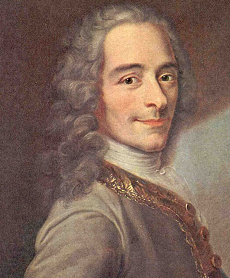
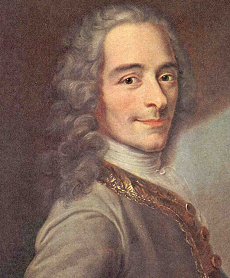
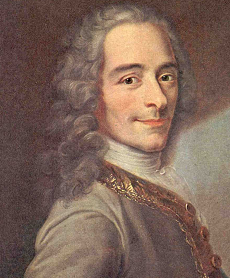
The gentleman in the image is Voltaire, who for a time graced the court of Frederick II of Prussia, known as Frederick the Great. King Fred loved to talk about the universe and everything at the end of a day’s work. He also used the salons of Berlin to get feedback in the development of public policy.

Fred would only talk in French; he regarded German as barbaric. Here we’ll use English.

The thread will be a stoush-free zone. The Comments Policy says:

The aim [of this site] is to provide a venue for people to contribute and to engage in a civil and respectful manner.

Here are a few bits and pieces that came to my attention last week.

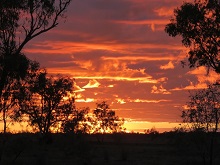
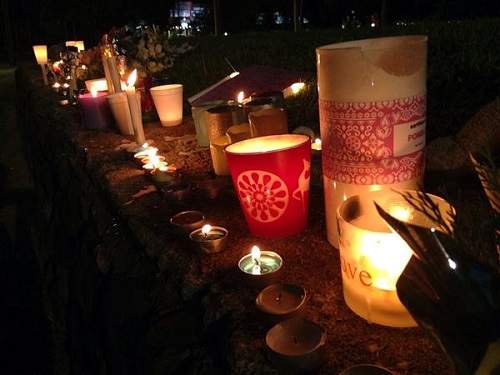
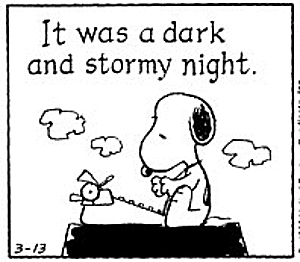
1. It was a dark and stormy night
darkandstormy_5013

Actually we’ve had gentle rain tonight, easing. Probably about 15 to 20 mm. Enough to keep the grass, shrubs and trees interested, but not enough to run water into any of the dams on properties where I work.

Other than Christmas, not too much has happened that impinged on my consciousness, but then we’ve intentionally missed the news on telly a couple of times. With Christmas midweek I lost a sense of what day it was. Tomorrow’s Sunday, when I normally work on a 50-acre property with possibly an acre of kept gardens. If it’s raining in the morning I’ll put the cue in the rack which means for sure the sun will come out to a bright shiny day!

The idea of the image above came from son Mark’s Facebook. He’s holidaying in southern Thailand where I gather the weather is bad!

2. Tsunami anniversary

Mark will be here next week. I must ask him whether Koh Samui was affected by the Boxing Day tsunami.

Of course, Boxing Day was the tenth anniversary of the tsunami that destroyed large tracts of Aceh province in Sumatra, also affecting Thailand and Sri Lanka, killing some 230,000 people. See reports at the the ABC and the BBC.

3. Putin needs new annexations

Looking further abroad the German magazine Der Spiegel ran an interview with the Ukrainian Prime Minister Arseniy Yatsenyuk, who thinks that Putin needs new annexations to feed his popularity at home. Yatsenyuk is plainly pessimistic about any resolution of the situation, which is a worry for the whole world in 2015.

This article by Anatole Kaletsky is reasonably optimistic, pointing out that the formal truce struck in September is holding and that the situation should evolve into

a broadly stable “frozen conflict,” similar to the stalemates that have prevailed for years, even decades, in Georgia, Moldova, Armenia, Azerbaijan, Kosovo, Cyprus and Israel, to name just the frozen conflicts closest to Europe.

Kaletsky thinks Ukraine will never make it into the EU or NATO. He thinks:

an EU association agreement, similar to Turkey’s, could help reduce corruption and encourage economic reform. A dual trading relationship with both Europe and Russia could ultimately offer Ukraine the only possible route to economic viability. This sort of relationship should become possible once this year’s conflict is definitively “frozen.”

4. Heightened terrorist “chatter”

There is always a possibility that Abbott’s warning of heightened terrorist chatter is playing politics. I’d be inclined to give him the benefit of the doubt.

Professor Jeff Lewis, terrorism expert at RMIT, said:

predictions were “very, very difficult” but believed an attack would occur in the following year.

“While we engage in war against ISIS it makes us vulnerable,” he said.
Advertisement

“I wouldn’t want to put a percentage on it, but I think in the next 12 months something else will happen, either in Australia or in Indonesia directed at Australians.”

Not good!

Season’s greetings!

Christmas-Bells-2_175

Climate Plus wishes you a pleasant Christmas/New Year and health and happiness for 2015.

Personally it’s been an up and down year. I’m rather looking forward to 2015!

For the blog it has been up and down too. I’ve been grateful for your support. We’ve struggled a bit since I took a holiday, but have just had the best day traffic-wise in months! I think Hockey’s budget was a great blessing for us. Now if Abbott would only do the decent thing and resign!

I had originally thought to have a blogging hiatus for a few weeks over the festive season. I need to do my tax, which is a major production – much ado about almost nothing, really – and some other personal stuff. On reflection, I think I’ll keep the blog open but at reduced volume. I’d hate to miss out if Abbott really did make an honest man of himself.

So as it stands I hope to get back to full production by about the third week in January. Certainly I plan to carry on from there, health permitting, while foreshadowing that we have booked a European holiday and river cruise down the Danube in October. We’ll certainly be back for the Paris climate conference in December.

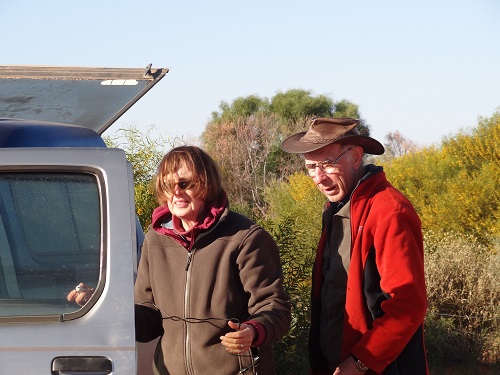
I’ll leave you with this photo, packing up at Purni Bore in the Simpson Desert, which captures some of my mixed feelings about the year:

11_DSC04691_500

Changing the barnacles

Abbott_Bishop_4394486-3x2-225

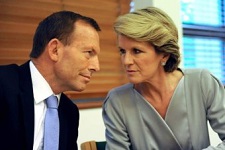
Would you believe Abbott has made 16 changes in all. Three barnacles have been dropped to the bottom of the ocean – Arthur Sinodinos, the already benched Assistant Treasurer, Defence Minister David Johnston and Brett Mason, Parliamentary Secretary to the Foreign Affairs Minister.

Some have had their role expanded. Ian Macfarlane is now Minister for Industry and Science; Christopher Pyne is now Minister for Education and Training.

The big movers are Kevin Andrews from Social Services to Defence, Scott Morrison from Immigration and Border Protection to Social Services, Peter Dutton from Health to Immigration and Sussan Ley from Assistant Education Minister to the cabinet post of Minister for Health and Sport.

Also Josh Frydenberg scored the Assistant Treasury ministry, whereas Hockey’s pick, Steve Ciobo, got a sideways flick as Parliamentary Secretary from Treasury to Foreign Affairs and Trade and Investment. Ciobo has been replaced at Treasury by newbie Kelly O’Dwyer.

Mungo MacCallum sees it as rearranging the deckchairs on the Titanic as the ship founders on. Scott Morrison, he says, now has “an opportunity to prove that he can be as brutal with welfare recipients as he has been with refugees.”

Paula Matthewson thinks the reshuffle is built on paranoia rather than progress.

Tony Abbott’s ministry reshuffle may appear to be a reset in preparation for 2015, but in reality it is more about the PM’s paranoia and tenuous leadership than it is about his Government’s rejuvenation.

For example, the Victorian young guns have been rewarded to quell their noisy agitation over Peta Credlin.

Julie Bishop has lost a friend and fellow West Australian in David Johnston.

Scott Morrison, she thinks, has been given a poison chalice, “a way for Abbott to push through one of his toughest reform agendas while also reducing the appeal of one of his competitors.”

The future is not bright for Kevin Andrews and Peter Dutton:

Kevin Andrews’ move to Defence will likely see him begging to be let go by the next election, for the Department is known for chewing up and spitting out their civilian “masters”. The future doesn’t look particularly rosy for former Health Minister Peter Dutton either. Dutton may be a retired policeman but it’s difficult to see him bring the same steely resolve that served Morrison so well in the Immigration and Border Protection portfolio.

Overall:

Prime ministers usually reshuffle their ministry to provide a fresh aspect on their government while hopefully also evoking a sense of stability through the regeneration. But with one or two exceptions, like the promotion of Ley, Abbott’s reshuffle is characterised by concessions to antagonists, throwing competitors in the deep end, and leaving the deadwood to atrophy.

Norman Abjorensen takes a somewhat similar view. The big threat, he thinks, is from Julie Bishop. A familiar scenario is taking shape in Canberra:

It runs like this: persistently poor polling for both the prime minister and the government creates anxiety over the next election, especially among those in vulnerable seats; a path is beaten to the door of the hitherto loyal deputy leader, who just happens to be a woman; the message is blunt: you have to challenge or we are gone.

Hockey, he says, is no longer a threat:

Then there is Treasurer Joe Hockey, who was once laughably seen as a future leader, and is shown in the polls as the most unpopular minister and as the least regarded treasurer in the past 40 years. He is a poor communicator – always ready to deflect a hard question with a smirk or a sneer rather than an answer – who has palpably failed in framing a budget that he is unable to negotiate through parliament. This violates the cardinal rule of politics: that it is all about the art of the possible.

Abbott, he says, is moving from a position of weakness, so the changes are essentially minor. He couldn’t undertake a big call like sacking Hockey, which at least one powerful member of the business lobby has privately advocated.

I’m staggered that Social Services is considered a key economics ministry. We know that is where the most money is spent, and certainly the Minister gets to join the so-called Razor Gang.

Andrews to Defence is, I think, a clever move. Abbott no doubt wants to run defence, with a white paper and submarine contracts on the go. Also Matthewson is probably right in that Andrews will beg to be released after a year, allowing another reshuffle.

From these reactions it is clear that leadership speculation, much loved by the media, has begun in earnest and will continue unless Abbott can turn the polls in his favour. Meanwhile his attention has been drawn to his own office, with leaks, shuffling staff and concern about communication strategy.

Update: Tim Dunlop has done a great piece on the reshuffle. He reckons it’s

like changing who wears which colour skivvy in the Wiggles: it doesn’t make any difference, and they all end up singing the same old tunes.

Tony Abbott is still the Prime Minister. Joe Hockey is still the Treasurer. They are still committed to their budget and its underlying philosophy of market liberalism and a wholesale attack on the pillars of the welfare state.

Let’s focus on that, not which Wiggle is wearing which skivvy.

Simpson Desert crossing 10: Cooper’s Creek to Emerald

Len remembered a perfect camping place on Cooper’s Creek from a trip he’d taken with a friend a few years ago, so we eschewed the main camping area and headed down a side-track on the left. When we got there it just didn’t look right. We decided to walk through the bush along the river bank looking for the spot. After about 10 minutes we found it. Continue reading Simpson Desert crossing 10: Cooper’s Creek to Emerald

Saturday salon 20/12

voltaire_230

An open thread where, at your leisure, you can discuss anything you like, well, within reason and the Comments Policy. Include here news and views, plus any notable personal experiences from the week and the weekend.

For climate topics please use the most recent Climate clippings.

The gentleman in the image is Voltaire, who for a time graced the court of Frederick II of Prussia, known as Frederick the Great. King Fred loved to talk about the universe and everything at the end of a day’s work. He also used the salons of Berlin to get feedback in the development of public policy.

Fred would only talk in French; he regarded German as barbaric. Here we’ll use English.

The thread will be a stoush-free zone. The Comments Policy says:

The aim [of this site] is to provide a venue for people to contribute and to engage in a civil and respectful manner.

Here are a few bits and pieces that came to my attention last week.

1. Eight children dead

What can one say?!

Eight children from the same family are dead following a stabbing incident which has left the Cairns community in shock.

The 34-year-old mother of seven of the children is in hospital with chest and neck injuries and police say there is no safety threat to the public.

The victims are aged between 18 months and 15 years.

The injured woman is helping police with their inquiries.

Cairns children_2a9e6404-9727-4964-96d6-7b7f788e285e_500

There’s more at the BBC and The Guardian.

I heard initially that the woman called the ambulance, who alerted the police. There’s a story now that a 20 year-old sibling came to the house and called the police.

We are told that there are no suspects, but there is nothing to fear. It doesn’t make sense.

2. 132 children dead in Peshawar

And nine teachers.

The Pakistani city of Peshawar is burying its dead after a Taliban attack at a school killed at least 132 children and nine staff.

Seven Taliban attackers wearing bomb vests cut through a wire fence to gain entry to the school, before launching an attack on an auditorium where children were taking an exam.

Gunmen then went from room to room at the military-run school, shooting pupils and teachers where they found them in a siege that lasted eight hours, survivors say.

Prime Minister Nawaz Sharif declared three days of mourning over the massacre, which has sparked national outrage.

Mr Sharif pledged to avenge a “national tragedy unleashed by savages”.

Ken Fraser says that the attacks, while repellent and unforgivable, were not the work of mindless monsters. He explains the complex web of political interests and and cultural factors at play.

Samina Yasmeen warns against the danger of desensitisation. She says:

unless the resolve is sustained, with active participation from all political parties in supporting the moves by the military to eliminate terrorism, the situation will not change.

This requires an end to the oppositional politics being played out in Pakistan by PTI but also requires the government to take solid measures to train national law enforcement agencies, and strengthen counter-terrorism agencies.

But:

The religious fraternity needs to promote the message of peace, openly counter the reading of religious edicts as justifying offensive and indiscriminate killings of citizens and soldiers in Pakistan and elsewhere.

3. ‘Shirtfront’ is word of the year

The runner up, apparently, was “Team Australia”. Frankly, either we have been particularly unimaginative or the Australian National Dictionary Centre has lost the plot.

4. Early Christmas present for Bill Shorten

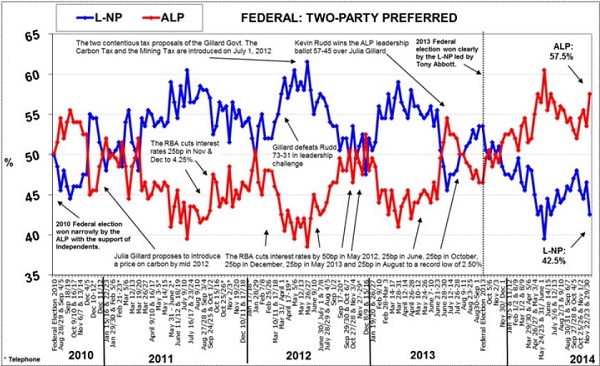
I think Newspoll didn’t bother, but Roy Morgan did and found that ALP support had surged to 57.5% (up 4%), well ahead of the L-NP 42.5% (down 4%) on a two-party preferred basis. This is what it looks like:

Morgan D 2014_cropped_600

5. Gillard cleared of criminality

Gillard was cleared of criminality by the Royal Commission into Trade Union Governance and Corruption although they found some issues with her professional judgement and her evidence.

You might recall that this was a big issue late in 2012, when the Roy Morgan poll above shows that Labor under Gillard was competitive in the polls. Julie Bishop led a merciless campaign in Question Time on Gillard’s credibility with Abbott eventually making a direct accusation of criminality.

Gillard says she is owed an apology. She is right.

6. Crook’s a crook

OK, there is the presumption of innocence, but things look a bit crook for Andrew Crook:

Clive Palmer’s media adviser and confidant Andrew Crook has been granted bail after being charged over the alleged kidnapping of a National Australia Bank executive on an Indonesian island.

Palmer reckons it’s a plot to embarrass him politically.

We do these things in Queensland to keep the nation amused.

Sydney siege

By my count we are now going to have four inquiries into the Lindt Cafe siege – a coroner’s inquiry, internal incident reviews by the NSW and Commonwealth police and a federal-state review undertaken by the Prime Minister’s department and the NSW Premier’s Department.

The latter will include an an investigation of how gunman Man Haron Monis slipped through state and federal security and legal nets, at his arrival in Australia, the decision to grant him of asylum, permanent residency and citizenship, as well as the social security support he received. I can’t see what social security support has to do with anything. I’m more interested in how he came by a pump-action shotgun.

Greg Barns believes bail laws are already an infringement on our liberty. The possession of personal freedom and the presumption of innocence are important principles in our society. New laws in NSW appear to contain a presumption against bail.

It is inappropriate for us to be second guessing what the magistrates had before them and we tend to be wise after the event about the risk that Monis constituted.

New Matilda details what we know officially. Listening to media reports there is a fair bit we know beyond that, but I’m happy to wait for the official reports.

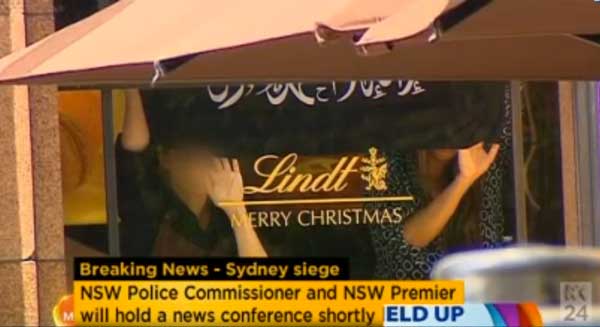
I’ve yet to get a clear idea of what the gunman’s motivation was. What demands was he making to police, or was he just creating an incident and waiting to be shot one way or another? It’s possibly significant that the cafe was opposite Channel 7. There is a suggestion this morning that he wanted to talk to the Prime Minister. What were we supposed to make of the banner held up to the window?

Lindt1L_0

Rachel Kohn discusses the inadequacy of the lone wolf theory. Monis was bad as well as mad and had a record that should have given concern. It does seem as though Monis may have written off as a harmless fruitcake when he was dropped from the watch list. It has been pointed out that resources to monitor individuals are always limited, so judgements need to be made.

Randa Abdel-Fattah asks whether we take crimes against women seriously enough. I gather here she is referring to the fact that he got bail for being an accessory to his wife’s murder and, separately, 40 sexual assault cases. Others have pointed out the weakness of the prosecution case for accessory to murder, also that both charges can vary from the relatively trivial to the extremely grave, depending on the specifics. We are in no position to know.

Also from Abdel-Fattah:

There is another issue though, too. And that is whether Australian Muslims will be entitled to grieve the deaths of the two hostages and the trauma suffered by the survivors in a way that does not make their empathy and grief contingent on condemning, apologizing and distancing themselves from the gunman.

David Connery reviews security aspects of the case:

While it’s still early to be analysing a situation that’s just concluded with two of our compatriots dead, the Martin Place siege this week shows that Australia’s high-level arrangements for responding to a terrorist attack are largely effective.

Still, we can expect to see a few near-term changes to our counter-terrorism arrangements in areas like public alerts and compensation for victims.

If the attack had occurred overseas, and was declared a terrorist attack, the Commonwealth government would offer compensation payments to victims and their relatives.

There is a need to resolve the long-running negotiations between the Commonwealth and the states over the allocation of dedicated broadband spectrum for emergency services.

The incident highlights how vulnerable we are to a lone actor.

Elsewhere Rachel Jacobs tells how #illridewithyou began.

Yes, I know that #illridewithyou is not enough in itself but I think it indicates how far we’ve come from the general islamophobia that was rife after the Twin Towers event in 2001.

Hockey: dark strategy or a muddle?

Some of each, I think.

In one sense the MYEFO (Mid-year Economic and Fiscal outlook) statement was not so bad. The bottom line is $10 billion worse and the budget will reach a surplus a year later, in 2019 instead of 2018. Ross Gittens gives Hockey a tick for not panicking.

Yet the MYEFO assumes that the Senate will co-operate in the new year and pass all those lovely cuts to higher education and welfare benefits along with other measures like the GP visits co-payment scheme.

Laura Tingle finds little to show that the Government has a clue on what to do about the collapse in revenue from the terms of trade and long-term fiscal consolidation. It’s blindingly obvious that we need to pay more tax, but the Government has taken the soft option of soaking the unseen poor by taking $3.7 billion from foreign aid.

Ben Eltham in an excellent budget review finds the Coalition’s economic policy “hopelessly confused”.

Last week Ian McAuley took a look at the Government’s economic strategies, which he finds based on three planks:

The first plank, revealed in the 2014 Budget, is an attempt to tilt income distribution towards the already well-off. The idea is that, given enough breaks, the rich will save and invest, providing employment for everyone else.

It’s a policy based on heroic assumptions about how the rich behave, most notably an assumption that rich people are rich because they are clever and industrious. Suffice to say that this was the disastrous approach known as “supply side economics” or “Reaganonomics” in America in the 1980s. If it stimulates any employment it is likely to be among workers in BMW car plants in Bavaria and real-estate agents in Sydney’s north shore.

The Australia Institute’s report The budget’s hidden gender agenda points out that this also favours men over women.

The second plank is about sustaining material living standards as long as possible on the back of the resource boom.

The benefits of the resources boom have been distributed in tax cuts and middle class welfare. Wayne Swan in his book The Good Fight points out that Peter Costello received a total of $334 billion in revenue upgrades and managed to spend $314 billion of it. A once in a century chance to upgrade our infrastructure was missed.

The Coalition’s third plank is pursuit of “small government”, even though Australia has one of the smallest public sectors of all developed countries, and we have pushed privatization to the extent that we are paying far more for poorer services than we would be had we retained public ownership of assets such as roads, airports and energy and water utilities.

Yet Eltham tells us:

With spending at 25.9 per cent of GDP, the Abbott government is indeed spending more than Julia Gillard’s government – more, in fact, than every year of the Rudd-Gillard era, except the stimulus year of 2009-10.

I’ve always thought there was an ideological dimension to Howard-Costello’s distribution of goodies. We are expected to take more responsibility for ourselves. But why does Labor follow suit? Purely for political reasons, I think. To avoid the ‘big spender’ tag and demonstrate economic management.

Labor might do better to take a different and more honest approach. Australia could become a better, fairer and more decent place to live if we taxed and spent to, say, 30% of GDP. We’d still be near the bottom of the league tables.

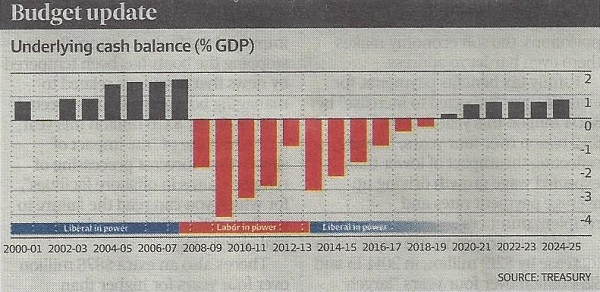
I’ll leave you with this graph of the underlying cash balance as a percentage of GDP from MYEFO via the AFR:

Cash balance 2 001_cropped_600

You’ll notice that Swan had the balance down almost to minus one percent before Hockey came and created a mess. I agree with Chris Bowen, Hockey is simply not up to the job.

Saturday salon 13/12

voltaire_230

An open thread where, at your leisure, you can discuss anything you like, well, within reason and the Comments Policy. Include here news and views, plus any notable personal experiences from the week and the weekend.

For climate topics please use the most recent Climate clippings.

The gentleman in the image is Voltaire, who for a time graced the court of Frederick II of Prussia, known as Frederick the Great. King Fred loved to talk about the universe and everything at the end of a day’s work. He also used the salons of Berlin to get feedback in the development of public policy.

Fred would only talk in French; he regarded German as barbaric. Here we’ll use English.

The thread will be a stoush-free zone. The Comments Policy says:

The aim [of this site] is to provide a venue for people to contribute and to engage in a civil and respectful manner.

Here are a few bits and pieces that came to my attention last week.

1. CSIRO cuts


From ABC Rural
:

The CSIRO is set to lose one staff member in five over the next two years.

The effect of the Federal Government’s cut of $114 million is now becoming clearer, with at least four regional research sites under threat.

National organiser for the CSIRO Staff Association, part of the CPSU, Paul Girdler, says 878 staff are to be cut over two years, until June 2015.

“It’s over 100 more than originally forecast.

“Over two years, the CSIRO is losing 21.5 per cent of its workforce, or one in five jobs.

“This new analysis demonstrates the cuts are even worse than when they were announced.”

Given the cuts last year, the total tally is 1,400 jobs at the Science Organisation.

CSIRO Chairman Simon McKeon says the organisation has “cut into the bone”.

We should be redoubling if not doubling our science effort.

Julian Cribb, science writer and author of The Coming Famine, says every government since Labor under Bob Hawke has slashed the CSIRO.

I simply can’t understand Industry Minister Ian McFarlane saying year-on-year funding is increasing, unless you cut overall first and then increase the funding each year. In which case he is intentionally misleading.

There’s more on the 7.30 Report.

Stephen Luntz at Crikey explains that many scientists will have unfinished projects, which doesn’t help them establish a reputation to find a job elsewhere.

Those made redundant include Nobel prize contender San Thang.

2. Farewell Stella Young

Stella Young, comedian, journalist and disability advocate, has died aged 32. I gather her death was unexpected. She will be missed.

3. Gillard’s My Story

I finished Gillard’s My story a while ago and have been meaning to report on it. Generally speaking I agree with Natalie Mast’s review but have a query about her final summation:

My Story is a substantial piece of work, yet there are times where policy wonks will be wishing for greater detail on negotiations or even why certain policy decisions were taken. Still in a work this size, limits must be made. For the most part Gillard’s focus is on key issues and those close to her heart.

The lucid presentation of Gillard’s case ultimately provides a cogent defence of the reasons for the challenge to Rudd, the difficulties her government faced, both internal and external, and an insight into Gillard herself.

I thought her detail on individual policies was more than one would expect. As PM she was impressively across a wide range of briefs and her recall is astonishing.

Lucid, yes, also very reflective and self-critical.

The first 130 pages tell the story of how she came to power and governed. In the following 331 pages she takes policy areas one by one, explaining how and why decisions were taken and in some cases an assessment of what still needs to be done, but laced with back stories and relevant anecdotes. The book forms a valuable resource.

Natalie Mast is right in saying she supported Rudd to the hilt and praises him where she thinks he did good work. I too found it surprising that she virtually took over organising his office for him. Also in areas such as health she ended up running the policy internally because Rudd was incapable of doing so.

Surprises include her attitude to gay marriage, which has always been painted as conservative. She says her brand of feminism historically saw marriage in general as an oppressive institution, so it was marriage that she opposed, not the gay bit. She concedes that views have now moved on.

I’ve come the the conclusion that Rudd probably did cause the leaks during the 2010 election campaign. Probably. Gillard reckons it wasn’t to bring her down, Rudd wanted to be foreign minister in her government and she was intending to give him something else. She was told the leaks would continue until she changed her mind. When she conceded his wish the leaks stopped.

One thing is certain, she will never respect Rudd as a person, a view he probably reciprocates.

Finally, I’d love to say more about the misogyny speech. Spoken unscripted with such eloquence and passion, yet she wasn’t personally angry. There is a lesson in there, but it will have to wait for another time.

New low in human rights: the asylum seeker legislation

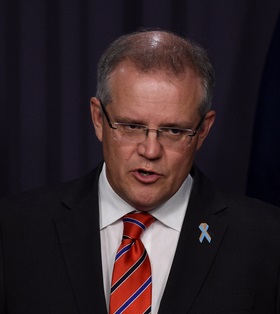
Morrison_Sowhothebloodyhellareyou _500

Ben Doherty at The Guardian has characterised the new asylum seeker legislation as “a seismic piece of legislation – one that destroys more than it creates.”

The passage of the Migration and Maritime Powers Legislation Amendment (Resolving the Asylum Legacy Caseload) Bill 2014 which “has given the immigration minister, while he holds that job, unprecedented, unchallengeable, and secret powers to control the lives of asylum seekers.”

In effect under the bill the minister can do anything he chooses, he can ignore the UN convention and avoid legal challenge – the courts have been sidelined.

With the passage of the new law, the minister can push any asylum seeker boat back into the sea and leave it there.

The minister can block an asylum seeker from ever making a protection claim on the ill-defined grounds of “character” or “national interest”. His reasons can be secret.

He can detain people without charge, or deport them to any country he chooses even if it is known they’ll be tortured there.

Morrison’s decisions cannot be challenged.

Boat arrivals will have no access to the Refugee Review Tribunal.

Instead, they will be classed as “fast track applicants” whose only appeal is to a new agency, the Immigration Assessment Authority, but they will not get a hearing, only a paper review.

“Excluded fast track applicants” will only have access to an internal review by Morrison’s own department.

Cross bench senators have been suckered by the promise that children will be released from detention, something the minister already had the power to do.

If we had a human rights charter the legislation would be struck out in a heart beat in a high court challenge. Since we don’t there is a fair chance the inevitable challenge will fail.

Critics – and they are a formidable group, including the United Nations High Commissioner for Refugees, the UN’s Committee Against Torture and parliament’s own human rights committee – say the bill strips the checks and balances that have always existed in Australia’s immigration system, and removes basic protections for those who arrive seeking asylum.

Australia now regards itself as free from the bonds of the Refugees Convention – a treaty Australia helped write, and willingly signed up to, more than half a century ago. All references to it have been removed from Australian law.

Max Chalmers at New Matilda reports on 25 children born in Australia who all had parents interned on Nauru but were flown back to Australia to give birth because of the poor medial conditions on the tiny Pacific Island. These children are the subject of a legel challenge being run by Maurice Blackburn’s social justice department. The legislation seems designed directly to alter the status of the children retrospectively and so prevent a favourable judgement.

It seems that children born in detention in Australia can now be deemed to have arrived by boat.

The UNHCR takes the view that Australia, as a signatory of the 1951 Refugee Convention cannot relieve itself of the obligations of the convention. The new law, however, creates an “new, independent and self-contained statutory framework” where Australia makes up its own rules. Australia now regards itself as free from the bonds of the Refugee Convention.

Especially egregious is the treatment of the principle of non-refoulement obligations under the legislation. Under this principle it is forbidden to return a person to a country where they may still be persecuted or tortured. Don McMaster at The Conversation points out that the Australian law states:

… it is irrelevant whether Australia has non-refoulement obligations in respect of an unlawful non-citizen.

The law seems designed to ensure that whole boatloads can be returned to Sri Lanka without legal challenge.

Malcolm Fraser has savaged Scott Morrison’s new asylum seeker laws and the senators who passed them.

Australia is now known around the world as the most inhumane, the most uncaring and the most selfish of all the wealthy countries, former prime minister Malcolm Fraser has declared.

Mr Fraser says migration legislation passed last week has given Immigration Minister Scott Morrison “dictatorial, tyrannical powers” over the lives of asylum seekers and “destroyed the rule of law as we know it”.

“The crossbench senators, Xenophon, Wang, Lazarus, Day, Leyonhjelm and Muir are wrong because their grievous political error has betrayed Australian democracy,” Mr Fraser said.

“They have co-operated by tearing up international conventions, practices of international law, all necessary if we are ever to establish a better and a safer world…

Paul Syvret in The Courier Mail says the legislation makes Australia a rogue state regarding international law and human rights. He terms it as “cruel, callous legislation that is arguably in breach of international law.”

Morrison effectively used children in detention as pawns to blackmail his legislation through the Senate, saying to the likes of Muir: “Pass my Bill and I’ll release the kids.”

This ignores the fact that he (and Labor before him) has the power at any time to release those children. It is hard to imagine a more cynically exploitative abuse of process and human life, and this from a man who professes to be a Christian. And here it is a shame Muir and others didn’t stand firm and say “Release the children first, and then we’ll negotiate”.

About 70% of the detainees languishing behind wire in the Manus Island and Nauru compounds who have had their claims processed have had positive determination of their refugee status, but both sides of politics have ensured that they have no place here.

It is a policy of deliberate cruelty perpetrated by both sides of politics, but taken to new — to use Senator Sarah Hanson-Young’s description — sociopathic depths by Morrison last week.

Future generations will look back on this dark period in Australian history with profound shame and regret. Many of us feel that way already.

PM’s stocks hit Gillard lows

That was the front page headline in the Australian Financial Review as a result of the new Ipsos-Fairfax poll.

Actually Abbott’s ratings were below Gillard’s in important attributes.

Overall the two party preferred vote was less bad than other recent polls at 52-48 to Labor or 53-47 if minor party preferences were allocated according to stated voter preference. The focus has been on the personal ratings and the attribute poll, which you can see in detail here.

In personal performance Shorten has improved 2 points to +5, whereas Abbott has slumped from -7 to -19. Shorten is now preferred prime minister 47-39 compared to 41-41 last month.

In his ability to make things happen Abbott at 48 is below any recent PM, below Keating, Howard, Gillard or Rudd. At the same time Shorten at 36 is below any recent opposition leader.

Is it any wonder that a snicker went around the party room when Abbott spoke of their ‘year of achievement’?

Of the eleven attributes, Bill Shorten has a statistically significant lead on six; being viewed as more competent (58%), having the confidence of his party (71%), being open to ideas (68%), being trustworthy (44%), and having a firm grasp of social policy (62%). He is also seen as being more easily influenced by minority groups (44%).

In contrast, Tony Abbott has a statistically significant lead on only two attributes; having a clear vision for Australia’s future (49%) and having the ability to make things happen (48%).

Opposition leaders don’t rate on making things happen, which leaves vision.

On vision, Abbott is roughly where Gillard was in April 2013. It must be said that Shorten is also low for an opposition leader.

In competence Abbott rates well below Keating, Howard, Gillard or Rudd, and below the Abbott of 12 months ago.

Ditto for the ‘strong leader’ category.

The question now is whether Abbott is being permanently written off as a dud by the electorate or whether he can recover. Abbott has already lost authority in the party room. If this performance in the polls carries on for a few months next year, how Bolshie will the troops become?

Peter Hartcher:

With the government’s support falling only marginally but Abbott’s precipitously, the people seem to be making a personal point.

This is about you, Prime Minister.

Abbott, seen by the people to be incompetent and untrustworthy, is a liability for his government and an asset for the Labor Party.

While most of Australia relaxes over the Christmas break, the Prime Minister will spend the time in serious self-reflection. If he’s in any way competent.