Category Archives: Sundries

Posts on sundry matters of life the universe and everything: Culture, Environment, Life, Politics & Government, Science, Social Science and Society, Technology etc.

Saturday salon 18/10

voltaire_230

An open thread where, at your leisure, you can discuss anything you like, well, within reason and the Comments Policy. Include here news and views, plus any notable personal experiences from the week and the weekend.

For climate topics please use the most recent Climate clippings.

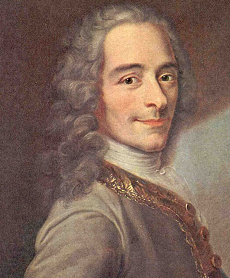
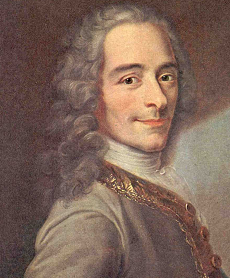
The gentleman in the image is Voltaire, who for a time graced the court of Frederick II of Prussia, known as Frederick the Great. King Fred loved to talk about the universe and everything at the end of a day’s work. He also used the salons of Berlin to get feedback in the development of public policy.

Fred would only talk in French; he regarded German as barbaric. Here we’ll use English.

The thread will be a stoush-free zone. The Comments Policy says:

The aim [of this site] is to provide a venue for people to contribute and to engage in a civil and respectful manner.

Here are a few bits and pieces that came to my attention last week.

1. National curriculum review

The Conversation asked several experts to comment on the Review of the Australian Curriculum conducted by Dr Kevin Donnelly and Professor Ken Wiltshire. As far as I can make out, the Government will make a final response by early next year and hopes that changes can be implemented by the states in 2016.

This is insane.

The Review seems to call for a rewriting of the entire curriculum, a task which would take years.

Moreover, the Review calls for a restructuring of the Australian Curriculum Assessment and Reporting Authority (ACARA), the body which would do the rewriting, which will take time. It seems unlikely that the states will have the capacity to undertake the necessary curriculum development themselves.

The Review itself seems to be based on opinion rather than research.

2. Calls to sack curriculum reviewer

One such opinion is that of Professor Barry Spurr of Sydney University, who was used as a consultant to review the teaching of English. Spurr has been suspended while the university investigates calls for his sacking. As reported on PM calls for his sacking:

follow the publication of a series of emails in which Professor Barry Spurr described Aboriginal people as “human rubbish tips” and reminisced about the 1950s, when there weren’t so many “bogans”, “fatsoes”, “Mussies” and “Chinky-poos” around.

In his review, Professor Spurr advised the Government to focus less on teaching Aboriginal and Torres Strait Islander literature and place greater emphasis on western Judeo-Christian culture.

On reading the original New Matilda report it’s hard to accept that his racist, sexist ranting is merely whimsical word games. See also here and here.

3. Classics in the English curriculum

While we are at it, Stewart Riddle and Eileen Honan took a look at the curriculum review and English literature. Remember that the Review

advised the Government to focus less on teaching Aboriginal and Torres Strait Islander literature and place greater emphasis on western Judeo-Christian culture.

They found that the national curriculum leaves the selection of texts entirely up to the schools. In fact as a result students already get a steady diet of the classics. But they probably don’t read the Bible or as six year-olds commit mediaeval verse to memory as suggested by the reviewers.

4. Five new growth centres for science and innovation

The Federal Government’s adding an extra $400 million to the science and technology budget. Five new “growth centres” are at the heart of the plan – mining, oil and gas, medical, food and advanced manufacturing.

The Government says that should boost growth and create jobs by encouraging co-operation between those sectors and the scientific community.

Sounds wonderful if you stop right there. But then this:

But the new centres will replace some existing co-operative research centres and it’s not clear what it will mean for the nation’s top research body, the CSIRO.

Opposition spokesman Kim Carr is allowed a very general criticism. I heard him later on RN’s Drive. Apparently Labor had instituted 12 such centres, which were slashed by the LNP. Also the cutbacks to research, science and innovation total a whopping $9 billion.

The headline says $400 million, but the article specifies only $188 million of government funds.

Hockey’s plan to shrink Australia continues apace!
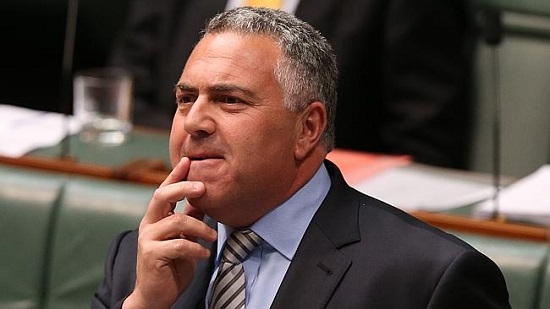
Hiccup Hockey fluffs his lines on the BBC

Hockey_269829-2d088adc-535c-11e4-a40d-833ddda6a9b8_550

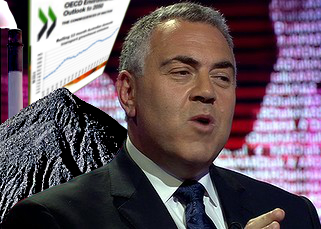
On one view Treasurer Joe Hockey made an absolute goose of himself on the BBC’s HARDtalk program the other day.

A kinder view is that Hockey and the interviewer, Stephen Sackur, were simply talking past each other. Sackur was talking about greenhouse emissions, Hockey was talking about coal exports. The question remains open as to whether Hockey understands the difference. In terms of the question he was actually asked, he was talking gibberish.

You can see the segment here or here. There are reports here and here. This is from the Australian Government transcript:

STEPHEN SACKUR:

Right, you sell an awful lot of coal in Asia and that raises questions about Australia’s commitment to cleaning up its act. You are one of the dirtiest, most greenhouse emitting countries in the OECD group of developed countries. Is your Government prepared to do anything to clean up its act?

TREASURER:

Well firstly, the comment you just made is absolutely ridiculous.

STEPHEN SACKUR:

Why?

TREASURER:

Well, Australia is a significant exporter of energy and in fact, when it comes to coal, we produce some of the cleanest coal, if that term can be used – the cleanest coal.

STEPHEN SACKUR:

(Inaudible) Highest per capita emitter of greenhouse gases of any nation in the OECD. So, what is wrong with what I am telling you? You are a very polluting nation and you have got a decision to make as a Government about whether you are prepared to do anything serious to change that.

TREASURER:

Stephen, I don’t accept the basis of your question, and why? Because we’ve got a small population and very large land mass and we are an exporter of energy, so that measurement is a falsehood in a sense because it does not properly reflect exactly what our economy is. We are on the threshold of becoming the biggest exporter of gas in the world. We are a major producer and exporter of coal. We are now selling uranium to India. We are an exporter – a trustworthy, reliable, predictable exporter of energy that is helping to drive the emergence of the middle-class in Asia. Now, that should be welcomed.

He goes on to say that the best way of tackling climate change is to help developing countries become richer, and to do this they need to burn more coal.

Greens will also be interested in Hockey’s reasoning as to why we need to increase the fuel excise:

The fundamental point is this: that we are asking Australians to pay an extra 40 cents a week in fuel taxes on average, in order to deliver the biggest road building program in Australian history.

Didn’t he promise Christine Milne that the extra funds would go on public transport? Seems she was right not to believe him.

I borrowed from Laurie Oakes’ story When Joe Hockey talks, Coalition colleagues wince for the title of this post. The story started:

HICCUP Hockey strikes again! Just when colleagues were starting to think the Treasurer might be getting his act together he produces another gaffe.

Oakes’ story was written before the BBC interview. Hockey’s was attempting to use national security to pressure Bill Shorten over Hockey’s stalled budget bills. Oakes termed this an appalling misjudgement.

“If Bill Shorten truly is honest about his commitment to deliver bipartisan support in relation to our defence efforts in the Middle East, he’ll provide bipartisan support to pay for it,” he said.

That time Abbott hastened to distance himself and to set the matter straight. Shorten was a true patriot, he said. This time, well you never know, he may agree with Hockey, being ignorant about climate change himself. Or perhaps he hoped we didn’t hear.

I think Laura Tingle got it right back in 2010, when she concluded Hockey and Andrew Robb were liars, clunkheads or both, but “whatever the combination, they are not fit to govern.”

That applies to the whole pack of them, Abbott and his front bench, with perhaps one or two notable exceptions.

Ebola: how bad will it be?

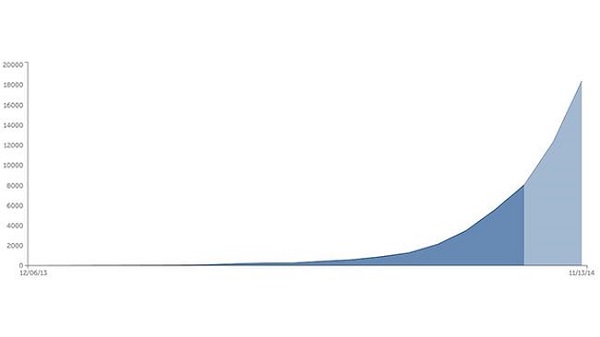
In Guinea, Sierra Leone and Liberia, three neighbouring West African countries, Ebola seems to be out of control. This is a graph of the numbers of new cases with projections for the next four weeks in lighter blue:

785673-51874c7e-5265-11e4-bb6c-6a17830799ac_600

So far there have been about 8,400 cases and some 4,000 deaths. There are claims that cases in Liberia are doubling every 15-20 days while those in Sierra Leone are doubling every 30-40 days. By the end of the year there could be as many as 18,000 new cases weekly.

I’m impressed though that there has been no spread to other African countries other than Nigeria, where it appears to have been contained. One case surfaced in Lagos in July with 19 subsequent infections. However, the chain of contagion seems to have been broken.

On the other hand subsequent infections in the US, where a second health care worker has tested positive, and Spain are cause for concern.

You can read very different views of the potential impact of the disease worldwide. This Nature article is quite definite that the Ebola does not represent a global threat. The virus is too hard to catch and advanced country health systems are too sophisticted. By contrast this New York Times piece worries about the virus gaining a foothold in a mega-city somewhere else in the developing world. I’d worry about India and the capacity of its health system to cope.

The current outbreak is the first time the disease has gained a foothold in urban areas.

A second worry is that the virus may become airborne. C Raina MacIntyre, who is Professor of Infectious Diseases Epidemiology and Head of the School of Public Health and Community Medicine at UNSW, points out that experienced health care workers who have contacted the disease have not been able to identify how they caught it. The assumption is simply that there has been a breach in protocol. We keep being assured that the disease is hard to catch. While the long incubation phase, up to three weeks, does not help memory, the fact that it keeps happening in ways that can’t be precisely pinpointed is troubling.

Still, the circumstances that saw the disease take hold in West Africa are unlikely to be repeated. This Vanity Fair article explains how the spread of Ebola was assisted by unique circumstances.

Firstly Ebola was not identified for three and a half months. The disease was virtually unknown in West Africa; earlier outbreaks had been in central and east Africa. At first cholera, then Lassa fever were suspected. By the time Ebola was identified the disease had already spread to a number of towns, including a bustling trade hub.

The reaction of first world agencies was swift. After identification in late March, Guinea was invaded by strange robotic white people who came in space suits and took ill people away.

The foreigners had come so fast that they had actually out-run their own messaging: there were trucks full of foreigners in yellow space suits motoring into villages to take people into isolation before people understood why isolation was necessary.

To a villager, the isolation centers were fearsome places. They offered a one-way maze through white tarpaulins and waist-high orange fencing. Relatives or friends went in and then you lost them. You couldn’t see what was happening inside the tents—you just saw the figures in goggles and full-body protective gear. The health workers move carefully in order to avoid tears and punctures; from a distance, the effect is robotic. The health workers don’t look like any people you’ve ever seen. They perform stiffly and slowly, and then they disappear into the tent where your mother or brother may be, and everything that happens inside is left to your imagination. Villagers began to whisper to one another—They’re harvesting our organs; they’re taking our limbs.

The people in Guinea were as frightened by the response to Ebola as they were by Ebola itself. By May the cases dried up and the aid agencies started to relax. In fact the sick were hiding, as soon became apparent.

Rather than under control the reverse was true, the epidemic was completely out of control. While new strategies are gaining the trust of the people, the disease has outrun attempts to contain it.

There must be a huge effort to contain the disease within the three countries where then disease is endemic while a vaccine, currently under development, is fast tracked. As to Guinea, Liberia and Sierra Leone, we can’t just write off a combined population of over 20 million people. Health workers are in the front line and these countries human health worker resources are being depleted by the disease. Liberia has only 250 doctors left for 4 million people, that’s one for every 16,0000 people.

Yet Australia has seen no great obligation to help. Officially I understand we have supplied about $18 million in aid, a pathetic amount, while our fearless prime minister has said that it is too dangerous for us to put boots on the ground. Yet there is work to be done out of direct contact with patients, in building temporary field hospitals, for example. Our PM could show just a bit of compassion and genuine humanitarian concern.

Klein vs capitalism

Naomi Klein

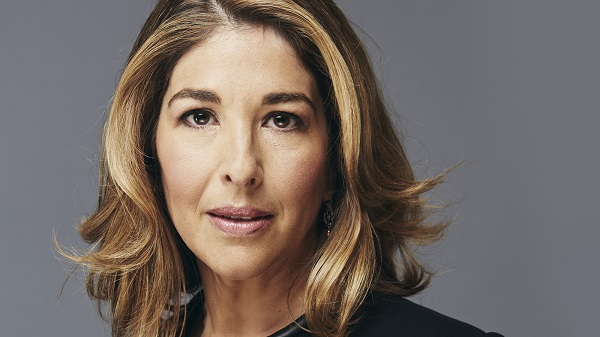
In Climate clippings 106, item 6 I linked to Joe Romm’s part review of Naomi Klein’s new book, This Changes Everything: Capitalism Vs The Climate. Romm promised to look at Klein’s program for action in a second post. I’m still waiting. I’ll recap here Romm’s exposition of Klein.

Romm on Klein

Klein, he says, makes three essential points:

1. Because we have ignored the increasingly urgent warnings and pleas for action from climate scientists for a quarter century (!) now, the incremental or evolutionary paths to avert catastrophic global warming that we might have been able to take in the past are closed to us.

2. Humanity faces a stark choice as a result: The end of civilization as we know it or the end of capitalism as we know it.

3. Choosing “unregulated capitalism” over human civilization would be a “morally monstrous” choice — and so the winning message for the climate movement is a moral one.

The time for ‘evolutionary’ strategies is long past. Now only ‘revolutionary’ strategies will get us there. Unregulated capitalism is a Ponzi scheme, which must collapse. The real choice facing us is a moral one.

Unchecked capitalism is immoral and will destroy civilisation as we know it.

Gareth at Hot Topic

Across the ditch Gareth at Hot topic has reviewed Klein’s book. Ultimately, he says, Klein’s vision is a moral one. She seeks

“an alternative worldview to rival the one at the heart of the ecological crisis— embedded in interdependence rather than hyper-individualism, reciprocity rather than dominance, and cooperation rather than hierarchy.”

In summary:

We need this not only to create a political context to drastically lower emissions but also to help us through the disasters now unavoidable, where respect for human rights and deep compassion will be all that stands between civilisation and barbarism.

Klein seems to be saying that with a mass movement, as with the abolition of slavery, we can prevail.

She’s really saying, however, that to change capitalism we need to change ourselves. But capitalism has shaped us powerfully to suit it’s needs. Weber’s iron cage comes to mind.

I think the problem is a step up from that faced by the slavery abolitionists. Slavery was only about how the new world acquired labour for farming. When slavery was abolished the price of food may have gone up a bit, but I suspect not much. It has been pointed out that with slavery the landowner kept the whole family. Now farm workers in the New World and elsewhere often work for less than a living wage. Farming in Africa is often practiced by women, whereas the men go off to work in the mines and elsewhere.

Yuval Harari in his book Sapiens: a brief history of humankind reckons that the core concept of modern capitalism is growth. Prior to capitalism, in the first millennium for example, economics was a zero sum game. It was assumed that if you wanted to increase your wealth you would do it by diminishing someone else’s, through plunder, or a landowner screwing more out of the peasants. One’s assumption was generally speaking that the future would be worse than the past.

To skip a bit, by the 19th century we had the industrial revolution and a belief in science and progress. The belief that the future would be better than the past was pervasive. At the same time there were also worlds to being conquered through colonialism and imperialism.

Harari says that obviously exponential growth using more energy and materials must stop somewhere. But, he says, capitalists will tell you that only capitalists can run the world they have created and no-one has much stomach for new versions of communism. Just wait a bit, they say, and goodies will flow to all.

I’ve said elsewhere that our future will not be constrained by a limit on energy. Ultimately we will have access to as much as we need or want. With nanotechnology the same may be true of materials. There is a limit, however, on the goods and services provided by nature.

To cut a long story short, capitalism will I think stay. Our only option is to civilise it. Two of the elements will have to be greater democracy and an expansion of the public sector, the things we do collectively for the good of all. And there will need to be limits to wealth.

We must re-imagine the future. Meanwhile the Scandinavians could be nearer the mark than we are.

Meanwhile also, there is this fascinating interview with Klein.

She’s not a raving revolutionary. She wants to keep markets with greater government intervention and regulation. We are in an existential crisis; she doesn’t know what the next step is, just that we should all take it very seriously and engage. She intends to spend the rest of her life on the problem.

We Could Learn a lot from the Scandinavians

The Conversation has run this interesting article suggesting that we could learn a lot from the Scandinavian Countries re Public policy.  It is all about comparing countries with a long history of governing to improve the welfare of the people and accepting high taxes with our far less people friendly policies that help minimize the taxes of the rich.

Funny thing is that people like the Yanks have been saying for years that what the Scandinavians are doing will wreck the economy despite the durable success of the Scandinavian countries.  The Yanks and clowns like Hockey don’t seem to understand that good health, excellent education, a fairer distribution of income etc. actually help economies stay healthy.

Worth a read and worth discussion.

The OECD has identified Australia as one of a small number of countries in which long working hours are common. In comparison, parents in Sweden and the other main Nordic countries have working weeks shorter than the OECD average. This is in addition to their substantial paid parental leave and publicly provided child care.

Shorter working hours allow parents from Sweden to pick up their children after work without the time pressures Australian parents face.

Australia will probably move to make child-care centre hours more flexible to suit our long working hours. However, the government should encourage shorter working hours, which are more compatible with family life.


Divesting Investments on Social, Environmental and Ethical Grounds

The Australia Institute is a progressive think tank that produces credible, fact based economic reports on the issues facing Australia.  What I have copied here is a short article from their periodic email on recent decisions by the ANU and others to divest the shares they held of companies whose business and/or behaviour is unacceptable on social, environmental etc. grounds.

It is just part of the pressure being encouraged by organizations such as 350.org to encourage banks, super funds etc. to stop investing in and financing unethical activities such as extracting fossil fuels:

Divestment movement hits a nerve

The fossil fuel divestment movement seemed to hit a particularly sensitive nerve this week. The Australian Financial Review has published a litany of critical front page stories, editorial and opinion pieces. In particular, special outrage flowed over divestment decisions taken by the Australian National University (ANU).

ANU announced last week it would divest from seven resources companies on environmental, social and governance (ESG) grounds. ANU is home to a long running student campaign calling on them to divest from fossil fuels. Under pressure, ANU sought professional ESG research and declared it would knock out the companies that ranked worst. The companies impacted include gas giant Santos, Oil Search and other miners extracting copper, nickel and a range of other minerals.

ANU’s decision has drawn ire, not only from the companies themselves, but also from SA Premier Jay Weatherall, previous Resources and Energy Minister Gary Gray and some Indigenous groups. There have been all manner of complaints: the companies say they weren’t consulted; they have won ESG awards; Santos is a proud Australian “pioneer”; fossil fuels cure poverty “whatever the effects of carbon dioxide ­emissions on climate”; mining is essential to modern life, and so on. One company is talking about legal action.

Others have baulked at the unusual enthusiasm in the reactions and coverage. A Canberra Times editorial said it “verged on hysterical”. Clean energy commentator Giles Parkinson, himself an ex-AFR deputy editor, said the reaction was “as though someone had committed treason against Team Australia. Or at the very least against Team Coal.”

At first glance, coal has nothing to do with it. ANU is not divesting from coal companies – unlike Stanford, which is divesting from all big coal companies, and Glasgow University which this week said it would divest from fossil fuels. Indeed, without a sector wide screen, ANU is likely to reinvest in fossil fuels. But when ABC’s Lateline covered ANU’s decision this week, theMinerals Council sent the head of their Coal Division into bat for the miners. Maybe that’s because coal is most at risk from the reputational effects of divestment campaigns. Coal is the heaviest emitter, cheapest to substitute with renewables and at most risk of being displaced by new clean energy.

ANU Vice Chancellor Prof. Ian Young defended the ANU’s move:

as “a major researcher in environment and alternative energy, we need to be able to put our hand on our heart when we talk to our students and to our alumni and to our researchers and be able to say that we’re confident that the sort of companies that we’re investing in are consistent with the broad themes that drive this university.

ANU economist Warrick McKibbIn did not agree, saying “you need proper, clear, transparent policies such as carbon pricing… You don’t get the sort of adjustment we need by these token gestures by institutions like a university.”

But Swiss investment bank UBS endorsed the strategy in a recent investor note. UBS said this was a “potentially effective campaign”, noting that:

“many of those engaged in the debate are the consumers, voters and leaders of the next several decades. In our view, this single fact carries more weight than any other data point on the planet for this issue: time, youthful energy and stamina are on the side of the fossil fuel divestment campaign.”

Saturday salon 11/10

voltaire_230

An open thread where, at your leisure, you can discuss anything you like, well, within reason and the Comments Policy. Include here news and views, plus any notable personal experiences from the week and the weekend.

For climate topics please use the most recent Climate clippings.

The gentleman in the image is Voltaire, who for a time graced the court of Frederick II of Prussia, known as Frederick the Great. King Fred loved to talk about the universe and everything at the end of a day’s work. He also used the salons of Berlin to get feedback in the development of public policy.

Fred would only talk in French; he regarded German as barbaric. Here we’ll use English.

The thread will be a stoush-free zone. The Comments Policy says:

The aim [of this site] is to provide a venue for people to contribute and to engage in a civil and respectful manner.

Here are a few bits and pieces that came to my attention last week.

1. Malala Yousafzai and Kailash Satyarthi win the 2014 Nobel Peace Prize

At 17, Pakistani education rights activist Malala Yousafzai is the youngest-ever winner of the prize. She first came to global attention in 2012, when a Taliban gunman attempted to assassinate her on her school bus. After surgery and rehabilitation in the UK, she has become an international advocate for access to education, in particular for girls who are denied opportunities to learn.

Indian activist Kailash Satyarthi, who shares the prize with Yousafzai, is the founder of the Bachpan Bachao Andolan movement. The organisation, which Satyarthi formed in 1980, campaigns against child labour and human trafficking in South Asia.

2. Dr Catherine Hamlin nominated for Nobel Peace Prize

The Ethiopian Government nominated 90 year-old Australian doctor Dr Catherine Hamlin for the prize in recognition for her work with women suffering obstetric fistula during childbirth. The hospitals she helped establish treat over 2500 women each year. She travelled with her late husband Dr Reg Hamlin to Ethiopia 55 years ago to train midwives and stayed on.

Would you believe, other nominations included Russian president Vladimir Putin, who was nominated earlier this year for his role in dismantling Syrian chemical weapons stockpiles.

3. Saudis crack down on political dissidents

The new laws have largely been brought in to combat the growing number of Saudis travelling to take part in the civil war in Syria, who have previously returned with newfound training and ideas about overthrowing the monarchy.

To that end, King Abdullah issued Royal Decree 44, which criminalises “participating in hostilities outside the kingdom” with prison sentences of between three and 20 years, Human Rights Watch said.

But the laws go beyond those concerns to anything which could “harm public order”. This includes defining atheists as terrorists.

4. Dozens of anti-Muslim attacks as Islamic leaders warn of community fear

There have been at least 30 attacks on Muslims – mainly against women wearing the hijab – in the three weeks since the police anti-terror raids and threats by Islamic State put relations between the Islamic community and mainstream Australia on edge.

Muslim community leaders are compiling a register of religiously motivated incidents, which includes reports of physical and verbal assaults, threats of violence against senior clerics and damage to mosques.

Escorts are being arranged for women to go shopping.

Queensland has the highest rate of personal assaults and threats to mosques, according to the list.

5. Feral cats rewrite the Australian story

There are between 15 and 23 million feral cats in Australia. Each night they chomp their way through about 75 million native animals.

Campaigns to eradicate foxes have backfired where they have been tried. Initial success has been followed by an explosion of the feral cat population leaving native wildlife worse off.

Other predators include the dingo and the Tasmanian devil.

6. Phillip Adams’ favourite interviews

To coincide with Phillip Adams’ induction into the Melbourne Press Club hall of fame, the host of RN’s Late Night Live has assembled a list of some of his favourite recent interviews from his ‘little wireless program’, featuring everyone from Magda Szubanski to Oliver Stone.

Dunbar’s number

Tonight (Thursday) on Catalyst Dr Jonica Newberry is going to show a segment entitled Falling in Friendship (cf falling in love), which will look at Dunbar’s number, the number of friends we can maintain in an enduring relationship. The Wikipedia spiel is as follows:

Dunbar’s number is a suggested cognitive limit to the number of people with whom one can maintain stable social relationships. These are relationships in which an individual knows who each person is and how each person relates to every other person. Continue reading Dunbar’s number

Is the world becoming more or less violent?

This question was triggered in my mind by hearing an interview with Steven Pinker. There was no doubt in his mind!

Our impressions of violence are determined by media reporting, which concentrates on violent acts. There is always newsworthy violence going on, so our impression is of unrelenting violence in society.

However, Pinker looks at the statistics showing the incidence of death at the hands of another human being over time. This was around 300 per annum per 100,000 population during the Second World War, he said. Since then it has declined to less than one, and continues to fall. He also quoted impressive trends over the centuries.

It turns out that Pinker in 2011 published a whopping 800+ page book on the subject called The Better Angels of Our Nature: Why Violence Has Declined which is treated extensively at Wikipedia. There is also a long interview on frequently asked questions.

To cut to the chase, there is a very interesting article by Philip Dwyer at The Conversation, with the important insight that violence is a human construct; what counts as violence varies over time and place. I’m reminded of the notorious Adelaide judge who referred to a case of sexual violence with marriage as “a little rougher than usual handling”. Dwyer also points out that while homicide stats in Australia have been steady for decades, assault is increasing.

Still the decline in violence over the centuries in Pinker’s terms is impressive. Dwyer tells us homicide rates:

have dropped dramatically from 100 for every 100,000 people in the 13th century, to ten in 100,000 by the middle of the 17th century (although it was that high in the United States only a few years ago) to rates of around one in 100,000 people in most Western countries today.

The reasons for this deserve analysis, which Pinker attempts. His six trends, five inner demons and four better angels are interesting but must in the end be speculative.

I think the more rounded approach taken by the Institute for Economics and Peace (IEP) has more to offer our current thinking:

The IEP’s Global Peace Index is researched by an international panel of experts and complied with data collated by the Economist Intelligence Unit (EIU). The GPI ranks 162 countries, covering 99.6% of the world’s population.

The index is composed of 22 indicators, including a nation’s level of military expenditure to its relations with neighbouring countries, as well as the percentage of the population held in prisons.

Thus homicides are but one of 22 indicators.

They note a 60-year down trend for violence since World War II, but a corner was turned in 2008. Each of the last seven years was more violent than the one before.

The 10 most peaceful countries in order, are Iceland, Denmark, Austria, New Zealand, Switzerland, Finland, Canada, Japan, Belgium and Norway. Australia comes in at 15th. Europe is the most peaceful region occupying 14 of the top 20 places. It would be interesting to analyse why Italy at 34, the UK at 47 and France at 48 do so much worse than the rest of Europe.

The United States is near the middle of “medium” occupying 101st place in the company of Haiti, Benin, Angola and Kazakhstan, a distinctly third world positioning. Amongst the OECD countries only Turkey at 128 and Mexico at 138 come out worse. South Korea is at 52, but as far as I can see all the other OECD countries are in the top 50.

The worst in order (worst first) are Syria, Afghanistan, South Sudan, Iraq, Somalia, Sudan, Central African Republic, Democratic Republic of the Congo, Pakistan, North Korea and Russia.

Dwyer says the evidence suggests:

violence is not a purely innate phenomenon and that it is also a question of culture and education. Cultural factors can play a determining role in how aggressive or violent a society is. Aggression, which is often mistaken for violence, can be contained by society and can be channelled into more positive activities.

In this, the role of the state and local community is fundamental. In countries where citizens identify with their local communities and where government is responsive and popular, levels of violent crime are relatively low.

He also says that violence is largely a thing for males aged 20 to 30.

It is said that the brain connections between our emotional and rational faculties only mature at age 24, plus or minus 5 and a little earlier for women than men.

Peabody Research Centre have done a study which found that religious hostilities reached a six-year high in 2012. However, I haven’t seen enough of the study to get a feel for what it is really about.

Dwyer finishes with:

Is the end of violence possible?

No, but cultures and attitudes can be changed by focusing, above all, on education, positive outlets for aggression, and community involvement.

Climate clippings 108

1. Across the ditch

New Zealand has just had a general election. Gareth at Hot Topic tells us that

The National Party has won itself another three years in government. With a probable overall majority and the support of three fringe MPs, prime minister John Key and his cabinet will be able to do more or less what they like. Given the government’s performance on climate matters over the last six years — turning the Emissions Trading Scheme into little more than a corporate welfare handout while senior cabinet ministers flirt with outright climate denial — and with signals that they intend to modify the Resource Management Act to make it easier to drill, mine and pollute, it’s hard to avoid the conclusion that the next three years are going to see New Zealand’s climate policies slip even further out of touch with what’s really necessary.

2. China most at risk from sea level rise

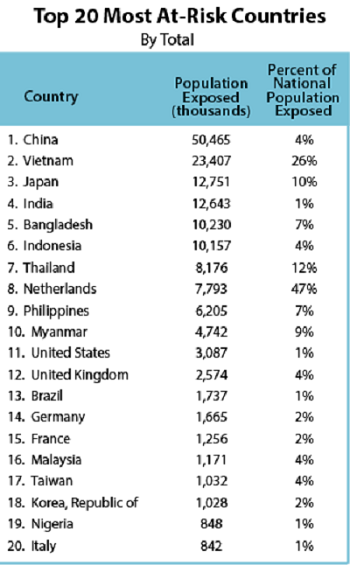
An analysis of global vulnerability to sea level rise has been done (see at Climate Central and The Carbon Brief).

China is the standout in terms of people affected, but Japan, India and Indonesia also figure prominently. This may assist international climate action negotiations, though recalcitrants like Canada and Australia don’t figure. Here’s the top 20:

assets-climatecentral-org-images-uploads-news-ssrf-Global-TableRCP85-smaller-nums-take5-670x519_cropped_350

Worldwide they found that “147 to 216 million people live on land that will be below sea level or regular flood levels by the end of the century, assuming emissions of heat-trapping gases continue on their current trend.”

The numbers ultimately depend on the sensitivity of sea level to warming. They say the figures may be two to three times too low, meaning as many as 650 million people may be threatened. Also population increase is not taken into account.

3. Human activities cut animal populations in half since 1970

shutterstock_120562819-e1412098764193-500

According to a new report, the Earth has lost half its vertebrate species — mammals, birds, fish, reptiles, and amphibians — since 1970.

The latest Living Planet Report, put out by a joint research effort between the World Wildlife Fund and the Zoological Society of London, found a stunning drop of 52 percent in the population of wild animals on the planet over the last 40 years. The most catastrophic drop was among the inhabitants of freshwater ecosystems — the last stop for much of the world’s pollution from road run-off, farming, and emissions — whose numbers declined 75 percent. Oceanic and land species both dropped roughly 40 percent.

It’s also all interconnected; land-use change can affect climate change and animal species both, then the altered climate can in turn affect the animals, and the animals’ effect on their ecosystem can in turn alter the climate again. Animals and humans both are inherent parts of the ecological fabrics they inhabit.

4. The science is clear: act now

Roger Jones and Roger Bodman have an article at The Conversation, republished at Understanding Climate Risk commenting on an article by Steven Koonin, New York University theoretical physicist and former US Under Secretary of Energy for Science, published in the Wall Street Journal and The Australian. Koonin accepts that the climate is changing and that human activity is having an effect, but:

Rather, the crucial, unsettled scientific question for policy is, “How will the climate change over the next century under both natural and human influences?” Answers to that question at the global and regional levels, as well as to equally complex questions of how ecosystems and human activities will be affected, should inform our choices about energy and infrastructure.

Koonin’s argument is technical, but he amplifies the uncertainties and does not properly attend to risk. Details which have no great relevance, such as the failure of models to explain why Antarctic sea ice cover is expanding, are amplified. His conclusion is that the science is urgent, but the uncertainty is such that there is no proper basis for action.

To answer in detail would require a volume. Jones and Bodman address his use of the concepts of doubt, uncertainty, confidence and risk and find his argument lacks an appreciation of how scientists use these concepts. Crucially, “acting now and learning as we go is a better way to manage uncertainty than waiting and learning.” On the main issue,s while uncertainty can be reduced at the margins with observations over time, overall the science is clear, we must act now!

%. No cash flows as Louisiana coast slides into the sea

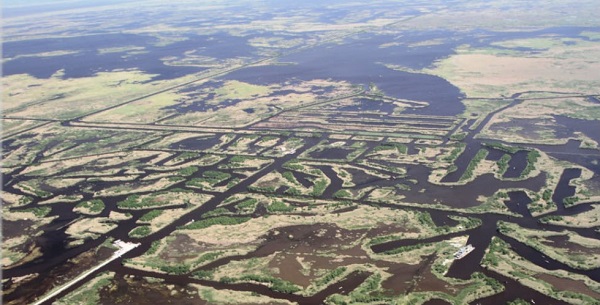
While the issue is mired in legal wrangles, the Louisiana weltands are sliding into the sea at the rate of 75 square kilometres and saltwater increasingly penetrates. In 2012 a $50 billion repair plane was formulated, but the prospects of adequate funding are remote.

Louisiana_cropped_600

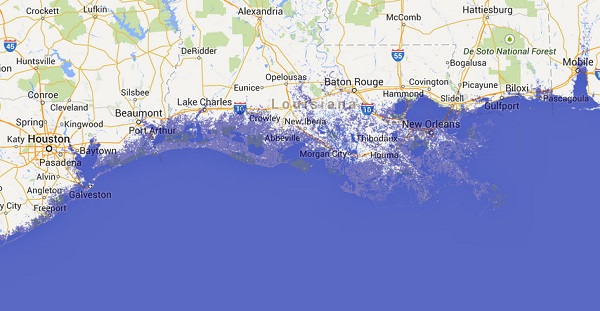
I’ve extracted an image of the flood map showing what 5 metres of sea level rise would look like, which is what I think we are looking at in the next 200 years:

Louisiana 5m_cropped_600

Mind you according to paleoclimate data the long-term effect of 400ppm of CO2 is 25m plus or minus 5. A rise of just one metre badly shreds the coastline.

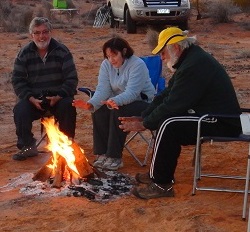
Red Centre Holiday: living was easy in the Simpson Desert

Nothing is more emblematic of living during our Simpson Desert crossing than gathering around the camp fire at night. In memory we did it a half a dozen times. Actually it was only three out of our four nights as a group in the desert, plus once on the way over at Jervois Station and at Cooper’s Creek on the way home. Continue reading Red Centre Holiday: living was easy in the Simpson Desert