Category Archives: Climate Action

Climate clippings 115: beyond coal

1. Liddell to go

The die was cast at the AGL annual general meeting. Liddell will be closed and not sold.

    Mr Vesey spent the bulk of his address explaining how AGL would replace the capacity lost at Liddell, including new wind and solar farms, up to 750 megawatts of new gas-fired plants and a 100-megawatt upgrade to the more modern and larger Bayswater coal plant nearby. A 250 MW battery at Liddell and demand response will also come into play, he said.
Continue reading Climate clippings 115: beyond coal

Gas to burn, but at what cost?

Four and a half years ago, at the national conference of the AWU in 2013, general secretary Paul Howes issued a warning:
    Howes warned that unless some gas was reserved for domestic use, and limits on coal seam gas extraction were lifted, the massive investment boom in LNG would soon affect the supply and price of domestic gas. And consumers, business and manufacturers would all suffer.

    “This is one of the most important resolutions we’ll debate at this conference,” he said.

Continue reading Gas to burn, but at what cost?

Are we serious about our Paris commitments?

The Australia Institute has looked at the penetration of renewables required in the electricity market to meet our Paris commitments, and come to the conclusion that we need from 66 to 75% renewables by 2030, rather than the weak 26-28% currently being assumed in relation to the Finkel review.
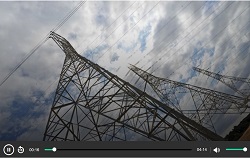
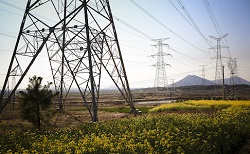
The basic issue is simple. If we don’t maximise the reductions in the electricity sector, we’ll have trouble meeting our overall Paris commitment, full stop. It will require a large and expensive effort in other areas such as agriculture. Completely decarbonising electricity was always the low hanging fruit. We appear to be ignoring this strategy completely, and the new report does not help all that much. Continue reading Are we serious about our Paris commitments?

AGL struggles daily to keep Liddell going, and looks to ‘flexible’ power

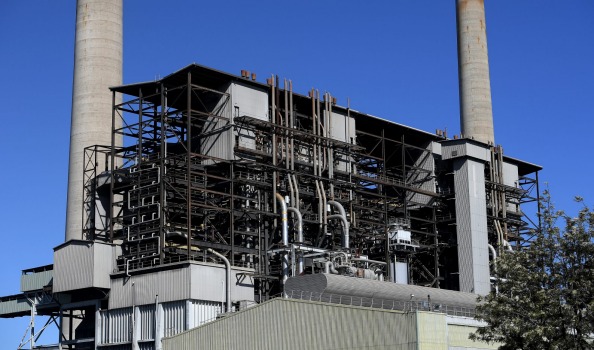
According to the AFR, AGL Energy faces “a huge daily challenge” just to keep its “geriatric” Liddell coal-fired power station running and will need to spend up to $150 million just to “keep our noses above water” until 2022. It will cost $900 million to keep it open for another 10 years, as Malcolm Turnbull and Josh Frydenberg would have it.

“It’s exceptionally challenging,” AGL Macquarie general manager Kate Coates told the group of press representatives and other interested persons on the tour on Tuesday. Continue reading AGL struggles daily to keep Liddell going, and looks to ‘flexible’ power

Climate clippings 214

1. Trump’s climate vandalism continues

Trump has picked a Republican politician, Rep. Jim Bridenstine of Oklahoma to oversee NASA, a job that often goes to astronauts or scientists.

    Bridenstine, who is the former executive director of the Tulsa Air and Space Museum and Planetarium, said in a 2013 speech on the House floor: “Global temperatures stopped rising 10 years ago. Global temperature changes, when they exist, correlate with sun output and ocean cycles.”

Continue reading Climate clippings 214

Turnbull to walk away from the Clean Energy Target

According to Malcolm Farr, when the Finkel review appeared, this is what Malcolm Turnbull said about the Clean Energy Target:

    “Well it would certainly work, there is no question it would work and we are looking at it, giving it very favourable consideration.”

Rafael Epstein interviewing Josh Frydenberg on RN Drive replayed Turnbull’s audio, saying also the CET had “strong virtues”. Continue reading Turnbull to walk away from the Clean Energy Target

Turnbull goes feral on electricity

Last week AEMO, the Australian Energy Market Operator produced two reports on future of electricity markets. The Coalition government under Turnbull cherry picked the reports in a way that was almost infantile, going completely feral, politicising the energy policy, making clear that bipartisanship will be avoided at all costs.

On Saturday at the Country Liberals annual conference in Darwin, he said this:

    “I mean, Blackout Bill, fair dinkum, as my old dad would have said, he is so hopeless he could not find his backside with both hands.”

The electricity issue has been folded into his “kill Bill” strategy. Continue reading Turnbull goes feral on electricity

Turnbull’s choice – a clapped out coal burner or a clean energy plan

You guessed it, he chose the clapped out Liddell coal-fired power plant.

AEMO, the Australian Energy Market Operator, said New South Wales may be short of power when Liddell closes, as scheduled, in 2022, based on known plans and government policy positions, federal and state. AEMO had just published two documents – Electricity Statement of Opportunities for the National Electricity Market and Advice to Commonwealth Government on Dispatchable Capability. Apart from the risk of blackouts this coming summer in SA and Victoria, the next pressure point could be in 2022 in NSW with the closure of Liddell.

As David Blowers of the Grattan Institute said, the second report carried a clear message, though not stated directly – the system is broken a bipartisan clean energy policy is badly needed. Continue reading Turnbull’s choice – a clapped out coal burner or a clean energy plan

AEMO sees electricity markets reshaped

While Malcolm Turnbull equivocates on a Clean Energy Target, he has called the electricity retailers to Canberra once again to jawbone them about electricity prices. Yet the industry keeps telling him the single factor most needed to bring electricity prices down is more investment in renewable energy, which would be facilitated by a Clean Energy Target (CET).
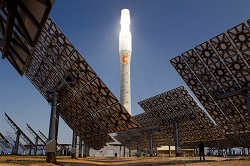
Whether the CET is central or not, it is what the industry believes. But Turnbull will not move until he has a report from AEMO on what the future need for ‘baseload’ power will be, which in the minds of hardcore recalcitrants within his own party, means coal-fired power, throbbing away.

Giles Parkinson says Turnbull does not need baseload, he just needs balls. Continue reading AEMO sees electricity markets reshaped

Climate clippings 212

1. South Australia to get 30MW battery to create renewables-based mini grid

    The Australian Renewable Energy Agency says it is providing $12 million towards the $30 million cost of a major battery storage installation to be located on the Yorke Peninsula in South Australia and create a renewables-based mini-grid with the nearby Wattle Point wind farm.

The battery will pair with the local 90MW Wattle Point wind farm and local rooftop solar PV to form local micro-grid to ensure grid security and so keep the lights on in case the network failures elsewhere in the state. Continue reading Climate clippings 212

Climate clippings 211

1. Planting nearly 100,000 trees per day with drones

We plant about 9 billion trees each year. Unfortunately we also clear about 15 billion, leaving a deficit of 6 billion.

A system of using drones is being developed which could plant trees at 10 times the rate of hand planting and at 20 per cent of the cost by firing germinated seeds into the ground. Continue reading Climate clippings 211

A tsunami of renewables

The AFR reports that Josh Frydenberg and Labor’s Mark Butler had a bit of a love-in when they shared a platform late last month. Ben Potter said they were peas in an energy pod.

    Frydenberg waxed lyrical about the shrinking cost of solar photovoltaic – from $1.6 per kilowatt installed in 2014 to 19 cents per kilowatt last year. Battery storage has also halved in cost and added half as much capacity again in just five years, he enthused, and “demand response” – where customers curtail their usage or offer their batteries and smart appliances to the grid during demand spikes to avert blackouts – has an “incredibly” important role.

    Butler took his cue, noting that the system is undergoing a “massive, profound and irresistible transition which will just continue whether we like it or not”.

Butler said that if anyone could get the Clean Energy Target (CET) through the LNP party room it would be Josh. Continue reading A tsunami of renewables