Category Archives: Climate Change & Sustainability

Posts on aspects of climate science, climate action and climate policy & planning.

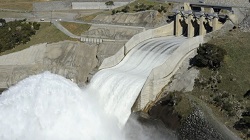
Snowy hydro 2.0: nation-building game-changer or giant red herring?

Just after we had heard about 100 MW batteries being installed in South Australia to keep the lights on, Malcolm Turnbull announced a giant ‘battery’ in the form of pumped hydro in an expansion of the Snowy hydro scheme.

    “In one hour it could produce 20 times the 100MW per hour expected from the battery proposed by the South Australian government, but would deliver it constantly for almost a week, or 350,000 MWh over seven days.

Michelle Grattan reports that the media were dragged up to Talbingo in the Snowy Mountains for Thursday’s big Hydro announcement. But then his press conference couldn’t be beamed direct because there was no way of transmitting the signal.

    Meanwhile the news cycle was taken up with the pictures of the extraordinary biffo between South Australian Premier Jay Weatherill and federal Energy Minister Josh Frydenberg when they appeared together in Adelaide.

    It was all a metaphor for the shambolic national energy debate, in which the process is chaotic and politics trumps policy.

Continue reading Snowy hydro 2.0: nation-building game-changer or giant red herring?
Zen Energy’s renewable baseload power

South Australia’s brave new energy plan may not have been the biggest energy news on Tuesday. The gong may go to Zen Energy‘s plan in cahoots with Santos to provide renewable baseload power.

It works this way. Solar is now the cheapest form of power when the sun is shining. So you supply solar during the day, but store some in a grid-scale battery to provide power when people are up and about at night. Then the battery gets recharged overnight from wind to provide power for the morning start until the sun takes over. The whole thing is backed up by gas. Gas is the backup of the backup. Continue reading Zen Energy’s renewable baseload power

Solutions to the energy crisis

Malcolm Turnbull has now, for reasons best known to himself, elevated “energy crisis” to a “national security” issue. Ben Potter puts the situation well:

    A decade of fighting over renewable energy, carbon prices and fossil fuels has left Australia with some of the world’s dirtiest and costliest energy – a bitter yield from historical abundance.

    Three years ago, manufacturers began complaining they couldn’t get gas, and 18 months ago the South Australian grid started to wobble.

    Now, electricity and gas prices across the eastern states are two to three times their levels only a couple of years ago.

    Gas exporters overcommitted to foreign buyers; the federal government mismanaged renewable energy and the regulatory apparatus – and politicians responsible for it – are frozen in the headlights.

Continue reading Solutions to the energy crisis

The sea is anything but level

Did you know that if you swam from a point south of India to Indonesia you would be swimming 200 metres uphill?

Did you know that the Ecuadorean peak Chimborazo is two kilometres higher that Mount Everest if measured from the centre of the earth?

Those are not the only issues with sea level. When the Swiss and the Germans built a bridge at the border at Laufenberg, the Germans calibrated the height to a benchmark in Amsterdam, while the Swiss used one in Marseilles. They knew there was 27cm difference, but they added where they should have subtracted and met with a yawning gap of 54cm! Continue reading The sea is anything but level

Climate clippings 198

1. LiquidPiston engine

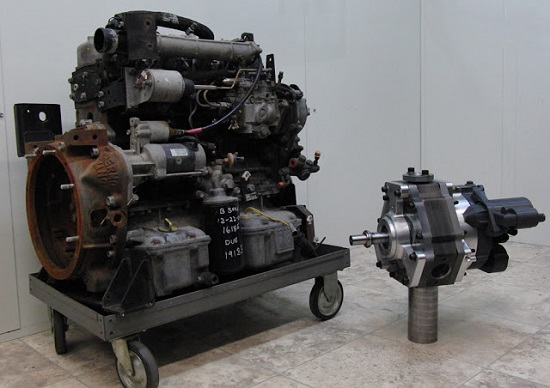
The innovative LiquidPiston engine, mentioned by BilB, is targetting a global market worth $460 billion. It has a power to weight ratio more than ten times better than a regular engine:

The big bruiser on the left puts out 35 HP, the one on the right 40 HP. Continue reading Climate clippings 198

Climate clippings 197

1. Global plan to save 10 per cent of coral reefs

A world-wide plane is being hatched a global plan says only 10 pc of coral reefs to save 10 per cent of coral reefs. The stark fact is that:

    Scientists estimate 90 per cent of the world’s coral reefs will disappear in the next 35 years due to coral bleaching induced by global warming, pollution and over-development.

The 50 Reefs initiative, recently launched at the World Ocean Summit in Bali, in a donor funded initiative to identify the 10% of reefs most likely to survive past 2050. Effectively it’s a triage operation. Continue reading Climate clippings 197

APRA warns company directors about personal liability on climate change

APRA warns company directors about personal liability on climate change. Politicians should also take note.

APRA, the Australian Prudential Regulation Authority, has warned company directors and other decision-makers that they may be held personally responsible for dumb investment decisions in relation to a transition to a low emissions economy. If a coal-fired power station with or without CCS becomes a stranded asset, whoever approved the funds could be in the gun.

So even if the government changes the legislation to allow CEFC to lend to new coal-powered electricity generators, responsibility still lies with the directors of the Clean Energy Finance Corporation (CEFC). Continue reading APRA warns company directors about personal liability on climate change

This toxic energy row must end

That is the title of an article by Jay Weatherill as we suffered the recent heatwave. He believes that electricity supply is a public good and should be in public hands. However, the article is really a plea to Malcolm Turnbull to keep an emissions intensity scheme (EIS) on the table.

Weatherill says that we do indeed have an impending crisis, with the planned closing of Hazelwood, and another nine coal-fired power stations closing across the country: Continue reading This toxic energy row must end

What really happened in the SA February blackouts

A number of reasons are being given for what was a relatively minor power blackout in South Australia, for example in Giles Parkinson’s excellent article, dud forecasts, lousy software, failing gas plants. However, the reason is actually more simple than that – no-one gets paid for despatchable standby power, only power actually used. South Australia needed standby despatchable power when record demand was forecast, and didn’t have it.
In the AFR Mark Ludlow tells us that the second unit at the Pelican Point gas-fired power station has not operated since April 2015, so it was effectively mothballed. When the need for extra power became obvious and the Australian Energy Market Operator (AEMO) approached Engie, the owners of Pelican Point, there was simply no time for a cold start. Continue reading What really happened in the SA February blackouts

Politicians lie, while corporates game the electricity system

I can’t make up my mind whether Malcolm Turnbull’s brains have fried, or whether he is just plain evil. I think of Godwin Grech, and think the former. My wife is convinced it’s the latter, and she’s usually right about people.

Anyway politics reached a new level of absurdity last week, as Scott Morrison brought a lump of coal into the parliament, which ended up between a crazed Barnaby Joyce’s legs, while in Question Time Turnbull’s answer to every question about the omnibus bill to change social security entitlements (and save a heap of cash) was to rant about Bill Shorten, blackouts and dreaded renewable energy in South Australia.

All the while, fossil fuel generators are gaming the system, to extract more from electricity consumers, while the market regulator ends up splitting the profits.

Two politicians from South Australia, Premier Jay Weatherill and Energy Minister Tom Koutsantonis, are very angry, and they’ve had enough. Continue reading Politicians lie, while corporates game the electricity system