Category Archives: Technology

Australia’s Future Workforce: up to five million jobs to go

There is a vague feeling of unease abroad about Australia’s economic future, as the mining industry peaks, the car manufacturing industry evaporates and now Woolworths announces yet another job bloodletting – this time 1200 staff to go. This unease was picked up in the Lowy Institute Poll 2015, where our economic optimism rose from 2005 to 2009, then fell from 2010 to 2015: Continue reading Australia’s Future Workforce: up to five million jobs to go

Renewables roundup: Daniel Andrews winds up wind

From Facebook:

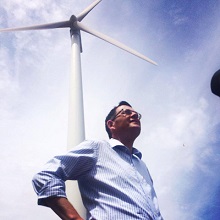
    Victoria continues to be the country’s best location for renewable energy investment, thanks to planning changes which will streamline wind farm project approvals.

    Applications made for new wind farms under the Andrews Labor Government will now be simpler, encouraging investment and jobs growth in regional areas.

    In Victoria, we currently have 19 wind farms that have planning approval but are yet to be commissioned. Continue reading Renewables roundup: Daniel Andrews winds up wind

The future of electricity in Queensland

As noted in Climate Clippings 139 (Item 5) the new Queensland Labor Government has committed to a 50% renewable energy target by 2030 so I was interested to attend a public forum last week on the future of electricity in Queensland, chaired by John Davidson as convenor of the West Brisbane Branch of the Queensland Greens. Speakers were John Foster, Professor of Economics at Queensland University, Murray Craig, Managing Director of Solar Centre and Charles Worringham, spokesperson for the Queensland Greens. Continue reading The future of electricity in Queensland

Seeking answers on GM food

It began as a comment about Vandana Shiva on Saturday salon 28/3. It continued on the thread for Maharishi Mahesh Yogi – cultist, guru or con-artist?

The topic of genetically modified organisms (GMOs) is very broad, but where we left it the focus had been on the safety of GM foods.

I’d expressed a need for someone knowledgeable who was both engaged and detached to explain the topic. Frankly I get concerned when people, however well-informed, seek to shove the truth down my throat. Reliable information from someone who is not trying to convince me one way or the other, is what I need. Continue reading Seeking answers on GM food

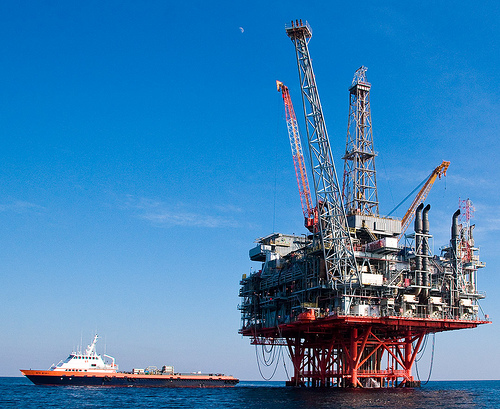
Big Oil’s business model – broken?

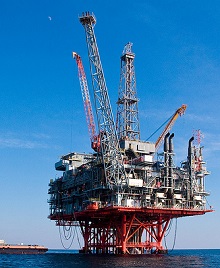
oil rig_6a00d8341d320d53ef0134855026ce970c-800wi

Michael T Klare in an article at Grist claims that Big Oil’s business model is broken.

I’m not so sure. An IEA (International Energy Association) update which he cites is titled A business-as-unusual outlook for oil in the medium term. Certainly there have been changes since the IEA’s World Energy Outlook 2014 (see my recent post).

Last September in the Outlook document the IEA saw oil prices rebounding, averaging $82.50 a barrel in 2015 and rising to near $100 in the coming years. Now they see prices recovering gradually to reach $73 a barrel in 2020.

The IEA now sees production as increasing by 5.2 million barrels per day over the same time period, which is substantially the same as forecast last September.

The IEA sees four main factors at play:

  • Emerging economies are reaching a less oil intensive stage of development.
  • The global economy is becoming less fuel intensive.
  • Concerns over climate change are affecting policies, for example the fuel economy regulations for motor vehicles in the US, which Klare says will reduce demand by 2.2 million barrels per day by 20125.
  • Globalisation of the natural gas market and the emergence of renewable technologies has led to inter-fuel competition beyond what would have been expected only a few years ago.

North American unconventional production (light tight oil, or LTO) has been greater than expected and has become the top source of incremental supply. Iraq supply increase is also beyond expectations.

Klare’s major point is that the oil industry assumed that demand would continue unabated no matter what the price, leading to massive investment in what he calls “tight oil” – oil from unconventional, hard to get at sources. His thesis is that production and consumption will increase, but only slowly, and to an extent and at a price that will not justify the investment necessary to extract tight oil.

The investment in tight oil dates from 2005, when production was 85.1 million barrels per day. At that time the IEA forecast that demand would reach 103.2 million barrels per day in 2015. In 2014 it was 92.9 with the forecast for 2015 only 93.2.

On the price recovery from $55 per barrel to $73 in 2020, Klare says:

Such figures fall far below what would be needed to justify continued investment in and exploitation of tough-oil options like Canadian tar sands, Arctic oil, and many shale projects. Indeed, the financial press is now full of reports on stalled or cancelled mega-energy projects. Shell, for example, announced in January that it had abandoned plans for a $6.5 billion petrochemical plant in Qatar, citing “the current economic climate prevailing in the energy industry.” At the same time, Chevron shelved its plan to drill in the Arctic waters of the Beaufort Sea, while Norway’s Statoil turned its back on drilling in Greenland.

In that sense Klare is right. Also profits like $32.6 billion in 2013 for Exxon (second only to Apple) and $21.4 billion for Chevron are unlikely to continue. Nevertheless these firms are not out of business. Some of the smaller producers in the sense of firms and countries may be, leading to possible failed states and security concerns. Russia will be producing less.

The bottom line, though, is that the crystal ball is clouded. Uncertainty prevails.

Climate clippings 111

1. Record warmth

September followed August as record heat for the month worldwide. The period January-September was equal hottest with 1998 and 2010. The 12 months from October 2013 to September 2014 was the hottest 12-month period on record. The heat was just about everywhere, except for central Russia, some areas in eastern and northern Canada, and a small region in Namibia:
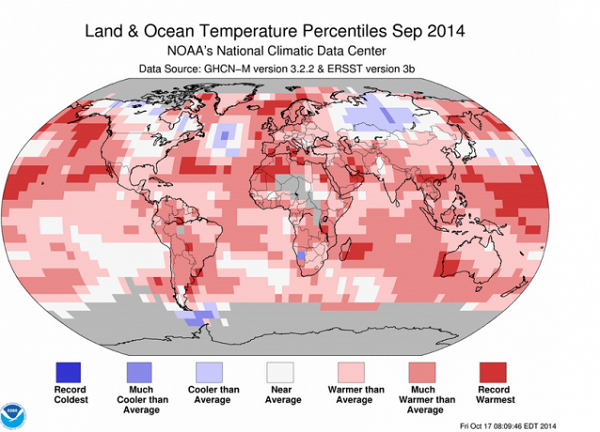
Screen-shot-Sept 2014-AM-600

2. Coal is good for humanity!

Thus spake Tony Abbott, repeating lines imprinted on his mind by coal industry lobbyists.

In an important post Graham Readfearn tells how big coal is hijacking the energy poverty issue

telling the world that the only way the poorest nations can pull themselves out of poverty is by purchasing lots of their product.

The point that those same people will likely be hit earliest and hardest from the impacts of climate change being driven by that same product, is neatly swerved or underplayed.

So we have Peabody Energy “fueling the world with energy essential to sustain life”.

Pardon me while I have a quiet chunder!

3. New 2030 climate targets for the EU

On the whole climate campaigners are disappointed with the new emissions targets set by the EU – 40% reduction in emissions, 27% cut in energy use and 27% of energy must be from renewables.

The ETS is seen as essential in reaching these targets, so it will be reformed in an as yet undesignated way.

Rich countries like Germany, the UK and France will have to do better than the designated cuts to compensate for the continued reliance on coal by the likes of Poland, Bulgaria and Romania.

At Climate Progress it seems the American reaction is more favourable. They point out that the targets are the first substantive offer from any member of the international community ahead of the UN climate talks to be held in Paris in 2015. The Americans and the Chinese are unlikely to go so far.

Personally when they aim for net zero emissions by 2030 and aim for 350 CO2e ppm by 2050 I’ll say they are reconnecting politics with reality.

4. Arctic sea ice escalator

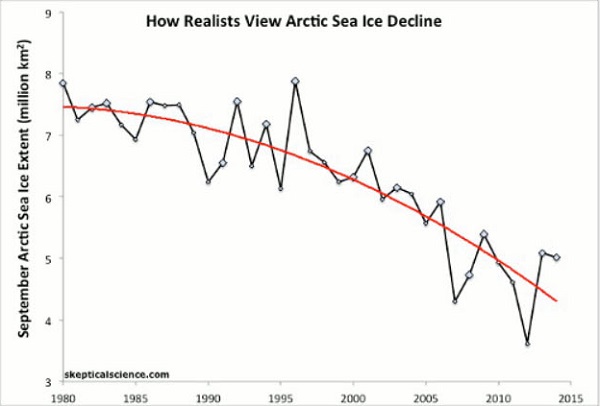
BilB drew attention to Skeptical Science’s Arctic sea ice escalator:
Sea ice 2014_cropped

He’s right, the next break downwards could shock some doubters.

Perhaps enough to shake pollies of all stripes out of their torpor.

If you look at the trend from the late 1990s it looks even more dramatic.

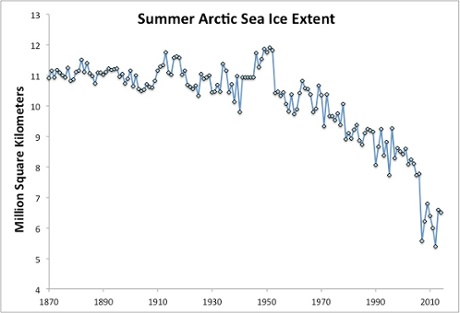
The full article has two further graphs:
00c36199-0fac-468c-86d4-76d93ce98cba-460x313

120afee8-e360-4a99-ab75-cabf94d6b08c-bestSizeAvailable

Actually there’s something wrong with both. The y axis should go below 4. It’s like where you have a graph on a wall and the line falls off the graph and onto the wall.

5. Pacific warriors blockade Newcastle

Climate Change Warriors from 12 Pacific Island nations paddled canoes into the world’s largest coal port in Newcastle, Australia, Friday to bring attention to their grave fears about the consequences of climate change on their home countries.

The 30 warriors joined a flotilla of hundreds of Australians in kayaks and on surfboards to delay eight of the 12 ships scheduled to pass through the port during the nine-hour blockade, which was organised with support from the U.S.-based environmental group 350.org.

The warriors came from 12 Pacific Island countries, including Fiji, Tuvalu, Tokelau, Micronesia, Vanuatu, The Solomon Islands, Tonga,
Samoa, Papua New Guinea and Niue.

6. Norway takes to electric cars

Norway, not a member of the EU, now has 15% electric cars. Since 2011 Nissan LEAF has become the nation’s third best-selling car.

Norway is not a member of the EU. It gets 98% of its power from renewables. Presumably it doesn’t go around preaching that oil is good for humanity!

7. How to build without bricks and cement

Just print houses out of mud!

wasp_3d_printed_mud_homes-3_600

Thanks to John Davidson for those last two items.

A blighted vision for the NBN

Donald Rumsfeld spoke about “unknown unknowns”. The Communications Chambers cost-benefit analysis (CBA) report gets rid of such nonsense by ruling it out. As Stilgherrian at Crikey says:

the key problem is the overall assumption that we’ll see a gentle, incremental growth in internet demand — whatever its rate for individual application — based on the kinds of things we’re doing on the internet today.

During a digital revolution, they seem to have missed the revolution part.

So the Multi-Technology Mix (MTM) model for the NBN will be fine, as long as you don’t want to use the internet much. Or as David Havyatt at the AFR says:

Choosing between the MTM and FTTP isn’t just about the outcome of the CBA. It is about choosing whether we want the nation to be technology leaders or technology laggards. It is about choosing whether we want to make do with inefficient government service delivery or drive it hard for efficiency and effectiveness.

The MTM simply rules out applications that could emerge in health and education which depend on a ubiquitous high-speed service, so public benefit is put at 5% of usage in the review. In truth it’s unknown with the fibre to the premises (FTTP) option, which was why a CBA always had limited value.

Stilgherrian says the model completely misses the Internet of Things, that is, the myriad devices such as smart air conditioners and light bulbs, toys and medical sensors. It assumes that such usage will fit into the cracks.

So 15 Mbps is seen as good enough for the vast bulk of users. There is no value assigned to the higher speeds a 100 Mbps would provide.

Hence the review strips away the known unknowns, dealing only with known knowns and very conservatively at that. Gentle, incremental growth in existing internet demand is assumed. It’s a case of dumbing down to the lowest common denominator.

The NBN strategic review found the FTTP cost only $8.6 billion more than MTM, a steal at the price. Yet the CBA review has inexplicably added $4 billion to the cost of FttP. Havyatt says this is problematic if not simply arbitrary and wrong.

In his blog post Havyatt points out that 70% of people connected to the NBN are opting and paying for a 100/40 Mpbs service. They are looking for speed if not volume. That’s what they want. Turnbull’s mob are taking the paternalistic view that it is not what they need.

I’m not sure of the funding arrangements for the NBN. I suspect that it is being funded on budget as an infrastructure program. Labor’s FTTP system was being funded off-budget effectively costing taxpayers nothing, against future privatisation.

All in all as in so many areas the Abbott government is dragging us back decades and compromising our future as a sophisticated economy. Think, for example, the renewable power industry and their passion for coal. Labor’s positive legacy is being destroyed with vigour and enthusiasm.

See also Deja vue all over again: the new NBN.

Driving down new car emissions using offset credit trading

Most cars last for years.  This means that a failure to reduce the average emissions of new cars now will damage the environment for many years to come.  This post looks at the use of offset credit trading to drive down the average emissions of new cars as well as a few other actions that would help.  Continue reading Driving down new car emissions using offset credit trading

Recent articles on renewable power

1. Radical ideas for renewable energy policy

Investment bank UBS came up with this list:

1.  Mandate time of use meter roll out over remaining States in the NEM (NSW, QLD, SA, TAS)

2.  Reinstate the carbon tax with zero exemptions and zero compensation, but start it at a lower level, say  $10/t. This would raise around $5bn of revenue and continue to discourage electricity consumption. It would send a price signal to all carbon producers, however of itself it would not induce much fuel shifting.

3. Encourage the construction of distributed PV solar on any building where the majority of the electricity consumption is during the day or where the costs of being connected to the grid are high. Examples of the former category include many Federal and State Government owned buildings, factories and warehouses. All that flat Western Sydney metal roofing is ideal for solar.

4. We would use some of the funds raised to subsidise the take-up of onsite storage and encourage grid defection and the creation of micro grids, particularly in rural areas. Network investment and pricing models would need to be sharply revised.

5. Networks in general would have their monopoly pricing status revoked. In the world of the “Nu-tility”, the network is no longer a monopoly – it competes with distributed electricity and possibly with other distribution business models. If networks put prices up too much they will face competition of their own.

6. We would incentivise closure of some brown coal fired electricity in Victoria, possibly via means of environmental regulation, but possibly with a capacity closure auction.

7. Likely continue with the current renewables target.

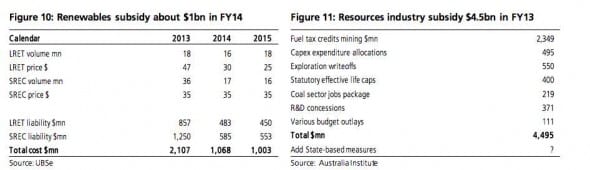
I can’t say I like all of these but they are a starting point for discussion.  The article also had this table comparing renewable and fossil “subsidies”.  (Excluding state subsidies which are quite significant.)

UBS subsidies

2.  Queensland power price goes negative in the middle of the day

Last week, for the first time in memory, the wholesale price of electricity in Queensland fell into negative territory – in the middle of the day.  For several days the price – normally around $40-$50 a megawatt hour – hovered in and around zero. Prices were deflated throughout the week.

There were several reasons for this. A restricted interconnector to NSW added to the volatile trading, as did uncertainty about the carbon price. But the overall softening of prices was primarily the result of the newest and one of the biggest power stations in the state – rooftop solar PV.

There is 1,100MW of it on more than 350,000 buildings in Queensland alone (3,400MW on 1.2 million building across the country), and  it is producing electricity just at the time that coal generators used to make hay (while the sun shines).

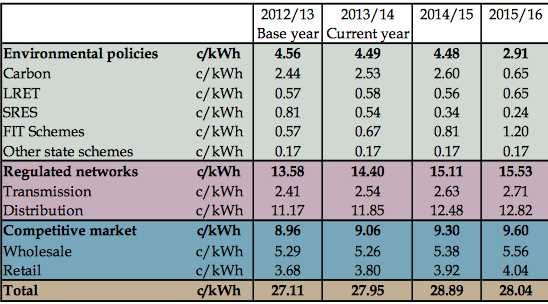
The article also had this table showing just how large the grid owners and retailers are costing consumers.

aemc electricity prices

3. Solar fuels exports from the Pilbara

This article argues that the Japan free trade agreement may hasten the production of solar fuels from the Pilbara.  A key argument is based around Japanese fears of LNG supplies being exposed to deteriorating relationships with China (as well as price uncertainty.)

Liquid ammonia is the logical solar fuel for production in the Pilbara.  Renewable ammonia can be produced from renewable power, water and nitrogen from the air.  Theoretical water consumption is 1.6 litres water per kg of ammonia so this shouldn’t be a problem even if desalination is required. (Other solar fuels such as gasoline require a source of CO2)

Liquid ammonia could be transported using LNG facilities.  The big disadvantage of liquid ammonia is that one kg of LNG has the same energy as 2.9 kg of liquid ammonia.   However, to some extent this disadvantage will be off set by the fact that ammonia can be used in fuel cells.

4. Turkey nest dams may be key to pumped storage in Australia

This article argues that “off river pumped storage” using small turkey nest dams overcomes the problems of using pumped storage systems with the dams in river valleys.

Off-river electricity storage has several advantages over typical on-river facilities:

– There are vastly more potential sites

– Sites can be selected that do not clash with environmental and other values

– The upper reservoir can be placed on top of a hill rather than in a valley, allowing the elevation difference to be maximised

– No provision needs to be made for floods (typically a major cost).

A system comprising twin 10ha reservoirs, each 30m deep, with a 750m elevation difference, can deliver about 1000 megawatts for five hours.

Between 20 and 40 of these systems would be enough to stabilise a 100 per cent renewable Australian electricity system.

How much does it cost?

As the reservoirs are tiny (just a few hectares) compared with typical hydro reservoirs, they are a minor component of the cost. Most of the cost is in the power components (pipes, pumps, turbines, transformers and transmission). Initial estimates suggest that the cost of an off-river system at a good site is around $1000 per kilowatt of installed capacity.

One m3/sec of water falling one m will generate 9.807 kW

The Heartbleed security vulnerability

Over the past couple of months, I have written a series of articles at The Conversation about one of the most serious software security flaws in history – the evocatively named “Heartbleed”.

The most recent article discusses the continued fallout from the event, and the tardy response of some system administrators and software developers. However, if you didn’t follow this story when it emerged in April, the first article explains the problem and the consequences in some detail, and the second article discusses how the discovery of the first bugs encouraged more scrutiny that found yet more problems.

Tomorrow, something on climate – a followup of sorts to Jess Hill’s cracking article in The Monthly about power prices.