Saturday salon 21/1

1. The rich have become gods

According to the latest Oxfam report, the top 1% now own more than the rest of us. In fact, just 62 people own as much wealth as the poorer half of the world’s population. The rich have become like gods. Marx said:

    Money is the supreme good, therefore its possessor is good.

Continue reading Saturday salon 21/1

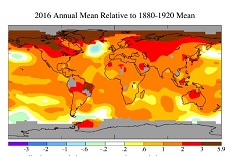
Record 2016 heat spells trouble on global scale

The third record year in a row has been declared. The last time it was as hot as this was 115,000 years ago. The last time CO2 was this high was in the Pliocene, 3 to 5 million years ago when the temperature became roughly 3 to 4 degrees Celsius warmer than today, and the sea level up to 40 metres higher.

Andrew Simms for The Guardian polled a number of scientists about whether we could keep warming under 2°C. Not a single one thought we would. One scientist said “not a cat in hell’s chance”. Kevin Anderson, now professor in Uppsala, said politically we gave up years ago. Prof Joachim Schellnhuber, director of the Potsdam Institute for Climate Impact Research, would “only confirm that it is still possible to keep global warming below 2C”. Technically speaking, I assume. Continue reading Record 2016 heat spells trouble on global scale

Vale Zygmunt Bauman

Zygmunt Bauman, sociologist and philosopher, died on 9 January. He had a particular place in my life, which I’ll contextualise later. My introduction was in 1999 through his book Work, consumerism and the new poor.

The message of the book can be simply stated. With the industrial revolution work was deemed intrinsically good, and more was better. It was preached from the pulpits. The poor had utility as a reserve workforce, to keep the cost of labour down.

The modern world, however, is shaped by consumption rather than production, and production could be automated or moved offshore. So the poor no longer have any utility, they are simply defective consumers.

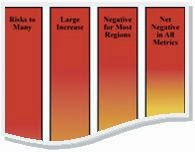
Climate risks re-examined

Back in 2001 the IPCC devised the famous Burning embers graph to reflect a broad perspective of risks emanating from climate change. Seventeen scientists have now had another look, original paper here. The graph has been enhanced with more information, which is itself more up to date. Continue reading Climate risks re-examined

Murphy’s Law: Economic outlook for Australia in 2017

Murphy’s law says that anything that can go wrong will. There is an awful lot that can go wrong with Australia’s economy in 2017, as this article by Michael Janda sent to me by John D shows.

An associated question is how should we react? Should we maintain our optimism, or should we take precautionary action? It’s a serious question, to which I’ll return later. Continue reading Murphy’s Law: Economic outlook for Australia in 2017

Saturday salon 14/1

1. Sussan Ley takes one for the team

Health and sports minister Sussan Ley took one for the team and resigned before inquiries into her expenses had concluded. Apparently while she was there journalists who currently have nothing much else to report on were digging into everyone’s business, like the four ministers attending the PM’s private New Year function.

Earlier Bronwyn Bishop amused everyone by saying that criticism of Ms Ley was socialism on the march. Continue reading Saturday salon 14/1

Trump compromised?

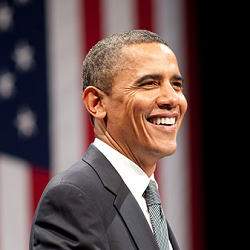
US intelligence agencies have briefed both President Barack Obama and President-elect Donald Trump that the Russians may well have information that compromises Trump. They don’t have anything they know directly, but they have information from a credible intelligence source which says that the Russians have information about his finances and about himself personally which would compromise him if released.
This may be why they wanted Trump rather than Hillary Clinton. Perhaps they didn’t have anything really damaging on her. They wanted what they call a “useful idiot” to win. Continue reading Trump compromised?

‘Wealthy’ pensioners pinged

As people most likely know, from 1 January 2017 some 327,000 pensioners have had their pensions adversely affected by changes in the assets test with around 100,000 losing their pensions entirely. Around 50,000 more will have their pensions increased to receive the full pension. The government is doing this to save $2.4 billion over four years, and, they say, to make the pension system more fair and sustainable.

Unfortunately proponents of the changes are framing this as about wealth, whereas it is actually about income. They are also saying that the changes are progressive, whereas the wealthy go completely free and the ones hit are actually hovering close to poverty, when you consider their income. Continue reading ‘Wealthy’ pensioners pinged

Wallerstein looks at the world in the era of Trump

Wallerstein usually doesn’t make short-term predictions, but has made an exception in the case of Trump. He says:
    It seems to me that everyone everywhere is focused for the moment on what will now happen in the short run. There seems to be no other subject of interest. Anxiety is at its maximum, and we need to deal with it.

Continue reading Wallerstein looks at the world in the era of Trump

Recalculating the climate maths

Start stopping now, is the short answer. No new coal mines, oil wells or gas fields, and start decommissioning existing ones now. “Managed decline” is the new imperative.

    A new study released by Oil Change International, in partnership with 14 organizations from around the world, scientifically grounds the growing movement to keep carbon in the ground by revealing the need to stop all new fossil fuel infrastructure and industry expansion. It focuses on the potential carbon emissions from developed reserves – where the wells are already drilled, the pits dug, and the pipelines, processing facilities, railways, and export terminals constructed.

Continue reading Recalculating the climate maths

Climate change, sustainability, plus sundry other stuff