Tag Archives: Abbott_Tony

Abbott is making Australia a joke on climate change

Australia is increasingly drawing fire from other countries about its lack of ambition in climate change action, according to The Guardian and RenewEconomy. The Age has editorialised on the matter.

The context is this.

At its December meeting of ministers in Paris the UNFCCC will strike a post-Kyoto international deal on climate mitigation post 2020. Countries were asked to put forward their draft plans by the end of March. Abbott deliberately ignored the deadline, putting forward a discussion paper (see Emissions reduction the Abbott way) with a submissions deadline of 24 April. Australia will submit its proposals in May. In this way Abbott has the chance to look at everyone else’s homework before he writes his own. Continue reading Abbott is making Australia a joke on climate change

Abbott explodes his economic credibility

Barrie Cassidy has called it a breathtaking shift in economic management.

Laura Tingle took the gloves off in an article Being governed by fools is not funny:

A bit like the old story of the frog that gets boiled alive because the temperature of the water in which it sits rises only gradually, we don’t seem to quite be able to take in the growing realisation that we actually are being governed by idiots and fools, or that this actually has real-world consequences.

We finish the week with a Prime Minister who has lost his bundle and is making policy and political calls that go beyond reckless in an increasingly panicked and desperate attempt to save himself; a government that has not just utterly lost its way but its authority; and important policy debates left either as smouldering wrecks or unprosecuted.

When debt under Labor reached 13% of GDP Abbott characterised it as a “disaster”, likely to send the economy down the Greek path. Suddenly, with 20% of his 2014 budget savings stalled in the senate, we have “done the heavy lifting” and the prospect of debt 50 to 60 per cent of GDP “is a pretty good result looking around the world”.

Here’s the graph of the forecast underlying budget cash balance from the Intergenerational Report:

IGR_underlying cash balance_BCEEB43A56494316992285B7177270E5.ashx

It shows the “currently legislated” path reaching a deficit of 6% of GDP in 40 in years.

Here’s Abbott, pointing to the wrong line, showing us that we’ve done the heavy lifting:

IGR_Abbott_1426668009686_600

Standard and Poor have warned that if debt, federal and state, goes beyond $30 billion we can expect to lose our prized AAA credit rating.

Laura Tingle and Phillip Coorey say that the federal budget’s forecast bottom line has gone backwards by at least $80 billion since the Coalition came to office.

Abbott and Hockey would have us believe that the bottom line on that graph represents the legacy from Labor. In fact the following set of graphs from Tingle’s article shows the deterioration in the hands of Abbott and Hockey. The first set on the left represent Labor’s legacy:

Tingle Mr 15_1426753757023_600

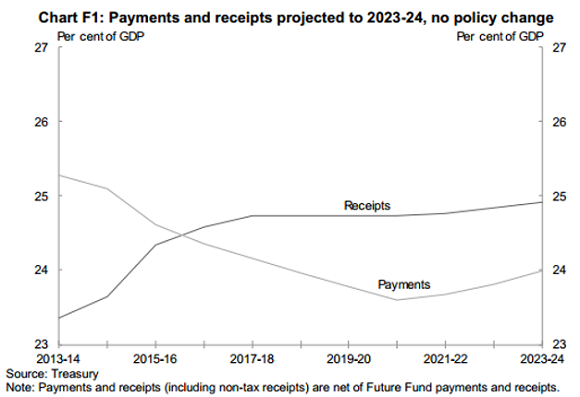
To emphasise the point about Labor’s legacy, this is the 10-year projection from the Pre-Election Fiscal Outlook (PEFO) prepared independently by Treasury and Finance and published under the charter of budget honesty in August 2013 before the last election is shown:

fcccad64-03b4-11e3-9d44-7643a0300d9c_chart1_580

That’s from this post.

Laura Tingle says that Labor’s focus groups keep throwing up the word “idiot” in relation to Tony Abbott. Swinging voters in Western Sydney in polling commissioned by Fairfax described the Prime Minister as “incompetent, an international embarrassment and a fool”. She thinks that there are “signs that our political system really is in deep trouble – not as a polemic point, but in a very real sense.”

Peter Martin tells us that:

In Labor’s last financial year in office, spending exceeded revenue by 5.4 per cent. This year it will exceed it by 13 per cent.

The budget does have to be fixed. The Reserve Bank Governor, Glenn Stevens, recently warned that in a recession a deficit of 3% of GDP will quickly balloon out to 6 to 7%. That allows no space for government stimulus of the economy.

Apparently Hockey has been sitting on a tax white paper for several months which is to be released next Monday, after the NSW election. Peter Martin looks to the savings available from super:

Treasury’s most conservative estimate has the concession for contributions to super funds costing $15.5 billion this financial year, climbing to $18 billion over three years. The tax concession for the earnings of funds costs $12 billion and is set to almost double to $22 billion. By way of comparison, Medicare costs $20 billion.

Peter Lloyd, Professor of Economics at University of Melbourne, puts forward some ideas, including:

  • Eliminating negative gearing for housing investments
  • Restricting the allowable deductions for depreciation and other business expenses
  • Revising rules relating to income from trusts
  • Tightening the rules for fringe benefit taxation
  • Reforming the taxation of super contributions and income
  • Reducing tax concessions for not-for-profit organisations

As he says, each one of these will meet objections from tax payers. But then the art of taxation was always plucking the goose without too much squawking.

A prime minister fighting for political survival appears to have thrown in the towel.

Update: I meant to mention that Labor had the budget remaining in surplus over the remaining part of a 10-year projection in order to show how Gonski and NDIS would be paid for, whereas Abbott/Hockey planned to slash schools and Hospital funding by $80 billion dollars.

Abbott is now saying that a surplus will be achieved within 5 years, whereas Mathias Cormann is saying “as soon as possible”.

See also They tell us lies, but are they clunkheads?

Saturday salon 14/3

voltaire_230

An open thread where, at your leisure, you can discuss anything you like, well, within reason and the Comments Policy. Include here news and views, plus any notable personal experiences from the week and the weekend.

For climate topics please use the most recent Climate clippings.

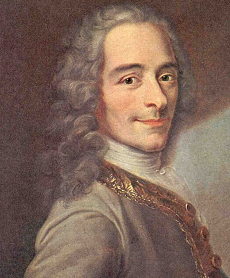
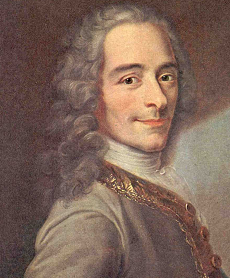
The gentleman in the image is Voltaire, who for a time graced the court of Frederick II of Prussia, known as Frederick the Great. King Fred loved to talk about the universe and everything at the end of a day’s work. He also used the salons of Berlin to get feedback in the development of public policy.

Fred would only talk in French; he regarded German as barbaric. Here we’ll use English.

The thread will be a stoush-free zone. The Comments Policy says:

The aim [of this site] is to provide a venue for people to contribute and to engage in a civil and respectful manner.

Here are a few bits and pieces that came to my attention last week.

1. Away next week

This week the Simpson Desert crossing fellowship is meeting for a reunion at Glen Alpin near Stanthorpe, where two of the couples live, I gather in idyllic circumstances.

A splendid time is assured, but it will take three days out of my blogging life. I promise I’ll think of you all!

2. Queensland Alzheimer’s breakthrough

Queensland scientists have discovered a new treatment that could help restore the memory of people suffering from Alzheimer’s disease.

The process uses ultrasound technology to help clear a plaque that builds up in the brain of Alzheimer’s sufferers.

They’ve successfully trialled the plaque-removal technology on mice. Human trials are about two years away.

About 250,000 Australians suffer from Alzheimer’s disease, the most common form of dementia.

3. Gender pay gap hits a two-decade high

The gender pay-gap is getting worse, not better, with new figures out yesterday showing the wage disparity between men and women has blown out to a two-decade high of 18.8 per cent.

The figures show that full time workers, when averaged across all industries, will earn $298 less per week if they happen to be a woman.

At the same time that lovely man, Employment Minister Eric Abetz, watered down business gender reporting requirements.

4. Abbott at it again

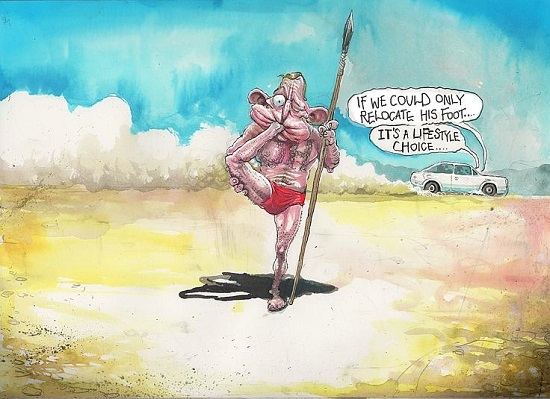
Every week we have at least one backflip, broken promise or gaffe. This week there were several but the prize goes to Abbott’s description of living in remote communities as a “lifestyle choice”, slammed by his own key indigenous advisers as “hopeless”, “disrespectful” and simplistic.

People are starting to make lists. The SMH reminds us of 10.

The AFR cartoonist David Rowe showed Abbott with foot firmly planted in mouth while advisers bemoan that “it’s a lifestyle choice.”

Rowe_c08dde44-c7d1-11e4-88b2-befebcebf2b0_syd-6jkrjh8mtvo3b8zaol9--550

Guy Rundle says Tony Abbott genuinely believes non-Christian societies are inferior.

Now I’d like to bring to your attention a poem by Graeme Henchel Why is Abbott a Dead Man Walking? It begins:

Was it justice, was it Karma?
Was it Murdoch, was it Palmer?
Was it lying and conceit?
Was it backbenchers fear of defeat?
Was it Mathias and Joe’s cigars?
Was it because we’ve stopped making cars?
Was it climate change denial?
Was it putting Julia on trial?
Was it the daughter’s scholarship prize?
Was it debt and deficit lies?

It goes on and on, ending with:

Was it the hubris and the swagger?
Was it Malcolm and Julie’s dagger?
Why will Abbott get the shove?
The answer is, ALL OF THE ABOVE.

5. Puzzling polls

Adrian Beaumont at The Conversation peers into the tea leaves, trying to make sense of the polls. Amongst the confusion is a cross-over between Morgan and Newspoll:

image-20150311-20517-eryfu1_march 11_600

Newspoll is said to be the one pollies watch. I reckon that if 8 days earlier we’d had Newspoll on 45-55, deteriorating from 47-53, instead of Fairfax-Ipsos on 49-51, we’d now have a new prime minister.

6. Fairfax axes rural staff

Some 80 positions are being cut from Fairfax media staff in regional Victoria. Reporters will file, sub-edit and edit their own work, plus do their own photography.

Fairfax said it was “building a modern, stronger rural and regional network”.

Let’s face it – Fairfax owns a large slice of the rural press in Australia, and it’s being gutted.

Abbott and the law

David Marr has turned his considerable forensic and rhetorical skills on Abbott in an article Tony Abbott running from the law in The Saturday Paper, the weekly version of The Monthly.

(You might be able to get free access to three articles a week by signing up. I took out a three-month sub to see how it goes.)

Rather than running from the law in then usual sense, Marr’s basic point is that Abbott has no feel for the law. In pursuit of political ends he actually shows contempt for it:

Abbott doesn’t set out to break the law. That’s not the point. But when the law stands between him and a quick win, he shows contempt for its values, its customs and the part they play in national life. (Emphasis added)

Abbott is pragmatic rather than principled – he does what it takes to win the contest at hand. What we expect from Abbott is:

minimum scrutiny by the courts, maximum power to government and close to nil concern for individual rights as Canberra pursues refugees in boats and lone wolf terrorists.

An example is the amendment last year of the Maritime Powers and Migration acts.

The amendment shreds our obligations under the Refugee Conventions and hands godlike powers to immigration ministers to decide the fate of refugees.

Malcolm Fraser called the bill: “The perverse creation of a government prepared to tear up the rule of law for its own political ends.”

Abbott’s attitude to the law can be seen in his response to a US court finding that there was no legal basis for holding David Hicks in Guantanamo Bay for five years:

“Whatever the legalities … he was up to no good.”

On several occasions now Abbott has ignored due process in declaring lone wolf terrorists guilty, using the most florid language. Within hours last September Abbott declared Omarjan Azari guilty of plotting random “demonstration killings” at the direction of a senior Islamic State figure linked to Australia.

Azari’s solicitor Steven Boland has attacked Abbott for “unprecedented intrusion by a sitting PM into criminal proceedings” and complained of “irreparable prejudice” caused to his client’s case. Abbott, he says, “has deliberately or otherwise spread misinformation that has no support in the evidence”.

The resu;t could well be Azari’s acquittal.

About a month ago Omar Al-Kutobi and Mohammad Kiad were arrested for planning a terrorist attack in Sydney with a knife and a machete. Immediately they were tried and found guilty by Abbott in parliament:

“I do not think it would be possible to witness uglier fanaticism than this, more monstrous fanaticism and extremism than this, and I regret to say it is now present in our country,” he told the house.

Marr says that respect for the law is a conservative value. Abbott is no conservative. PMs normally bridle at the restraints of the law.

Abbott has been willing to a remarkable degree to push the law aside to appease populist fears and populist contempt for human rights.

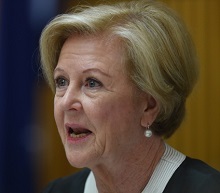
In responding to Gillian Triggs Abbott failed to recognise that the Human Rights Commission is one of the pillars of our justice system. Abbott descended into street-brawling mode in an attempt to win the point. In Abbott’s world inquiries are for stitching up an opponent. He thought he was being stitched. Forget the fact that children in detention are being damaged by public policy.

He forgets too, says Marr, that judges are trusted more than politicians. Abbott is playing to his base but with respect to the centre it looks like a losing strategy.

Saturday salon 7/3

voltaire_230

An open thread where, at your leisure, you can discuss anything you like, well, within reason and the Comments Policy. Include here news and views, plus any notable personal experiences from the week and the weekend.

For climate topics please use the most recent Climate clippings.

The gentleman in the image is Voltaire, who for a time graced the court of Frederick II of Prussia, known as Frederick the Great. King Fred loved to talk about the universe and everything at the end of a day’s work. He also used the salons of Berlin to get feedback in the development of public policy.

Fred would only talk in French; he regarded German as barbaric. Here we’ll use English.

The thread will be a stoush-free zone. The Comments Policy says:

The aim [of this site] is to provide a venue for people to contribute and to engage in a civil and respectful manner.

Here are a few bits and pieces that came to my attention last week.

1. Cutting funds to assist the homeless

Groups that provide aid to homeless people are set to start making thousands of their staff redundant from next month due to uncertainty over federal funding.

The National Partnership Agreement on Homelessness, a funding agreement between the states and territories and the federal government, is set to expire on 30 June, with no assurance from Canberra that the arrangement will continue.

Homelessness agencies have warned that dozens of programs will be axed if the $115m in federal funding ceases, potentially putting the lives of rough sleepers and women fleeing domestic violence at risk.

Canberra public servants can’t even to provide a date for a decision on the funding arrangements.

More than 3,000 staff, who provide support for more than 80,000 homeless people, will be affected. Redundancy notices will start to flow from the end of March.

2. Cutting research infrastructure funding

Above we saw that the Government has no heart. It also has no brains. Christopher Pyne in an indescribably venal move has tied research infrastructure funding to the passage of his higher education reforms.

For reasons that are unclear, the government has singled out the research infrastructure part of the annual A$9 billion science and research budget and is threatening to kill it for the sake of the A$150 million earmarked to keep the infrastructure afloat.

Without looking at the cutting-edge science that the facilities produce, the research facilities support just about every sector of the Australian economy from agriculture, to mining to drug design and medical research.

There are more than 35,000 researchers who use our major research facilities, and these will be progressively locked out as the facilities go off-line. More than 1,700 skilled scientific and support jobs are under threat if the facilities are mothballed. Even now we are seeing the signs of losing the corporate knowledge and erosion of the skilled professional workforce as staff seek more secure career opportunities.

And perhaps worst of all is the sheer waste of more than A$3 billion in capital investment as well as the hard work that has gone into building up new capacity over decades.

Some innovative companies will take their research overseas.

The universities are on their knees begging. Adam Bandt has called it “parliamentary blackmail”. It’s beyond stupid. Words fail!

3. GP Co-payment is ‘dead, buried and cremated’

That’s what Abbott assured us this week. Medicare is still unsustainable, according to the Government, though this is questioned by experts.

Health Minister Sussan Ley says the Government still wants people who can afford to contribute to the cost of their healthcare to do so. Presumably this would mean a rebate indexed according to affordability. Is this practical?

The Government will continue its pause on indexation of Medicare rebates, for GP and non-GP items. This must be wearing thin with doctors. It started with Labor in 2013 and there is no indexation for inflation.

So far bulk billing rates have held up pretty well.

The Minister says she is consulting. There’s also plenty to read at The Conversation on sustainable health spending and Medicare reform generally.

4. Soldiers get 2 per cent pay rise

In another exercise in barnacle scraping, the Government relented partially on defence force pay at a cost of $200 billion over the forward estimates. Jacqui Lambie says they’ve still been dudded by one per cent, it’s still an insult and she is considering her embargo on supporting government legislation.

5. 300 more Australian troops to be sent to Iraq

Australia is to send about 300 more troops to Iraq, to help train the Iraqi army in its fight against Daesh, also known as Islamic State.

Mr Abbott says the contribution is prudent and proportionate and it’s in Australia’s national interest to stop the militant group from inspiring supporters around the world.

The new deployment was quickly supported by Labor, but opposed by the Greens and the Independent MP Andrew Wilkie.

Abbott was boasting that he sweats with the troops. He tries to have physical training with them when he is on their bases. He’s certainly pushing the national security issue hard.

Like Wilkie, Bernard Keane at Crikey doesn’t agree with the deployment. He says we are doing what ISIS wants us to do, we are endangering our home security, and in any case the Iraqi armed forces don’t do fighting, they do torturing, murdering and raping Sunni prisoners.

I wonder how much this exercise will cost!

Puzzling polls

Mark Kenny at the SMH believes the Fairfax-Ipsos poll has thrown Tony Abbott’s leadership a lifeline:

Australian voters have thrown Tony Abbott a lifeline just as his internal opponents were shaping to dump him, with a Fairfax-Ipsos poll confirming a pro-government shift is under way.

In a result set to strengthen the Prime Minister’s hand in the short term, the Abbott government has staged an unlikely recovery and, while still trailing, is now within striking distance of overhauling the ALP lead at 49-51.

Coalition pollies seem to believe it and that’s what matters. Abbott is certainly acting like chief rooster in the chook yard again.

I’m inclined to think that Abbott is safe from his own mob until budget time, but perhaps not yet safe from voters’ ire.

Firstly, the Ipsos poll is new on the block, replacing Nielsen as Fairfax’s pollster. Adrian Beaumont says:

An important qualification with Ipsos is that all four of its polls, conducted since it replaced Nielsen as Fairfax’s pollster, have shown a clear lean to the Coalition relative to other pollsters. As a result, this poll should be interpreted as being at least 52-48 to Labor.

Peter Hartcher thinks the poll shows Abbott as a dead man walking. Fully 72% of voters say Abbott does not have the confidence of his own party. Only 21% say he does. Sportingbet says Abbott has a 75% chance of being removed from the leadership before the next election.

Indeed the ‘attribute’ section of the poll is simply awful for Abbott. Go here and scroll down.

Voters were asked whether specific attributes applied to Abbott and Turnbull. Only 39% thought Abbott competent (Turnbull 74%). 36% thought him trustworthy to Turnbull’s 55%. Only 33% rated him a strong leader to Turnbull’s 60%.

Abbott’s ratings are all negative, and all at historical lows.

This week’s Essential Report has Labor ahead TPP 53-47, the same as last week and a slight improvement on two and four weeks ago, which both came out at 54-46.

Peter Lewis and Jackie Woods of Essential Media Communications attempt some analysis. They say that some issues just don’t cut through. For example:

for all the bluster, the controversy around the Attorney-General and the Human Rights Commission has not captured the attention of the general public. When asked to pass judgment on the performance of the Commission, 44 per cent concede they don’t know enough to form an opinion. While it has dominated the national headlines, the reality is that most people just don’t follow politics that closely.

National security, however, is an issue that people think matters and pay some attention to. Three-quarters (75%) think the threat of terrorism happening in Australia has increased over the last few years – up from 57% in September 2014.

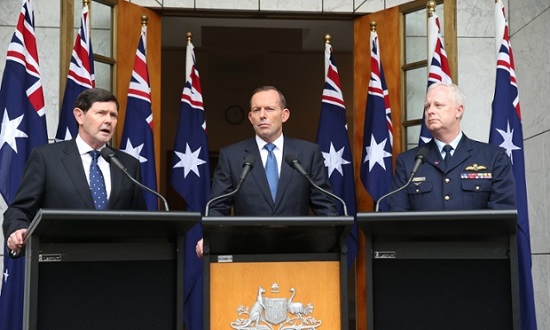
Newspoll tells us that 51% think Abbott is best at handling the nation’s security, whereas 31% go for Shorten. Last week Abbott stood in front of six flags to tell us about strengthened home security measures. This week he found eight flags to backdrop his announcement of 300 troops on the ground in Iraq.

b424db70-c46f-4bdb-b4a9-348089d95f5f-550

Lewis and Woods say, however, that Abbott’s handling of security matters is divisive. What he is doing may appeal to the Coalition base, but may not get him over the line.

To be frank, I’ve been amazed at how Abbott appears to have extricated himself, for now at least, from his near death experience. Where the story goes next, I think no-one can tell.

Abbott shoots himself in the foot – again

Chris Uhlmann and Sabra Lane say that pressure is building in the Liberal Party to remove Prime Minister Tony Abbott and that backbenchers and ministers say the Malcolm Turnbull now has the numbers. The leadership issue has risen again because of the brutal attack launched on Gillian Triggs as President of the Human Rights Commission. Ben Eltham says:

In a show of belligerence that has stunned seasoned political observers, the Abbott government has declared a personal vendetta against one of the most respected lawyers in the land. Triggs’ personal ethics have been questioned, her competence and impartiality attacked, and her conduct impugned.

Turnbull has certainly put some distance between himself and Abbott on the matter. He says that criticism of Triggs “misses the point” the point being the children in detention. Further, he said that Triggs was “a very distinguished international legal academic”.

Eltham again:

The findings of The Forgotten Children report should shame us all. Triggs found that children have been sexually and physically assaulted in federal care. Some children have been detained for more than 27 months. Many are denied education. Unaccompanied children are locked up in adult compounds. They are mentally and emotionally traumatised. There have been multiple instances of attempted suicide and self-harm.

A government with a scintilla of compassion would have welcomed the report, and redoubled its efforts to get children out of these hell-holes. And, if the Abbott government had wanted to, it could have spun the findings in its favour. For instance, the report found that there are fewer children in detention now than under the previous Labor government.

Instead the Government advised her that it had lost confidence in her and suggested that her legal talents might otherwise be employed by the Government. She declined. It then launched a public attack, bringing up also her finding in the Basikbasik matter.

A galaxy of legal scholars has signed a letter supporting Triggs, pointing out, inter alia, that the Government is not obliged to take her advice, a point she understands well.

Distinguished retired lawyer Hal Wooten tells why he signed up. He respects Triggs personally and professionally, the facts of the report speak for themselves.

Once again Mr Abbott has proved a loose cannon, but this time his wild firing threatens grave pain and injustice to a courageous and honourable public servant, and the undermining of a much needed national institution, as well as obscuring the terrible effect of detention on innocent children.

Richard Flanagan says that some day a PM will apologise for what it is now doing. He thinks:

The only accusation of Gillian Triggs with the ring of truth is that she has lost the confidence of the government – but then so too has Tony Abbott. Gillian Triggs’s real crime is that as human rights commissioner she spoke up for human rights with a government that has no respect for them.

He also sees women and children as being at the bottom of the pile, as it were. Triggs is being attacked as a woman speaking up for children.

Bill Shorten says Tony Abbott sank to ‘a new low’ over Gillian Triggs’s treatment and that Abbott was ‘psychologically unsuited’ to the prime ministership.

Annabel Crabb says the Government is thumping Triggs when it could/should be thumping Labor. It has also presented Labor with the moral high ground.

Jonathon Green has written the speech Abbott could have made about Triggs’ report, with Triggs at his side.

One point is that there were 1500 children in detention when the LNP took over. Now there are 126.

For the record, from Berard Keane at Crikey, this is what Chris Moraitis from Brandis’s department told the Senate hearings:

“There were essentially three points that I was asked to make. One was that the Attorney had lost confidence in Professor Triggs as chairperson. He retained significant goodwill towards her and had high regard for her legal skills. In that respect, he was asking me to formally put on the table or mention that there would be a senior legal role, a specific senior role, that her skills could be used for.”

Brandis later quibbled over the word “position” being tossed around, emphasising that the offer was for a role. But an offer there surely was, later denied by Julie Bishop representing Brandis in the House of Representatives.

Meanwhile much of importance, such as the McClure report on social security, is not being discussed.

Abbott’s war on terror

TONY ABBOTT NATIONAL SECURITY ADDRESS

The tricky thing about Man Haron Monis and the Lindt Café siege, is that he acted alone and was taken rather as a harmless buffoon by the security agencies. The terror threat from random actors is very real. Annabel Crabb says that

It’s clearly an escalating threat situation. Anyone carrying on today about how Tony Abbott is just cooking it all up to save his own skin is thinking wishfully.

She says that there are now:

Four hundred current investigations by ASIO, sixty-two new biometric screening gates to catch people travelling on false passports, forty-nine extra AFP officers across Sydney, Melbourne and Canberra working on the problem of Aussie jihadists abroad, and so on.

Certainly Abbott is playing to a political strength. Newspoll tells us that 51% think Abbott is best at handling the nation’s security, whereas 31% go for Shorten. 7% say neither, and 11% are uncommitted.

What the Government intends to do was spelt out on Radio National’s PM:

  • There will be a national counter-terrorism co-ordinator “to bring the same drive and focus to this as we’ve brought to Operation Sovereign Borders.”
  • On immigration a harder line will be taken to “keep out people with security questions over them.”
  • “The Government will develop amendments to the Australian Citizenship Act so that we can revoke or suspend Australian Citizenship in the case of dual nationals.”
  • The Government is looking at “suspending some of the privileges of citizenship for individuals involved in terrorism.” Privileges susceptible to suspension could include “the ability to leave or return to Australia”, “access to consular services overseas” and “access to welfare payments”.
  • The Government will take action against hate preachers by “enforcing our strengthened terrorism advocacy laws” including “new programs to challenge terrorist propaganda and to provide alternative online material based on Australian values, and it will include stronger prohibitions on vilifying, intimidating or inciting hatred.”
  • Muslim community leaders should speak up more. When they talk about Islam being a religion of peace that they should mean it.

All this doesn’t actually amount to much, according to Annabel Crabb, apart from enforcing existing laws and some blowhard (my term) urging.

Bill Shorten offered bipartisanship, saying that Labor would “engage constructively” with the government but counselled:

Haste and confusion is never the friend of good, sensible security in the future.

Abbott had also said quite explicitly that individual liberties might have to be sacrificed to ensure the safety of the community.

According to Grattan:

Shorten said there always should be a strong presumption in favour of individual liberty. “This presumption should only be reduced, rebutted or offset to the extent that current arrangements are proven to be inadequate.”

I’m concerned about what Abbott and Brandis might do in returning to section 18C of the Racial Discrimination Act. Frankly I’m concerned about anything Brandis does after getting out of bed.

I’m concerned about revoking citizenship. Once people are Australians, we should take responsibility for them rather than shunt them to a different jurisdiction, or virtually render them stateless.

Sangeetha Pillai argues that there’s more to be lost than gained in stripping citizenship. She says that most of what is proposed that is achievable can already be achieved by other means. In other words existing laws suffice. She says “commentators have been quick to note that amendments along these lines carry the risk of exacerbating feelings of social disaffection that can underpin extremism.” Her bottom line:

The limited potential effectiveness of the proposed measures, combined with the challenges of implementation and the possibility for them to be counter-productive, suggests that the losses may outweigh the gains.

I’m concerned also that there might be hassling of Muslim’s and consequent increased radicalisation.

Abbott’s words about Muslim community leaders were, according to Michelle Grattan:

“I’ve often heard Western leaders describe Islam as a ‘religion of peace’. I wish more Muslim leaders would say that more often, and mean it.”

Shorten and Julie Bishop were quick to distance themselves from these remarks. One Muslin community leader suggested that Abbott should engage in anything he chose except politics. I understand that some community leaders declined to attend a special briefing.

Randa Abdel-Fattah has a fine piece on the ABC religion and Ethics site:

Flanked by a row of Australian flags, Tony Abbott, like a priest performing a rite of passage, formally inducted Australian Muslims into the category of Australia’s primary Other.

The Prime Minister’s stated intention was to provide the nation with clarity and reassurance – just in case the decade-long stream of moral panic, manufactured fear and Islamophobic sentiment had left Australians in any doubt as to who successive governments deem as “un-Australian.”

In a way, the Prime Minister has done Muslims a favour. For he has made explicit what is at the heart of this government’s war on terror (picking up where previous governments left off). It has never been about targeting a radical minority or national security per se. The real struggle is to re-configure our social, discursive and symbolic relations around a politics of us and them.

There are many tragic consequences to this state of affairs. But at least the government has now laid bare the fact that it is prepared to hold social cohesion, justice and national security to ransom in its war on terror.

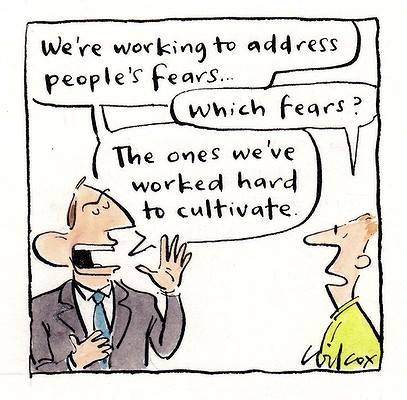
I’ll finish with this Wilcox cartoon from August last year:

10385377_10152391991503191_5473164664640791266_n

I’m sorry, Annabel Crabb, the problem’s for real, but Abbott isn’t – not entirely. Guy Rundle says Abbott should act like a statesman. It seems to be beyond him.

Abbott’s battles back, but will he make it?

Abbott has two big challenges right now. One is to settle his party, organisational and political, down and the other is to cream Labor in the polls.

On the latter it was one step forward with a long way to go. Morgan saw the LNP improve from 43-57 to 44-56. Still in wipe-out territory. The only demographic were the LNP heads Labor in the TPP vote is the 65+ group.

In Newspoll the LNP improved from 43-57 to 47-53, a difference worth writing about. Nevertheless it leaves Labor with a comfortable winning position.

The Greens were unchanged at 12 per cent.

The papers are making much of Bill Shorten’s net approval rating, which dipped from +2 to -14. Abbott’s ‘improved’ from -44 to -43.

Shorten still heads Abbott as preferred prime minister 43 to 35, with Abbott closing from a hopeless 48 to 30 thumping last time.

In personality terms Abbott is a shocker. The Abbott-Shorten scores are:

    Understands the major issues 52-68

    Cares for people 55-71

    Arrogant 77-46

    Likeable 40-64

    In touch with voters 33-63

    Trustworthy 43-59

They were remarkably similar on Experienced, Decisive and strong and Vision for Australia.

On handling issues they stack up Abbott-Shorten as follows:

Australia’s economy 45-37

National security 51-31

Health and Medicare 30-56

Education 33-53

Asylum seekers 51-32

Climate change 24-55

With that one the scores should add up to 100, with the shortfall made up of Neither and Uncommitted. These totalled from 14 to 21%.

Politically Abbott is playing to his strength with his ‘war on terror’ which I hope to post on soon.

It is possible to battle back from a desperately losing position, as Howard did in 2001, largely on the back of a war on asylum seekers.

He did have his party behind him.

True, after the liberals had lost the blue ribbon seat of Ryan in a by-election and party president Shane Stone sent him a memo accusing the government of being “mean and tricky”. Essentially Howard took notice.

The “mean and tricky” leak is now being compared to Fairfax’s publication of excerpts from two candid and blunt emails from party treasurer Phil Higginson. RN’s PM reporter James Glenday:

it’s now obvious the Prime Minister’s grasp on power is being actively undermined by a steady stream of leaks.

Abbott:

Plainly there is this desire on the part of some to damage and destroy this government.

But who? The Drum looks at the leaks that rocked Australian politics politics. All were damaging and the leakers were never discovered. Could be one of the seven ministers who are said to have Abbott on notice.

Guy Rundle in a delicious (for lefties) article at Crikey (paywalled, unfortunately) says we are we are watching the throes of a dying government:

Like Howard in 2007, Abbott is politically dead — he just doesn’t seem to have noticed yet.

How good is this? Seriously, how good is it? I know I should start a piece about the Abbott government in some more serious vein, about the new stuff about redrawing the line between security and freedom being the desperate act of a dying government but no less dangerous for that, but ehhhh …

frontbench555x295

Climate clippings 127

1. Queensland’s minister for the reef

Premier Palaszczuk’s new ministry contained some surprises, including the appointment of Steven Miles as Minister for the Great Barrier Reef. His full handle is Minister for Environment and Heritage Protection, Minister for National Parks and the Great Barrier Reef.

According to the WWF, Minister Miles will be responsible for delivering ALP environmental commitments including: a ban on dumping dredge spoil in the Great Barrier Reef World Heritage Area; an 80 per cent reduction in pollution run-off into the Reef by 2025; and the reinstatement of key legal safeguards.

2. Japan now has more EV chargers than petrol stations

The number of EV charging points in Japan, including fast-chargers and those installed in homes, has reached 40,000, surpassing the nation’s 34,000 gas stations, a new report has found.

The surprising figures were reported last week by Japanese auto giant Nissan, whose fully electric car, the Leaf, has been one of the world’s big EV success stories, selling 160,000 cars globally since its 2011 launch date.

Mainly in Japan, the US and Europe.

It should be noted that some of the charging stations are in private homes. Also petrol stations have multiple pumps, not reflected in the figures.

Tesla has its own network of (solar powered) charging stations in the US – and has plans to build versions of this supercharge network in China, Europe and Australia.

In Australia, local fast-charge tech company, Tritium, installed its first public Veefil EV charger in Brisbane at a BMW dealership in Fortitude Valley – the first of a planned “electric super highway” of fast chargers along the east coast.

3. Temperature records vs trends

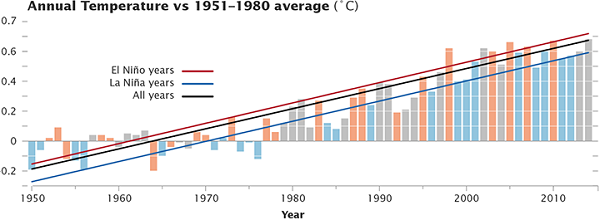
Gavin Schmidt, who has succeeded James Hansen as head of NASA GISS, has some Thoughts on 2014 and ongoing temperature trends. The shorter Schmidt is that while individual records grab the headlines, they don’t matter nearly as much as the underlying trend. This graph shows the overall trend in relation to El Niño and La Niña and years:

graph_gis_2014-1_600

The blue bars represent La Niña years, the orange El Niño and the grey neutral years. 2014 is bang on trend, but only marginally higher than 2005 and 2010. Yet it is grey to their orange.

Schmidt doesn’t mention this, but while 2014 was neutral it did feature anomalous warming in the northern Pacific, rather than the eastern equatorial Pacific warming associated with El Niños. This warming is said to have some of the same climatic effects as El Niño. Perhaps we need a new category with a fancy name.

4. Climate sensitivity conundrums

The term is “equilibrium climate sensitivity” (ECS). It represents “the global surface temperature change anticipated as a result of doubling atmospheric carbon dioxide concentrations.” John Fasullo has done a post on the current challenges and constraints in relation to the concept. It’s technical and I find it a bit boring, but ECS is an absolutely central concept to climate change discourse.

The basic problem is that the IPCC broadened the uncertainty range at the lower end from 2-4.5°C in IPCC4 to 1.5-4.5°C in IPCC5. The likely midpoint is still 3°C.

Fasullo has a lot of complex argument about the constraints arising from observations and models. What I think it comes down to is this.

The cut-off date for published papers for IPCC5 was July 2012. Prior to that date there had been several papers suggesting uncertainty at the lower end. Now the literature has swung back the other way. There was also the ‘warming pause’, which for a while back there was deemed by some to be real.

Fasullo makes it clear that the calculations are based largely on short-term effects. In Climate clippings 125 I referred to a David Spratt article which refers to the work of Hansen, Tripati and others which put longer term ECS at 4.5°C or more. And part of the point of the Michael Mann article was that we are starting to get into the longer term feedback zone.

I think they should all go back and read Hansen et al Earth’s Energy Imbalance and Implications (2011, I think) pages 4-18. The table on p17 gives ECS at 8°C or more, depending on certain definitions and circumstances.

5. Origin Energy to build Australia’s biggest rooftop solar array

Origin Energy and Zen Energy Systems are to build a 3MW solar system on the rooftop of the old Mitsubishi factory in Tonsley, Adelaide, in what will be the largest rooftop solar array in the country.

The awarding of the contracts was announced by the South Australian government this week. The intention to build the array was first announced late last year.

Origin Energy will own the rooftop array and sell the output to the tenants of the Tonsley high tech centre…, under a power purchase agreement that it is looking at replicating elsewhere in the country.

Here’s an artist’s impression of the site:

tonsley-solar-300x148

6. Origin shifts retail focus to rooftop solar and battery storage

Origin Energy has provided further details of its impending major push into the domestic solar market, saying that it expects rooftop solar to grow five-fold over the next 15 years, and battery storage will also emerge.

The Tonsley centre initiative is one example of this company reorientation. Seems AGL is looking to follow suit.

Saturday salon 21/2

voltaire_230

An open thread where, at your leisure, you can discuss anything you like, well, within reason and the Comments Policy. Include here news and views, plus any notable personal experiences from the week and the weekend.

For climate topics please use the most recent Climate clippings.

The gentleman in the image is Voltaire, who for a time graced the court of Frederick II of Prussia, known as Frederick the Great. King Fred loved to talk about the universe and everything at the end of a day’s work. He also used the salons of Berlin to get feedback in the development of public policy.

Fred would only talk in French; he regarded German as barbaric. Here we’ll use English.

The thread will be a stoush-free zone. The Comments Policy says:

The aim [of this site] is to provide a venue for people to contribute and to engage in a civil and respectful manner.

Here are a few bits and pieces that came to my attention last week.

1. Brandis staffer oversees Labor meeting with Gillian Triggs

This scungy mob don’t know how to behave.

When Mark Dreyfus, shadow attorney general, met human rights commissioner Gillian Triggs Brandis’s deputy chief of staff, Josh Faulks, turned up at the commission’s Sydney office at the appointed time for the meeting. Both Dreyfus and Triggs asked him to leave.

Faulks refused, saying he was acting on the instructions of the attorney. The meeting proceeded with Faulks watching.

The Human Rights Commission is an independent statutory body.

At the same time Abbott refuses requests from Triggs for a meeting and Brandis has been unable to find time in recent months.

Simply outrageous.

2. Abbott wades into the Bali nine affair

When Abbott promised an “absolutely unambiguous” response if Bali nine the executions went ahead, I was inclined to agree with him. I thought there should be some very overt sign of our displeasure if our neighbours kill some of our citizens. However, I thought, now is not the time to be saying this.

I also thought it was very bad form to remind Indonesia about the help we gave them during the aftermath of the Aceh tsunami. Surely we gave help because it was needed, not in the hope of future favours.

It seems that Abbott’s intervention was a real diplomatic clanger and may have undid much of the carefully crafted strategy pursued by Julie Bishop and others. Lets hope no-one takes the clown too seriously. Certainly Julie Bishop made clear to RN Drive that aid was a quite separate issue.

3. Remembering the freedom rides

Nearly every week we remember some significant event of the past. This week it was the freedom rides of 50 years ago. Ann Curthoys and Brian Aarons remember:

We travelled by bus to protest against racial discrimination against Aboriginal people in New South Wales country towns such as Walgett, Moree, Bowraville and Kempsey.

Although we had done our best to prepare, the non-Aboriginal students were shocked by what we found: desperately poor living conditions on fringe settlements, missions on which white managers controlled every aspect of Aboriginal people’s lives, white people convinced of their racial superiority, and exclusion of Aboriginal people from the basic amenities of a country town.

So, we protested against the exclusion of Aboriginal people from RSL clubs in Walgett, swimming pools in Moree and Kempsey, and picture theatres in Bowraville.

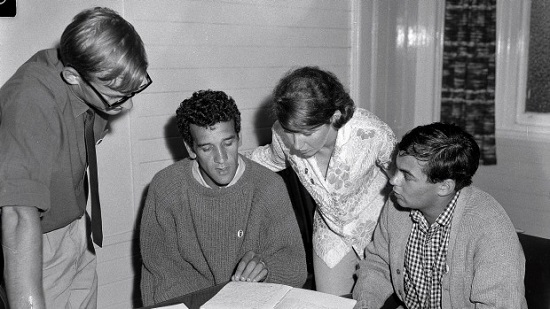
The SMH tells the story of the re-enactment. Here John Powles, Charles Perkins, Patricia Healy and Jim Spigelman plan the ride:

Freedom rides_1424227244392_550

How much has changed? A lot, but there is more to go, according to this account of Moree then and now.

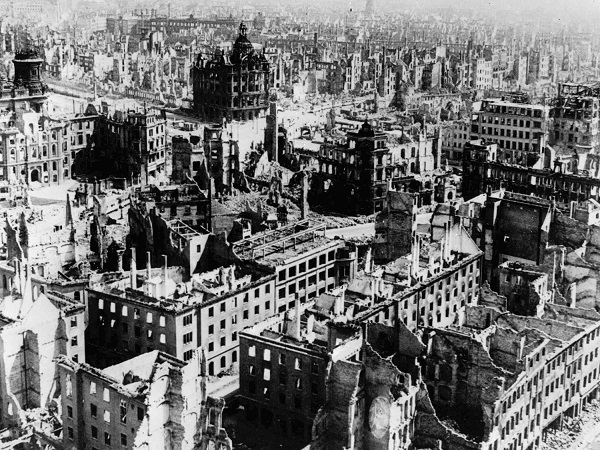
4. Remembering Dresden

Just a week ago, on 13-14 February, we remembered the 1945 carpet bombing of Dresden and the consequent fire-storm in which at least 25,000 people died. There are some historic pictures at The Atlantic:

Dresden_main_600

The Daily Mail concentrates on photos of the commemoration, including the magnificent rebuilt Frauenkirche. It also includes historic photos towards the end.