

Category Archives: Climate Action

Climate clippings 92

Climate clippings_175 This is a continuation of the Climate clippings series familiar to readers of Larvatus Prodeo

While this edition was finished about a week ago I actually started writing stuff from about mid-February and have several others queued in the draft bin. They’ll be fed in periodically at the rate of perhaps more than one a week until I catch up with myself.

1. Strong El Niño rated an 80% chance

That’s according to Paul E. Roundy of the University at Albany, New York.

The sub surface temperature of the eastern Pacific Ocean is measuring an ‘astounding’ six degrees warmer than normal for this time of year.

The only time anything similar has happened was in March 1997, before the whopping 1998 El Niño.

An El Niño normally means dry conditions and reduced monsoons in Australia and Indonesia, but wetter weather in Central America.

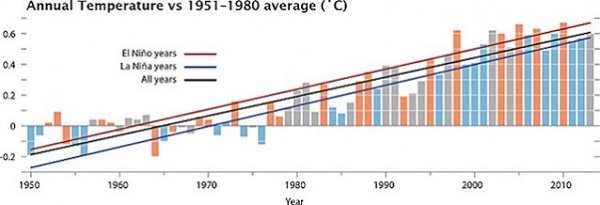
Climate Progress shows this interesting graph:
gistemp_nino_s-600

Since 1998 there have been six La Niña years warmer than any El Niño years prior to 1998.

At Mashable Andrew Freedman quotes the same people but found at least one scientist who thinks there’s perhaps a 40% chance there will be no El Niño at all.

Worth watching. Could be spectacular.

2. Wave and tidal energy

Climate Progress reports on wave energy projects at Morro Bay in California and elsewhere.

A 2012 report prepared by RE Vision Consulting for the Department of Energy found that the theoretical ocean wave energy resource potential in the U.S. is more than 50 percent of the annual domestic demand of the entire country. The World Energy Council has estimated that approximately 2 terawatts — 2 million megawatts or double current world electricity production — could be produced from the oceans via wave power.

3. The Pacific Ocean is turning sour

Much faster than expected, according to a new study.

Apparently CO2 concentrations are not uniform around the world and the tropical Pacific is getting more than its fair share. Hence the ocean in that area is acidifying faster than elsewhere.

4. Oxfam on food futures

From Huff Post, Oxfam has just completed a report (downloadable here) which suggests that climate change could delay the fight against world hunger for decades. Global food prices could double by 2030, with half the increase attributable to climate change. In the next 35 years there could be 25 million more malnourished children under the age of five than there would otherwise be.

Oxfam analyzed ten gaps that measured how prepared – or unprepared – 40 food-insecure countries are to tackle climate change impacts.

We assess ten key factors that influence a country’s ability to feed its people in a warming world – these include the quality of weather monitoring systems, social safety nets, agricultural research and adaptation finance.

As expected, the poorer countries will be most affected.

5. Will we still be able to have a decent cup of tea?

At the foot of the Huff Post Oxfam link above is a graphic showing the top “endangered” crops listing in order chocolate, coffee, beer (at least in Germany), peanuts, durum wheat to make pasta in Italy, maple syrup, honey, wine (at least in France). It must be said that I couldn’t find that list in the Oxford report which is mainly about staples such as rice and vegetables.

Now it seems that Assam tea is being affected by hotter, drier weather with more erratic rainfall. Indeed tea growing all over the world is becoming more difficult.

There’s more at the BBC.

6. More on global food security

A separate study found that from 2030 onwards, the world’s crop yields will be more and more impacted by climate change.

The study found that Sub-Saharan Africa and South Asia showed significant yield reductions for the second half of the century, while regions of the world with temperate climates, such as Europe and most of North America, could withstand a couple of degrees of warming without a noticeable effect on harvests, or possibly even benefit from a bumper crop.

One of the most important findings of this study is that adaptation may not be as effective for rice and maize as it is for wheat.

7. On the other hand

If you need a more cheerful story, here’s one about peasant farmer Vu Thi Ngoc who has adapted to crazy weather in the uplands of northern Vietnam by growing a different range of crops and changing farming practices.

It shows adaptability at work, this time with the help of CARE and Vietnam’s Agriculture and Forestry Research and Development Centre for the Northern Mountainous Region.

Reminder:

These posts are intended to share information and ideas about climate change and hence act as an open thread.

But as ever, I do not want to spend time in comments rehashing whether human activity causes climate change.

Climate clippings 90

Climate clippings_175These posts are intended to share information and ideas about climate change and hence act as a roundtable for readers to contribute items of interest. Again, I do not want to spend time in comments rehashing whether human activity causes climate change.

This edition begins with a couple of items on extreme weather, but is mainly about solar electricity. Once again, thanks to John D for providing some links.

1. Snow in Egypt

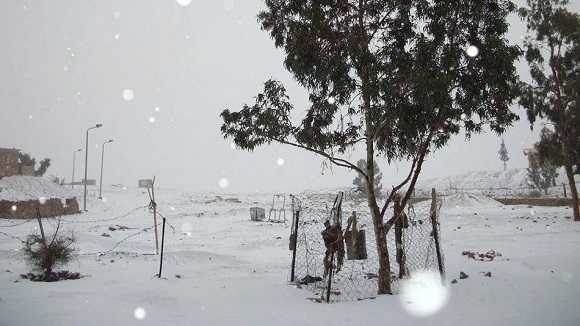
Recently snow fell across the Middle East, with pictures from Egypt, Israel, Syria, The Lebanon and Iran.

EGYPT-WEATHER

Conditions in refugee camps in the area must be horrific. Flooding was general throughout the area, including Gaza.

See more photos of extreme weather.

Lest you think global warming has gone away, November 2013 was the globe’s warmest November since records began in 1880, and the 345th consecutive month with global temperatures warmer than the 20th century average. Continue reading Climate clippings 90

Real clothes for the emperor

“When I look at this [CO2] data, the trend is perfectly in line with a temperature increase of 6 degrees Celsius, which would have devastating consequences for the planet.” Fatih Birol, IEA chief economist

That’s one of the favourite quotes by Professor Kevin Anderson of Manchester University and the Tyndall Centre (personal website here) who, like James Hansen in the US and John Schellnhuber in Germany, is a leading climate scientist who speaks plainly about the dangers of global warming and the situation we’re in. Much of his important work seems to have been done with Alice Bows, now Bows-Larkin. In this piece I’ll refer to “he” or “they” depending on my perception of the source.

Real clothes for the emperor was the title of a talk Anderson gave to unionists in June 2013 (slides here).

Their basic point is that no real progress has been made since the Rio Summit in 1992 from which international action flowed through the agency of the UNFCCC and the IPCC. Policy makers in nations with ostensible targets seriously fudge the game so that economic growth is not inconvenienced.

Another favourite quote of theirs is:

“… dangerous climate change can only be avoided if economic growth is exchanged, at least temporarily [until low carbon energy supply is widespread], for a period of planned austerity within Annex 1 nations…” – Anderson and Bows, 2011

I’ll proceed by stating their main summary points in turn followed by a brief explanation. Continue reading Real clothes for the emperor

Assessing dangerous climate change

Seventeen high-profile academics with expertise across the climate research spectrum, from atmospheric science, earth science and environmental science, to economics, global change and public health led by James Hansen, now at Columbia University’s Earth Institute, have published a paper Assessing “Dangerous Climate Change”: Required Reduction of Carbon Emissions to Protect Young People, Future Generations and Nature which demands attention.

The bottom line is that “aiming for the 2°C pathway would be foolhardy” because it “would have consequences that can be described as disastrous”. The authors believe that humanity and nature, the modern world as we know it, is adapted to the Holocene climate that has existed more than 10,000 years. Departing from this climate by more than 1°C would have intrinsically harmful effects. At 2°C these effects become unacceptably severe. Moreover we enter a zone where further feedbacks, such as ice sheet response, methane release and vegetation change, are likely to push the climate towards further warming, of probably at least 3°C.

James Hansen and Pushker Kharecha have done a summary with discussion here, then there’s Joe Romm at Climate Progress, Tim Radford at Climate Code Red, Damian Pattinson, Editorial Director, PLOS ONE and at Huff Post. My partial summary is below. Continue reading Assessing dangerous climate change

Climate clippings 89

Climate clippings_175These posts are intended to share information and ideas about climate change and hence act as a roundtable for readers to contribute items of interest. Again, I do not want to spend time in comments rehashing whether human activity causes climate change.
This edition is a mixture of science and implementation issues that found me rather than I found them. A couple came from Mark’s Facebook. The last item was drawn to my attention by John D.

1. Electric tents

If you want a tent for the holiday period that stands out from the pack and generates enough electricity to power computers, phones, cameras and loud speakers then
Bang Bang Tents is for you.

Bang Bang tents_cropped_500 Continue reading Climate clippings 89

Saving the CEFC

Sophie Vorrath at RenewEconomy reports that both Senators Xenephon and Madigan spoke against the bill to abolish the Clean Energy Finance Corporation (CEFC). The Abbott government may not be able to complete their destructive war against renewable energy, even with the new senate next July. My understanding is that they need six votes from the cross benches. These may be hard to find.

However, Vorrath gave prize for best and most impassioned Senate speech in defence of the CEFC to WA Greens Senator Scott Ludlam, who repeatedly pointed out the lack of Coalition Senate representatives to argue their side of the debate. I’ve republished here her selection of highlights in plain text rather than italics. Continue reading Saving the CEFC

Galilee Basin coal: a vision splendid or a kind of madness?

This map gives some idea of the geographic positioning of the vast Galilee Basin, one of the greatest untapped coal reserves in the world.

Galilee basin18

This map locates it in relation to some well-known towns.

Last year we were told that nine coal mines are proposed. The Alpha proposal and Kevin’s Corner (GVK and Hancock Coal) could each produce 30 million tonnes per annum for export, Palmer’s China First hopes for 40 million tonnes. The Carmichael deposit (Adani) at 10 billion tonnes is the world’s largest coal deposit. I think the plan there is for another 30 million tonne mine.

Greame Readfearn has calculated that the Alpha and Kevin’s corner projects alone will produce 3.7 billion tonnes of CO2-e when burned. He compares that to the UK which emitted 571.6 Mt of CO2-e last year. He also outlines some of the difficulties being encountered, including contestation in the land Court.

Greenpeace calculated that if the Alpha coal project was a country, its annual emissions would be higher than the likes of Austria, Columbia and Qatar.

Last week Lateline highlighted the problems encountered by Adani, mainly high debt. A report by the Institute for Energy Economics and Financial Analysis commissioned by Greenpeace found the project “uncommercial” and found that Adani Power was losing money on its other operations. Continue reading Galilee Basin coal: a vision splendid or a kind of madness?

Climate clippings 88

Climate clippings_175These posts are intended to share information and ideas about climate change and hence act as a roundtable. Again, I do not want to spend time in comments rehashing whether human activity causes climate change.
This edition is completely about implementation issues and is largely based on a number of links drawn to my attention by John D, for which gratitude and thanks. I’ve restricted the offering to six items to make it more digestible.

1. The battery storage system that could close down coal power

A German company is developing relatively large scale battery storage (up to 10MW-sized battery parks) which could “stabilise the grid faster, cheaper and with greater precision that conventional generation.”

Screen-Shot-2013-11-21-at-3.48.40-am_450

It says that these systems can substitute 10 times the capacity from conventional generation – coal, nuclear and gas – and at a fraction of the cost. According to Younicos spokesman Philip Hiersemenzel, each battery park can be installed at around € 15 million, which means that for an investment of €3 billion, conventional generation in Germany’s 80GW would no longer be needed – at least for frequency and stability purposes. Continue reading Climate clippings 88

Numbers add up to keep Clean Energy Finance

This article from Climate Spectator tells us that shutting down the Clean Energy Finance Corporation (CEFC) will actually cost the government $200 million each year in lost revenues.

The article refers to an article (by Laura Tingle) in the AFR. Apparently my $3 per day subscription doesn’t entitle me to see the article online – the first time I’ve encountered this problem.

In the dead tree version we are told that the CEFC is making 7% on funds invested, as against their benchmark of 3%, being the five-year bond rate. Other than being a good Labor idea, I think the Government’s objection may be that the CEFC adds to gross debt. The fact that it adds nothing to net debt is apparently irrelevant.

The dividend stream more than covers the cost of administration. The Direct Action alternative is to pay public servants to hand out taxpayers’ money without a return.

Each dollar spent by the CEFC leverages $2.90 in private capital expenditure. So far over $500 has been spent leveraging $1.55 billion of private capital investment.

Apparently the CEFC operates in a niche that would not happen without it.

It has been able to do deals that are too small, too complicated, or not previously done in Australia. In other words, deals that bankers can’t get past their own credit committees which prefer easier propositions.

Perhaps the CEFC’s real crime is to offend Big Coal.

Climate clippings 87

Climate clippings_175These posts are intended to share information and ideas about climate change and hence act as a roundtable. Again, I do not want to spend time in comments rehashing whether human activity causes climate change.
This edition picks up the theme of activism mentioned in Climate change: reconnecting politics with reality.

1. Blue sky

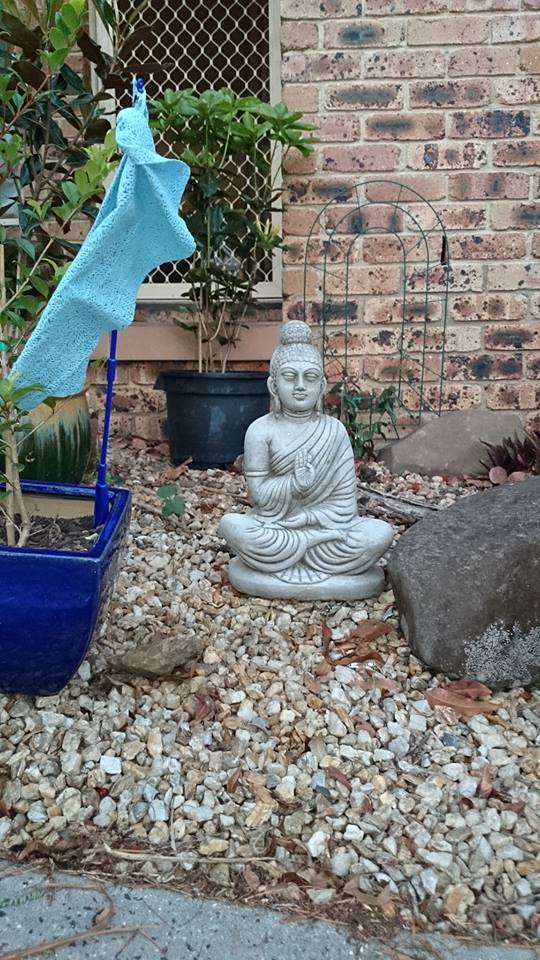
After the last election some friends of my younger brother, feeling blue, decided to turn blue into an optimistic colour, and invented the Blue Sky movement. To join all you have to do is ‘like’ the Facebook site put something blue on your front footpath visible from the road, take a photo and post it on the site. Yes, and take the Blue Sky Pledge, which includes reducing your own emissions, displaying blue for 12 months, and encouraging others to join.

Here’s one example:

Blue Sky_1395958_234410770055917_951721907_n
I notice that people have been using the site to share links.

If you click on “Community” or “About” at the head of the Blue Sky FB page and then click “more” you’ll get the full Blue Sky spiel.

2. Go Getup!

Ben Eltham thinks GetUp! is currently Tony Abbott’s most dangerous opponent. Continue reading Climate clippings 87

Climate change: reconnecting politics with reality

After the rally on Sunday 17 November Ben Eltham took a look at climate activism in the digital age and nominated climate policy as “the central battleground of 21st century politics.” Sooner or later, somehow or other, climate activism has to be turned into real politics. As one of the ten themes in the Centre for Policy Development’s Pushing our Luck: ideas for Australian progress Professor John Wiseman, Deputy Director of the Melbourne Sustainable Society Institute at the University of Melbourne looked at the shape of climate policy for the future.

You can find his whole piece at page 142 on the pdf counter, but I’ll attempt to give a brief outline here.

First he surveys the science, our prospects and the risks. The risk of a 4C future is unacceptably high. He quotes the World Bank’s report Turn Down the Heat:

    ‘Even with the current mitigation commitments and pledges fully implemented there is roughly a 20 per cent likelihood of exceeding 4°C by 2100. If they are not met warming of 4°C could occur as early as the 2060s.’

What does 4°C mean?

    Professor John Schellnhuber, Director of the Potsdam Institute for Climate Impact Research, provides a stark assessment of the difference between a rise of two and four degrees. ‘The difference,’ he says, ‘is human civilisation. A 4°C temperature increase probably means a global [population] carrying capacity below 1 billion people’.

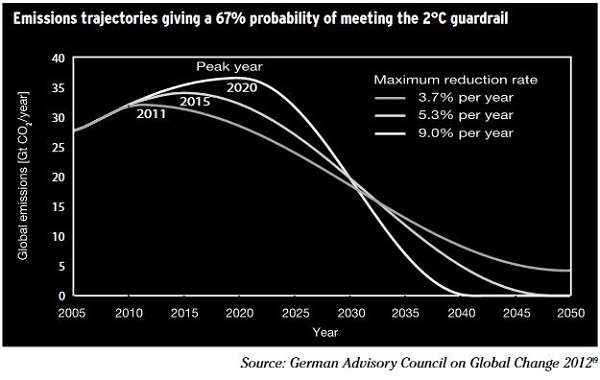
He then looks at the climate budget approach and posts a version of this now familiar graph:

He concludes that we need more ambition and urgency, both at the national and international levels. The achievement of emission reductions at the necessary scale and speed will require transformational rather than incremental change. Continue reading Climate change: reconnecting politics with reality

Climate Change Authority review

BernieLast month the Climate Change Authority published a Draft Report of its Targets and Progress Review, which is to be completed by February 2014.

Submissions to the Draft Report must be lodged on this webpage by 29 November 2013.

The full draft report (all 265 pages) is downloadable from the first link above. Unfortunately I don’t have time to read all of it, so I’ve reproduced below the summary of the Executive Summary provided by the Authority, with some slight enhancements.

This Review can inform upcoming decisions on international commitments, guide long-term investment decision-making and inform the design of the Government’s Direct Action Plan.

The Authority’s views are grounded in science which says the world needs a long-term limit on emissions to stay below 2 degrees of warming and reduce risks of dangerous climate change. Australia also needs to take a long term view of emissions and set a 2050 emissions budget.

The Authority has also considered international action on climate change which shows a clear trend towards more ambitious action, although all countries need to do more.

The Authority has considered the economic implications of stronger targets and has concluded that it is possible to move to stronger targets at relatively small cost to the economy. The Authority’s draft recommendations seek to balance short term clarity and stability with longer term flexibility by recommending a single 2020 target and a trajectory range to 2030.

The Authority considers a 5 per cent target for 2020 to be inadequate because the Government’s [own] conditions [for moving beyond 5 per cent appear to have been met] and the pace of international action justifies us going further. [It] is inconsistent with action towards the 2 degrees goal and more ambitious targets might now be easier to achieve than earlier thought.

The Authority presents two targets for 2020 – 15 per cent and 25 per cent, with different trajectory ranges to 2030 [35 to 50 per cent and 40 to 50 per cent respectively].

Compared with 25 per cent, 15 per cent would require faster reductions later, and would use up more of the [carbon] budget sooner. [It] would place us in the middle of the pack on climate change action and would cost slightly less in the short term.

Australia can use international emissions reductions to help meet its target. While we have many domestic opportunities to reduce emissions, allowing international emissions reductions to be part of the mix can help lower costs. The Government should consider allowing the use of international emissions reductions to go beyond 5 per cent.

The Authority seeks feedback on this Draft report to inform its deliberations on final recommendations.

Clearly the Abbott Government will take no notice of the Review. In fact they have specifically reneged on the extended 5 to 25% range which had been bipartisan policy since 2009. Continue reading Climate Change Authority review