Climate clippings 106

1. Abbott adviser warns of threat of ‘global cooling’

Nevertheless with the certainty only possessed by fools, the Abbott government’s chief business adviser, Maurice Newman, has warned that Australia is ill prepared for global cooling owing to widespread “warming propaganda” in his latest critique of mainstream climate science.

The suggestion is that temperature change is due to changes in solar activity, cosmic rays and stuff. The science is heading in the opposite direction.

“The sun doesn’t have as much influence on the climate as we previously thought, the latest estimates are that it explains only 5% of the warming over the last 150 years,” he said.

How can the government be advised by someone who is so ill-informed about arguably the biggest single influence on business conditions over the next century.

2. August hottest ever

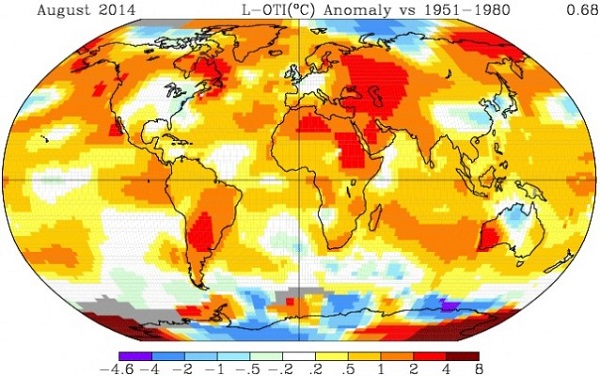
We’ve just had the hottest August globally since records began being kept in 1880, according to NASA. The year to date has been the fourth hottest on record. Hot years usually coincide with an El Niño either in the year concerned or the previous year. An El Niño has not yet arrived but does look likely according to the latest information.
NASA_ 2014_Ag_600

It has been especially hot in West Antarctica. Bear that in mind when you see stories of record sea ice around Antarctica:

seaice_2014_Ag_500

This is not incompatible with global warming and could in fact be caused by it. Melting ice produces cold water, and the tightening wind pattern tend to blow the ice further north.

There is no information as yet on ice volume.

3. Australian Climate Action Summit 2014

The Australian Climate Action Summit 2014 is on this weekend. Since my life is governed by work, the weather and medical appointments I am unable to go.

On Sunday there will be a People’s Climate March, organised by an outfit called Avaaz. Marches will be organised all around the world, and indeed, all around Australia, including, for example Mt Isa and the Gold Coast. If you click on Brisbane you get the Summit, but if you click on the Summit you don’t get a march. So if there is a march in Brisbane, I can guess where but I’d also need to guess when.

The march is meant to impress the leaders gathering in New York on Tuesday 23 September. That’s the UN Summit Tony Abbott will not attend although he’ll be in New York on Wednesday.

4. Surviving in hot, acidic oceans

I think this is a good news story.

More than 90% of the extra heat in global warming ends up in the oceans, as does 25% of the CO2 we create, which makes the oceans more acidic. Shell-making organisms such as plankton are expected to be in trouble. The good news is that it seems one species of plankton, the Emiliania huxleyi, can survive the changes underway.

5. Climate Council report on sea level

The Climate Council has taken another look at climate change and coastal flooding. The focus is on 1.1 metres sea level rise by 2100, all too possible if West Antarctica is in play, as it seems to be.

We are told that the frequency of flooding events can treble for every 10 cm of sea level rise. The risk multiplier depends where you are. In Sydney, Bundaberg and Hobart, for example a current 1 in 100 year event now could be happening every day by 2100. In Adelaide, the least at risk city, it would be only once every year.

At risk we have $87 billion worth of commercial and light industrial buildings, $72 billion worth of homes and $67 billion worth of roads and rail infrastructure.

6. Capitalism v The Climate

Joe Romm tells us about Naomi Klein’s new book, This Changes Everything: Capitalism Vs. The Climate. Klein, he says, makes three essential points:

1. Because we have ignored the increasingly urgent warnings and pleas for action from climate scientists for a quarter century (!) now, the incremental or evolutionary paths to avert catastrophic global warming that we might have been able to take in the past are closed to us.

2. Humanity faces a stark choice as a result: The end of civilization as we know it or the end of capitalism as we know it.

3. Choosing “unregulated capitalism” over human civilization would be a “morally monstrous” choice — and so the winning message for the climate movement is a moral one.

The time for ‘evolutionary’ strategies is long past. Now only ‘revolutionary’ strategies will get us there. Unregulated capitalism is a Ponzi scheme, which must collapse. The real choice facing us is a moral one.

Unchecked capitalism is immoral and will destroy civilisation as we know it. Just what Klein says we should do will be covered by Romm in a subsequent post.
Who voted for this man?

Abbott_300b

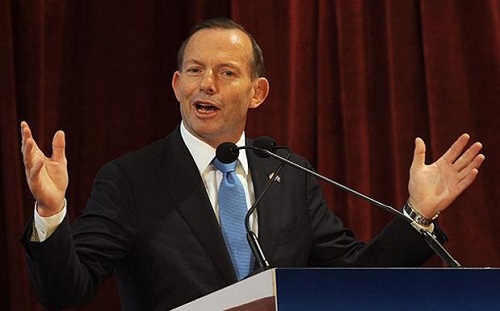
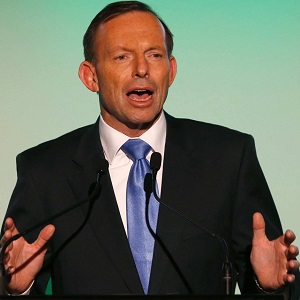
T. Abbott, our illustrious PM, continues to embarrass us all.

On the Scottish independence referendum first he said he would not presume to tell Scottish voters which way they should vote. Then he said this:

“As a friend of Britain, as an observer from afar, it’s hard to see how the world would be helped by an independent Scotland.

“I think that the people who would like to see the break-up of the United Kingdom are not the friends of justice, the friends of freedom, and the countries that would cheer at the prospect … are not the countries whose company one would like to keep.”

No doubt we should invade Scotland, or bomb them into submission!

That was last month. Next Tuesday 125 world leaders including US president Barack Obama and UK prime minister David Cameron will attend the UN secretary-general’s Climate Summit in New York. Tony Abbott will not be one of them. Yet the very next day he will be in New York to attend a UN Security Council meeting. He says he has more important things to do in the Australian parliament early next week.

While the New York meeting has no formal part of the climate talks leading up to the preliminary commitments countries will be asked to make by next March leading to the formal renegotiation of the Kyoto treaty in Paris in December next year, when the UN Secretary General says, “Come to New York, the planet is in trouble and needs you”, normally you would go, unless you want to make a statement about how you view the talks. In this regard Connie Hedegaard, the EU climate supremo, said:

“At least 125 heads of state have sent a strong signal to the rest of the world that … climate change is important, and they know they have a role to play and a responsibility to take in order for the world to address climate change.

“I do not know what the reasons would be behind it, but, of course, the world will interpret who is showing up and who will not be showing up.

“So that’s for your Prime Minister and your government to decide, what kind of profile they want in this.”

Hedegaard counsels us not to make too much of the fact that the Indian and Chinese leaders won’t be there. We know they are taking climate change seriously. We know, however, that Stephen Harper of Canada, Abbott’s ideological soul mate, has similar views to Abbott’s and also won’t be there although he too will be in New York a couple of days later. We know that Abbott is smugly satisfied with our pathetic 5% reduction target by 2020. He doesn’t appear to understand that this is about post 2020. His vision is clouded by denialism and the coal lobby.

The Pedestrian laments the fact that we are not the slightest bit surprised – Abbott is running true to form.

TonyAbbottClimate-500

Bernard Keane at Crikey finds that Abbott’s form is changing. He’s shedding the carefully scripted, softer-spoken persona he presented before the election and is returning to the more pugilistic Abbott of the Gillard years.

If you are not a Crikey subscriber but are on Facebook you might be able to read the piece here, courtesy of Mark. It begins:

“Tony Abbott is a man in a hurry. There’s a blue on, and he wants in. The Prime Minister has regressed from statesman to pugilist. He’s back to Punchy Tony, the Rocky of the Right, a bloke who’s up for any fight, even if he has to start it himself, the former boxing “blue” and front rower ready to deck anyone (including a young Joe Hockey), if they get in his way. Or even if they don’t.

Keane is speaking of Abbott’s statements hyping the terrorist threats:

But they also reflect Tony Abbott’s aggression, a trait he laboured hard to keep under wraps as opposition leader and harder still in his early days as Prime Minister—remember that parliamentary transition to the soft-voiced Prime Minister from the often shrill Abbott of the Gillard years.

But bit by bit it has re-emerged—the boyish grin sitting in the cockpit of a mocked-up F-35 (appropriately, on the ground, where the F-35s spend all of their time), the near-hysterical rhetoric about the threat of Islamic militants, and now dispatching tonnes of military hardware and some of our best troops to the United Arab Emirates, there to await whatever America wants them to do.

For a truly scathing assessment of the first year of the Abbott government, however, take a look at Nick Feik, the editor of The Monthly.

Feik says he’s passed six pieces of legislation and

After almost a year, the Abbott government has repealed one tax, a move that left the nation without a climate-change policy but had no discernible impact on prices, and implemented an increasingly inhumane, secretive and quite possibly illegal asylum-seeker regime designed in large part by the ALP.

And it has been good at undoing things:

It has cut funding to social, educational, health, research and advisory bodies. Any and every environmental action, movement, organisation or legislation has been made a permanent target.

Feik sees incompetence and incoherence everywhere. He concludes:

Beyond the budget, it’s unclear whether the government has a legislative agenda of any kind. Perhaps this explains recent efforts to reposition Abbott as an international statesman, in charge of keeping Islamic terrorism, Russian tyranny and Scottish independence at bay. He needs to be above the fray, because domestically his troops are stuck in the trenches, and they’re starting to turn on one another. They must be relieved the Opposition is showing no stomach for a fight.

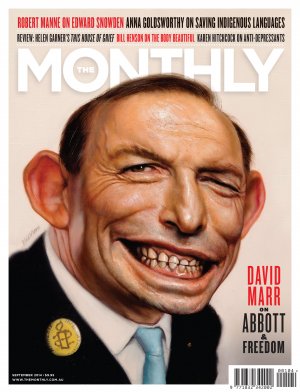
I’ve used the cover image from The Monthly as the featured image on the home page.

Saturday Salon 13/9

voltaire_230

An open thread where, at your leisure, you can discuss anything you like, well, within reason and the Comments Policy. Include here news and views, plus any notable personal experiences from the week and the weekend.

For climate topics please use the most recent Climate clippings.

The gentleman in the image is Voltaire, who for a time graced the court of Frederick II of Prussia, known as Frederick the Great. King Fred loved to talk about the universe and everything at the end of a day’s work. He also used the salons of Berlin to get feedback in the development of public policy.

Fred would only talk in French; he regarded German as barbaric. Here we’ll use English.

The thread will be a stoush-free zone. The Comments Policy says:

The aim [of this site] is to provide a venue for people to contribute and to engage in a civil and respectful manner.

Here are a few bits and pieces that came to my attention last week.

1. Scottish independence

Finally the vote for Scottish independence is to take place on Thursday 18 September.

Suddenly with a “no” vote possible, everyone is paying attention. Anatole Kaletsky in the New York Times says it would send a ripple through Europe, make David Cameron a lame duck leader if he doesn’t resign and destabilise what remains of the UK.

George Monbiot says a yes vote in Scotland would unleash the most dangerous thing of all – hope.

John Harris thinks the system is broken. What we are seeing is post-democratic politics.

what is happening north of the border is the most spectacular manifestation of a phenomenon taking root all over – indeed, if the splintering of politics and the rise of new forces on both left and right across Europe are anything to go by, a set of developments not defined by specific national circumstances, but profound social and economic ruptures.

Whether justifiably or not, millions of British people have passed through holding politicians in contempt and now treat them with cold indifference. Let’s face it: the only thing keeping all this alive is the electoral system.

Post-democracy is

a development seen “when boredom, frustration and disillusion have settled in after a democratic moment … [and] where political elites have learned to manage and manipulate popular demands”

2. Terror alert

Abbott announced, just after the anniversary of 9/11, that the country was going on high terror alert, this time without fridge magnets. We are meant to carry on as normal and not worry about his nasty budget. Sorry, I’m wandering!

Greg Barns wonders whether it’s just a case of the spooks, who are always jumpy, jumping as they do, and asks:

If no attack is imminent and Abbott says it is not, then why bother to make the announcement?

3. High court intervenes on asylum seeker detention

For the first time, the High Court clearly set out the constitutional limits on immigration detention:

It was previously unclear for what purposes the government could detain non-citizens. The court has now clearly stated that the government can lawfully detain someone in only three circumstances: to consider whether to let someone apply for a visa; to consider an application for a visa; or to remove someone.

Detention is only lawful if these purposes are being “pursued and carried into effect as soon as reasonably practicable”, the court held. The length of detention must be assessed by what is “necessary and incidental” to execute and fulfil those purposes. These limits on detention are constitutional. In other words, parliament cannot override them by introducing new legislation.

4. Obama has a plan

Obama is on the offensive at least rhetorically, promising to degrade and destroy ISIL. His foot is now firmly planted in the quagmire.

Australia will tag along, of course.

5. Submarines will be bought from Japan

It looks certain that the next batch of submarines for the Australian Navy will be made in Japan.

Whatever you think of this it looks like yet another broken election promise.

6. Oscar Pistorius convicted of ‘culpable homicide’

In other words, manslaughter.

I can understand him being acquitted of premeditated murder. To me his brain was minimally engaged at all. What I don’t understand is that you can fire four shots through a closed door at a presumed intruder without an intent to kill.

Is harassing the unemployed justified?

A key feature of the government’s approach to unemployment is the constant vilifying and harassing of the unemployed.  It may be a good strategy for diverting attention from government stuff-ups and appealing to voters darker side but there are no signs that it is reducing real unemployment , creating jobs, preparing people for more productive work or helping to share the available work in a fairer way.

This post asks whether there are smarter, fairer ways of dealing with unemployment.  It also presents some useful employment and unemployment welfare system data.

Continue reading Is harassing the unemployed justified?

Pause and re-group

On Saturday afternoon my wife’s brother-in-law passed away. He had been in poor health for some time and his passing was not unexpected. Nevertheless when these things happen it is not easy. My wife had been to visit that day, about an hour’s drive away.

The funeral will be early next week, when we also have some overseas visitors coming to stay for a few days.

I’m going to take a little time to pause and re-group, so I hope to be back to posting towards the end of next week. I’ll comment as required and do a Saturday salon post, but I’d rather let the rest of the world go by for a bit.

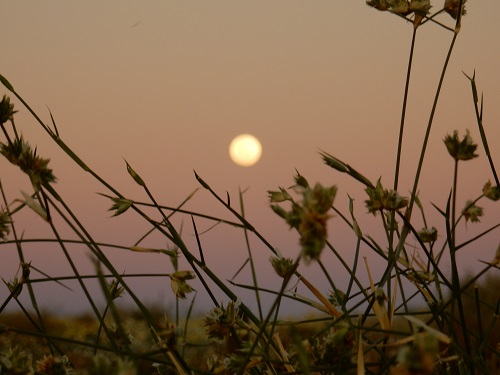
I’m planning to do a little work on some travelogue posts on our recent Red Centre holiday. As a foretaste you might like this photo of the full moon at Purnie Bore in the Simpson Desert seen through the desert grass:

DSCN0585_500

We were very lucky and truly blessed.

See you soon!

Saturday salon 6/9

voltaire_230

An open thread where, at your leisure, you can discuss anything you like, well, within reason and the Comments Policy. Include here news and views, plus any notable personal experiences from the week and the weekend.

For climate topics please use the most recent Climate clippings.

The gentleman in the image is Voltaire, who for a time graced the court of Frederick II of Prussia, known as Frederick the Great. King Fred loved to talk about the universe and everything at the end of a day’s work. He also used the salons of Berlin to get feedback in the development of public policy.

Fred would only talk in French; he regarded German as barbaric. Here we’ll use English.

The thread will be a stoush-free zone. The Comments Policy says:

The aim [of this site] is to provide a venue for people to contribute and to engage in a civil and respectful manner.

Here are a few bits and pieces that came to my attention last week.

1. Paul Kelly’s new tome

Richard Fidler talked to Paul Kelly about his new book Triumph and Demise. All of the main players talked to Kelly on the record, which they haven’t done for anyone else. In all other cases I know at least one or the other of them wouldn’t talk or wouldn’t talk on the record.

I’m hoping to do a full-length post. Kelly mentions at least one incident I didn’t know about. There was a conversation between Rudd and Gillard on the verandah of Kirribilli in January 2010. That was where Gillard told Rudd she thought he should forget about climate change for a time, so it supports the “She made me do it” thesis. Kelly will have none of that. He says Rudd ignored Gillard’s advice often enough and has to take responsibility.

At that meeting Kelly says Gillard formed the opinion that Rudd was in no shape mentally to lead the party to an election.

The book looks like a ‘must read’.

2. The Searchers

The Searchers is the name of a 1956 film which this review suggests is “considered by many to be a true American masterpiece of filmmaking, and the best, most influential, and perhaps most-admired film of director John Ford.”

Certainly it did not do well when it was made, but influenced film makers such as Martin Scorsese, Steven Spielberg, Jean-Luc Godard, Wim Wenders, and George Lucas. In a recent survey it was rated the seventh best film of all time. Now Glenn Frankel has written an amazing book called The Searchers: the Making of an American Legend. The book tells you everything you’d want to know about the incident it was based on, the Alan Le May novel, Frank Nugent’s script, about John Wayne, John Ford and the making of the film itself as though he was there on the set.

He also unravels the grisly truth about the story of how Cynthia Ann Parker was taken by Comanches in an 1836 raid and retrieved in a ‘battle’ (actually a massacre of old men, women and children) by Texas rangers in 1860. He tells the story of Cynthia’s son Quanah Parker. Most of all he tells us how the legend of ‘how the West was won’ was formed over a century or more, and the racism that underlies it.

I’ve read the book with pleasure, now I’d like to see the film.

3. Barrier Reef dredging plans changes

It looks as though plans to dump waste on the Great Barrier Reef will be changed so that the waste will be dumped on land. What the report doesn’t say is that the change of plans is based on new technology, making land dumping the cheaper option rather than an outbreak of good sense on the part of the minister, Greg Hunt.

4. What Country in the World Best Fits Your Personality?

For me the answer is Iceland.

Iceland_b5d533e5-cd2f-4888-a1b3-774bc7f1e092_500

What a surprise!

Climate clippings 105

1. Atlantic Ocean important for heat storage

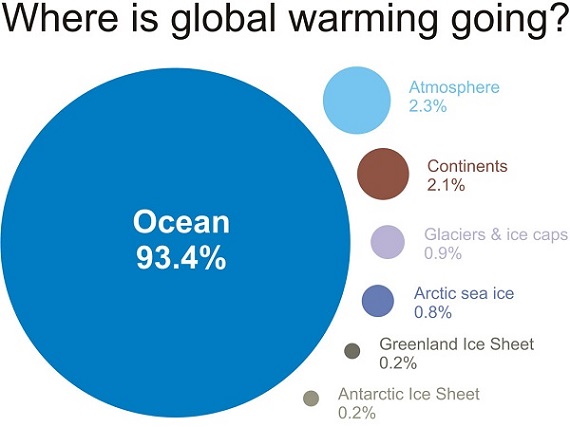
Most of the energy from global warming goes into the ocean as this graphic from Skeptical Science illustrates:

GW_Components_570

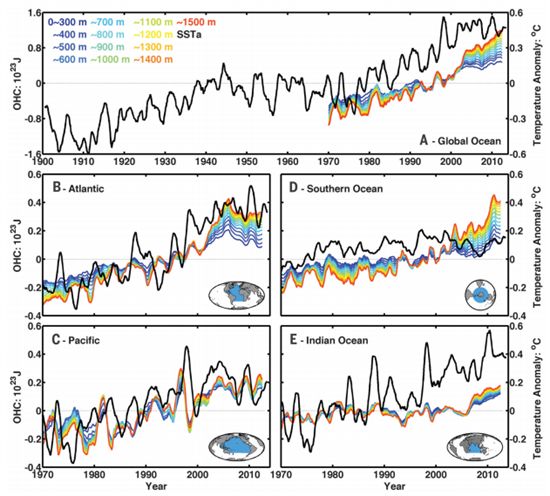
The linked paper stresses the role of the Atlantic in heat uptake. The following graph shows the heat uptake for the four main oceans. The black line is the sea surface temperature, the red line shows the heat below 1500 metres.

oceanheatuptake_chentung-2014-_550x496.jpg

All this is considered in relation to the socalled warming ‘hiatus’. The suggestion is that the Atlantic Meridional Overturning Circulation is the critical influence and it changes phase every 20 to 35 years. If so the ‘hiatus’ could last another decade or so.

Other scientists see the hiatus as multi-causal. It also depends which temperature series you are looking at. The HadCRUT temperatures always look flatter in recent years, as in this article. The Gistemp series from NASA has 1998 as about the third highest and shows a continuing upward trend, albeit slowed..

2. ‘Unprecedented’ ice loss in Greenland and Antarctica

Since 2009 the volume of ice loss has tripled in West Antarctica and more than doubled in Greenland, the highest rate of ice loss since satellite records began 20 years ago.

While it’s still early days, sea level rise this century could surprise on the upside.

3. El Niño watch

Carbon Brief also have the latest on the chances of an El Niño developing in 2014, which the Australian BOM now put at about 50%. Earlier there was talk of a super El Niño, which is still possible.

4. China gets into emissions trading

The Chinese national market will start in 2016.

The Chinese market, when fully functional, would dwarf the European emissions trading system, which is now the world’s biggest.

It would be the main carbon trading hub in Asia and the Pacific, where Kazakhstan and New Zealand already operate similar markets. South Korea will start a national market on Jan. 1, 2015, while Indonesia, Thailand and Vietnam are drawing up plans for markets of their own.

Looks like quite a trend. Time perhaps for Australia to join in!

5. World’s poor need grid power, not just solar panels

Small scale solar power is quite popular in Africa and supported by environmentalists. A few panels are able to run a few lights, a radio, charge the mobile phone but stop short of boiling a kettle. Critics see this as condemning the poor to a constrained future. Only 20% of Kenyans are connected to the grid.

Coal fired power is obviously not the answer. Dams take years to build, are typically over budget, inundate fertile lands or forest areas and interrupt natural stream flow.

In the Democratic Republic of Congo the mega project of the Inga 3 dam is due to start construction on the Congo River. If fully developed it will produce twice as much electricity as the world’s largest, the three Gorges in China. But will it be economically justified and what impacts will it have on the environment?

6. Emissions from energy generation jump after carbon price axed

Carbon emissions from the country’s main electricity grid have risen since the end of the carbon tax by the largest amount in nearly eight years.

Data from the National Electricity Market, which covers about 80 per cent of Australia’s population, shows that emissions from the sector rose by about 1 million tonnes, or 0.8 per cent, at an annualised rate last month compared with June.

That is the biggest two-month increase since the end of 2006, and came as a result of an increase in overall demand and a rise in the share of coal-fired power in the market, according to Pitt & Sherry’s monthly Cedex emissions index.

From what I can make of it, gas is increasingly going to export, there is some scaling back of hydro, presumably because of the weather. and large scale solar was killed off ages ago. The slack is being taken up by old coal, including brown coal.

Abbott’s strategy of saving the coal fired power industry seems to be working.

Building new more efficient coal would be his ultimate aim. This would involve investors and lenders having confidence in the future of coal. Surely they can’t be that stupid!

Reminder: Use this thread as an open thread on climate change.

A blighted vision for the NBN

Donald Rumsfeld spoke about “unknown unknowns”. The Communications Chambers cost-benefit analysis (CBA) report gets rid of such nonsense by ruling it out. As Stilgherrian at Crikey says:

the key problem is the overall assumption that we’ll see a gentle, incremental growth in internet demand — whatever its rate for individual application — based on the kinds of things we’re doing on the internet today.

During a digital revolution, they seem to have missed the revolution part.

So the Multi-Technology Mix (MTM) model for the NBN will be fine, as long as you don’t want to use the internet much. Or as David Havyatt at the AFR says:

Choosing between the MTM and FTTP isn’t just about the outcome of the CBA. It is about choosing whether we want the nation to be technology leaders or technology laggards. It is about choosing whether we want to make do with inefficient government service delivery or drive it hard for efficiency and effectiveness.

The MTM simply rules out applications that could emerge in health and education which depend on a ubiquitous high-speed service, so public benefit is put at 5% of usage in the review. In truth it’s unknown with the fibre to the premises (FTTP) option, which was why a CBA always had limited value.

Stilgherrian says the model completely misses the Internet of Things, that is, the myriad devices such as smart air conditioners and light bulbs, toys and medical sensors. It assumes that such usage will fit into the cracks.

So 15 Mbps is seen as good enough for the vast bulk of users. There is no value assigned to the higher speeds a 100 Mbps would provide.

Hence the review strips away the known unknowns, dealing only with known knowns and very conservatively at that. Gentle, incremental growth in existing internet demand is assumed. It’s a case of dumbing down to the lowest common denominator.

The NBN strategic review found the FTTP cost only $8.6 billion more than MTM, a steal at the price. Yet the CBA review has inexplicably added $4 billion to the cost of FttP. Havyatt says this is problematic if not simply arbitrary and wrong.

In his blog post Havyatt points out that 70% of people connected to the NBN are opting and paying for a 100/40 Mpbs service. They are looking for speed if not volume. That’s what they want. Turnbull’s mob are taking the paternalistic view that it is not what they need.

I’m not sure of the funding arrangements for the NBN. I suspect that it is being funded on budget as an infrastructure program. Labor’s FTTP system was being funded off-budget effectively costing taxpayers nothing, against future privatisation.

All in all as in so many areas the Abbott government is dragging us back decades and compromising our future as a sophisticated economy. Think, for example, the renewable power industry and their passion for coal. Labor’s positive legacy is being destroyed with vigour and enthusiasm.

See also Deja vue all over again: the new NBN.

Newman Unable to stop 2794 new Qld Solar in Aug

Newman’s anti solar hysteria and the economic punishing of those who continue to install solar is having little effect on the growth of both rooftop and commercial solar.  During August, another 2,794 systems of 5kW or less were added to bring another 11.5MW of capacity into the system.  This despite the fact that participating households are being paid little for their power exports.

Continue reading Newman Unable to stop 2794 new Qld Solar in Aug

Chair of RET Review Not Looking Good

Climate Spectator had this post on Dick Warburton, the Chair of the RET review committee and his performance on a Fran Kelly interview after his review had been released. It gives a picture of a man who doesn’t understand his own report or anything much else apart from the need to recommend the destruction of the RET and all the jobs it has created. Continue reading Chair of RET Review Not Looking Good

Australia’s involvement in Iraq conflict: how should we decide?

Contrasting views were put yesterday on the issue as to whether parliament should decide on our involvement in the Iraq conflict. Tony Abbott put the status quo thus:

The National Security Committee of the Cabinet considers the matter, the full Cabinet considers he matter, a decision is taken, the Opposition leader is consulted.

That’s the standard procedure. It’s always been thus; as far as I’m concerned it always will be thus.

I understand that Abbott made a statement to parliament in the afternoon advising members of developments and the action taken and contemplated. Abbott ruled out giving Parliament a vote on the current airlift to Iraq and any subsequent involvement.

In this he was backed by Labor. Stephen Conroy:

Labor fully supports the role of Parliament as a place of debate, but that should not be confused with requiring parliamentary approval. The role of the Parliament in approving military action is fraught with danger. The Government must retain maximum flexibility to respond to threats to Australia’s national security quickly and efficiently.

The Liberal Democrats think there should be a two-thirds vote in both houses of Parliament to commit forces overseas in foreign conflicts.

The Greens are leading the charge for the parliament to have a vote. Christine Milne:

The Australian Parliament now needs to be consulted and approval needs to be sought from the representatives of the people.

And:

Greens leader Christine Milne says there’s been no United Nations resolution for intervening in northern Iraq, nor, she says, has anyone seen an Iraqi government request.

Andrew Wilkie is very much of the same view. He questions whether we are becoming gun-runners for the Kurds at the direction of the United States.

Wilkie says it’s time Australia followed the lead of a long list of “sophisticated, developed democracies”:

Countries as diverse as Denmark, Finland, France, Germany, Ireland, Italy, Luxemburg, the Netherlands, Spain, Sweden, the United States, and by convention, now even the United Kingdom – all of these countries require parliamentary involvement in decision-making about matters of war and peace.

Flexibilty and speed of decision making can save lives. However, there is concern about mission creep. Also Laura Tingle tells us that modern prime ministers have assumed the right to make a decision irrespective of cabinet’s views. Laura Tingle says:

The trend towards all powerful prime ministers – or to that perception – has been a persistent one in the past 30 years.

There were some ding dong battles in the Howard cabinet: on the early round of industrial relations reforms in 1996, for example, on the GST; on the car industry.

But as the government aged, and the absolute authority of the prime minister grew, the idea of cabinet government started to recede.

It wasn’t that cabinet didn’t meet and debate, it was just that ministers would increasingly be inclined to just shrug their shoulders and gesticulate at the PM’s office down the corridor to explain what was driving the direction of a particular policy.

The same was apparently true under Rudd and Gillard. But under Hawke in the mid-1980s things were different:

A reminder of what has been lost comes leaping out at us from Gareth Evans’s Inside the Hawke Keating Government: A Cabinet Diary, released this week.

It says much that a diary written 30 years ago can still sparkle and shimmy with a vibrancy that puts most recent political tomes to shame.

The striking thing about the book she says is “the sense of both collective responsibility and authority felt by the colourful cabinet ministers who brawl and wrestle their way through complex issues in the pages of Evans’s diary, covering the period 1984-86.”

How the Abbott cabinet works is not known to me. We have heard of Peta Credlin as head of PMO tearing strips off ministers.

Mark Latham argues for a Bastardry Factor as essential in a leader. Apparently Bill Shorten doesn’t have it. Thank God for that!

On the present issue I have the sense that Abbott has been genuinely consultative, and on balance I’d leave the protocols as they are. That’s unless there are to be boots on the ground. Then the Liberal Democrats’ notion of a two-thirds majority in both houses looks good to me.

Climate change, sustainability, plus sundry other stuff