Tag Archives: extreme weather

Climate clippings 92

Climate clippings_175 This is a continuation of the Climate clippings series familiar to readers of Larvatus Prodeo

While this edition was finished about a week ago I actually started writing stuff from about mid-February and have several others queued in the draft bin. They’ll be fed in periodically at the rate of perhaps more than one a week until I catch up with myself.

1. Strong El Niño rated an 80% chance

That’s according to Paul E. Roundy of the University at Albany, New York.

The sub surface temperature of the eastern Pacific Ocean is measuring an ‘astounding’ six degrees warmer than normal for this time of year.

The only time anything similar has happened was in March 1997, before the whopping 1998 El Niño.

An El Niño normally means dry conditions and reduced monsoons in Australia and Indonesia, but wetter weather in Central America.

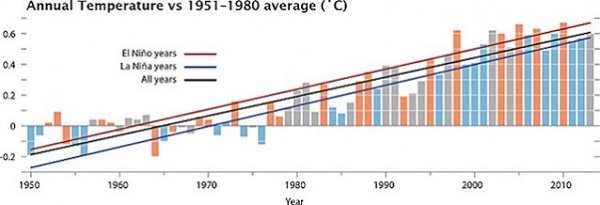
Climate Progress shows this interesting graph:
gistemp_nino_s-600

Since 1998 there have been six La Niña years warmer than any El Niño years prior to 1998.

At Mashable Andrew Freedman quotes the same people but found at least one scientist who thinks there’s perhaps a 40% chance there will be no El Niño at all.

Worth watching. Could be spectacular.

2. Wave and tidal energy

Climate Progress reports on wave energy projects at Morro Bay in California and elsewhere.

A 2012 report prepared by RE Vision Consulting for the Department of Energy found that the theoretical ocean wave energy resource potential in the U.S. is more than 50 percent of the annual domestic demand of the entire country. The World Energy Council has estimated that approximately 2 terawatts — 2 million megawatts or double current world electricity production — could be produced from the oceans via wave power.

3. The Pacific Ocean is turning sour

Much faster than expected, according to a new study.

Apparently CO2 concentrations are not uniform around the world and the tropical Pacific is getting more than its fair share. Hence the ocean in that area is acidifying faster than elsewhere.

4. Oxfam on food futures

From Huff Post, Oxfam has just completed a report (downloadable here) which suggests that climate change could delay the fight against world hunger for decades. Global food prices could double by 2030, with half the increase attributable to climate change. In the next 35 years there could be 25 million more malnourished children under the age of five than there would otherwise be.

Oxfam analyzed ten gaps that measured how prepared – or unprepared – 40 food-insecure countries are to tackle climate change impacts.

We assess ten key factors that influence a country’s ability to feed its people in a warming world – these include the quality of weather monitoring systems, social safety nets, agricultural research and adaptation finance.

As expected, the poorer countries will be most affected.

5. Will we still be able to have a decent cup of tea?

At the foot of the Huff Post Oxfam link above is a graphic showing the top “endangered” crops listing in order chocolate, coffee, beer (at least in Germany), peanuts, durum wheat to make pasta in Italy, maple syrup, honey, wine (at least in France). It must be said that I couldn’t find that list in the Oxford report which is mainly about staples such as rice and vegetables.

Now it seems that Assam tea is being affected by hotter, drier weather with more erratic rainfall. Indeed tea growing all over the world is becoming more difficult.

There’s more at the BBC.

6. More on global food security

A separate study found that from 2030 onwards, the world’s crop yields will be more and more impacted by climate change.

The study found that Sub-Saharan Africa and South Asia showed significant yield reductions for the second half of the century, while regions of the world with temperate climates, such as Europe and most of North America, could withstand a couple of degrees of warming without a noticeable effect on harvests, or possibly even benefit from a bumper crop.

One of the most important findings of this study is that adaptation may not be as effective for rice and maize as it is for wheat.

7. On the other hand

If you need a more cheerful story, here’s one about peasant farmer Vu Thi Ngoc who has adapted to crazy weather in the uplands of northern Vietnam by growing a different range of crops and changing farming practices.

It shows adaptability at work, this time with the help of CARE and Vietnam’s Agriculture and Forestry Research and Development Centre for the Northern Mountainous Region.

Reminder:

These posts are intended to share information and ideas about climate change and hence act as an open thread.

But as ever, I do not want to spend time in comments rehashing whether human activity causes climate change.

Climate clippings 90

Climate clippings_175These posts are intended to share information and ideas about climate change and hence act as a roundtable for readers to contribute items of interest. Again, I do not want to spend time in comments rehashing whether human activity causes climate change.

This edition begins with a couple of items on extreme weather, but is mainly about solar electricity. Once again, thanks to John D for providing some links.

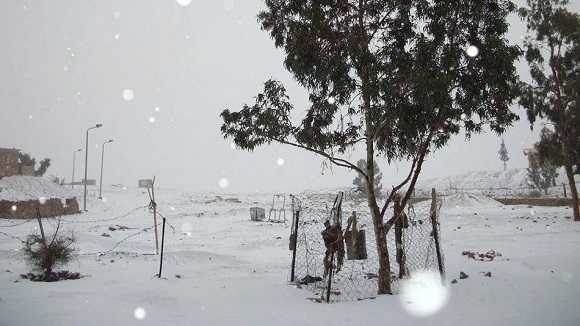
1. Snow in Egypt

Recently snow fell across the Middle East, with pictures from Egypt, Israel, Syria, The Lebanon and Iran.

EGYPT-WEATHER

Conditions in refugee camps in the area must be horrific. Flooding was general throughout the area, including Gaza.

See more photos of extreme weather.

Lest you think global warming has gone away, November 2013 was the globe’s warmest November since records began in 1880, and the 345th consecutive month with global temperatures warmer than the 20th century average. Continue reading Climate clippings 90

Climate clippings 89

Climate clippings_175These posts are intended to share information and ideas about climate change and hence act as a roundtable for readers to contribute items of interest. Again, I do not want to spend time in comments rehashing whether human activity causes climate change.

This edition is a mixture of science and implementation issues that found me rather than I found them. A couple came from Mark’s Facebook. The last item was drawn to my attention by John D.

1. Electric tents

If you want a tent for the holiday period that stands out from the pack and generates enough electricity to power computers, phones, cameras and loud speakers then
Bang Bang Tents is for you.

Bang Bang tents_cropped_500 Continue reading Climate clippings 89

Cyclone Haiyan

dn24549-1_300Over the last few days we’ve received a stream of information and images about cyclone* Haiyan which devastated central Philippines, especially the city of Tacloban. Zoe Daniels compiled a graphic report for the 7.30 Report program last night. She mentions that they went to see a coastal village where the devastation was complete.

Here’s a photo from the SMH:

Hayan_ leyte169-408x264

Donations can be made through the Philippine Red Cross and Oxfam. Please feel free to post links to other charities in comments.

According to this link you can donate to the Red Cross by via credit card by phoning 1800 811 700. The hyperlink given there is broken.

Dr Jeff Masters’ Wunderblog has a post which reports the damage initially as $14 billion, breaking The Philippines’ record for damages for the third time in 12 months. Initial estimates of the death toll were put in excess of 10,000, but the SMH suggests the toll from Tacloban alone may have exceeded that figure. Some 9 million people have been affected.

The cyclone has been reported as the strongest ever to make landfall. An article in The Guardian quotes Jeff Masters as putting it at number four with the note that NOAA has stated that the maximum sustained winds estimated for typhoons during the 1940s to 1960s were too strong. The other three were in 1958 and 1961. In his linked post above Masters has compiled an unofficial top ten, with Haiyan at the head. Five of the ten were in The Philippines.

There are two aspects where I’d like better information. Firstly, I heard one report that the wind remained at Category 5 intensity for either six or eight hours (can’t remember which). The system was very large. Secondly, I heard of a storm surge of up to eight metres. Apparently this caused more damage than the wind and was responsible for many of the deaths. In many cases only the lowest areas were evacuated. Continue reading Cyclone Haiyan

Quicklink: Roger Jones on Bolt on Bandt

NSW fires_250Adam Bandt recently wrote an opinion piece in The Guardian suggesting a link between the NSW fires and climate change, then suggesting that the Abbott Government’s action, or lack of it, on climate change has real implications for loss of life. This incurred the displeasure of one Andrew Bolt who, inter alia, quotes or rather misquotes Roger Jones.

Roger takes a look at these doings at his blog Understanding Climate Risk.

It turns out Bolt is the one who is wrong, wrong, wrong. Oh, and a disgrace, but we already knew that.

Update: Roger Jones has two more posts up:

Fire and climate change: don’t expect a smooth ride

Backburning

Climate clippings 80

Climate clippings_175In these posts the aim is to include eight segments averaging 125 words long with sufficient detail so that casual readers can get the sense of the featured article without following the links, which are there for those interested in more detail. Lately I have been alternating week by week collections of science/observations/predictions and practical matters associated with adaptation and mitigation.

During the last week of political distractions I have had about half my usual time at the computer. Moreover some segments just won’t fit within the 125 word constraint. Next cab off the rank, I hope, will be President Obama’s climate initiative, which demands extended treatment.

So for the next little while I’ll attempt to post whatever I have to hand every Tuesday until things settle down a bit.

As usual these posts are intended to share information and ideas about climate change and hence act as an open thread. And again I do not want to spend time in comments rehashing whether human activity causes climate change.

1. Climate change measuring instruments are on life support

That’s the story from John Abraham at Climate Consensus – the 97%. He is warning that many measuring systems, especially the satellite platforms, are headed for declines in coverage, which will lead to an information deficit. His worry is that straightened budgets will not allow replacement and hence continuity of information may be broken.

In a specific example, the Tropical Atmosphere Ocean (TAO) array, which consists of 55 oceanic moorings is involved in the detection, understanding and prediction of El Niño and La Niña, is only operating at 50%. Continue reading Climate clippings 80

Climate clippings 77

Climate clippings_175

1. Antarctic ice melt studies

A recent study by Abram et al showed that the ice on the Antarctic peninsula was melting about 10 times faster than it was 600 years ago, concluding that further melting was particularly sensitive to temperature increases. The headline and the text of this story perhaps gave the impression that the whole continent was ready to go.

A more sober assessment was found at The Carbon Brief where the study was linked with another study by Steig et al that finds recent changes in the West Antarctica ice sheet “cannot be distinguished from decadal variability that originates in the tropics.”

Nevertheless Antarctica overall is losing mass (see also here). Antarctica contributed strongly to sea level rise during the Eemian and the Andrill study showed that “the West Antarctic ice sheet has collapsed and regrown over 60 times in the past few million years”. Any complacency would be misplaced.

2. New review of ice sheet studies

The Carbon Brief has also posted on a new major review of the latest research on ice sheets. The last IPCC report (AR4) relied on about 10 years worth of reliable sea level data, from 1993 and 2003. Greenland and Antarctica together were found to be raising sea levels by about 0.42 mm per year. That has now doubled to about 0.82mm per year.

So while we are still dealing with short time periods, a clear acceleration is in evidence.

3. Skeptical bloopers

The Carbon Brief reckons that once about every six months David Rose runs an article saying global warming has stopped. Here’s their post of October 2012. Then they lined up six top rebuttals of the week, and a reader contributed a seventh by Tamino.

It’s a tired canard and I didn’t bother reading them all. It did introduce me to the Met Office News Blog which has, for example, a very clear post on tornadoes.

Elsewhere in case you missed it Andrew Glikson debunks the notion that CFCs are responsible for global warming.

4. Garnaut recommends 17% target

Dr Jenny Riesz of the University of NSW reports on Garnaut’s recommendation to the Climate Change Authority which is currently deliberating on the Caps and Targets Review. He favours a 17% target by 2020 to put us in line with the US, Canada and other major economies.

At the Cancun United Nations negotiations in 2010, President Obama committed the USA to an emissions reduction target of -17% by 2020 (below 2005 levels). This has been somewhat ignored in Australia’s carbon targets debate, because policy to implement a national carbon pricing scheme to achieve this target was filibustered by the US Senate.

However, the USA remains committed to this target, both in spirit, and in writing with the UNFCCC.

Canada has promised to match the USA.

He suggests that the EU has found it much easier to meet their targets than originally anticipated, which is a typical experience. This, he says, is in part why their carbon price has collapsed.

Garnaut points out that:

the biggest change of all is coming from China, in terms of quantity of emissions reduction from business as usual. They have set truly ambitious targets, and are meeting them through a wide range of activities, including substantial structural change in the Chinese economy. These actions are driven by a wide range of objectives, including environmental drivers, desire for expansion of the role of services in the economy, and desire for more equitable income distribution.

5. Carbon trading schemes

In the last CC thread Jumpy linked to a Parliamentary Library paper Countries trading greenhouse gas emissions.

Over the last three years, the global carbon market has more than doubled in volume but almost halved in value. In that time a further eight countries, states or cities have adopted a carbon market as their primary means for reducing greenhouse gas emissions. Yet the price for one tonne of carbon dioxide equivalent has dropped by as much as 100 per cent in some markets.

That last sentence looks like an oops! A 100% drop gives you nothing!

The paper is the most recent of 25 on climate change in the past few years. In fact their blog Flagpost looks a valuable resource.

6. Floods in Central Europe

Dramatic floods have spread over central Europe.

The New Scientist reports caution about a link with climate change:

While it is premature to pin the heavy rainfall on climate change, it could be partly to blame, says Stéphane Isoard of the European Environment Agency in Copenhagen, Denmark. But he says bad land management is just as important.

Nevertheless wetter weather is predicted by climate change, making more floods inevitable.

Deutsche Welle goes into more detail, saying that while individual events can’t necessarily be linked to climate change, they’ve had once in a century floods now in the 1990s, in 2002 and now in 2013. We’ll have to expect more and prepare accordingly.

They make reference to Stefan Rahmstorf’s blog (which is auf Deutsch), but this paper is in English. On a quick look I think he’s saying they have found a mechanism linking floods, droughts and heat waves to climate change and if they are right expect more. And, yes they need money for research of the kind expended on the Higgs boson.

7. Interest grows in the Arctic

Now that the Arctic is increasingly becoming trafficable during the summer many countries are becoming interested. The politics of who sits where at the Arctic Council is complex, but China, Japan, South Korea, Singapore, India and Italy have now been admitted as permanent observers.

According to the New Scientist China is the one to watch. They’re interested in the Arctic as a shipping route, but also in fish and oil.

“It’s fair to say China will drive development of Arctic resources,” says Malte Humpert of the Arctic Institute in Washington DC.

The Arctic is fragile so we hope they take care.

8. US and China agree to cooperate on phasing out HFCs

From the White House brief:

For the first time, the United States and China will work together and with other countries to use the expertise and institutions of the Montreal Protocol to phase down the consumption and production of hydrofluorocarbons (HFCs), among other forms of multilateral cooperation. A global phase down of HFCs could potentially reduce some 90 gigatons of CO2 equivalent by 2050, equal to roughly two years worth of current global greenhouse gas emissions.

William S. Becker explains that China had always wanted to consider the issue in the context of the current round of climate talks, which would delay action, whereas the Montreal Protocol already exists. HFCs were introduced as an alternative to chlorofluorocarbons (CFCs) which were destroying the ozone layer. Unfortunately HFCs have a greenhouse effect like CO2.

Climate Progress has more detail and the AFP places this topic in context of the whole meeting agenda.

To provide further context HFCs amount to about 2% of GHG emissions, as shown on this wondrous flowchart.

Oklahoma tornado and climate change

Tornado damage_cropped_300

The Courier Mail had quite a good piece. If you want pics the BBC has a gallery or enter Oklahoma tornado at Google images. There are some videos collected here. The Courier Mail has a large photo gallery.

Climate Progress revisits tornadoes, extreme weather and climate change. The bottom line is that the jury is out.

In the US tornado alley warm moist air flows north from the Gulf of Mexico in the lower atmosphere and becomes unstable. Dry, cold air comes from the west over the Rockies in the upper atmosphere, with a shear effect to create the top of the column. The warm air becomes unstable and lifts. The shear effect of the upper wind spins the rising column. More air is sucked in by the spinning, rising column. That’s simplistic but those are the basic elements as I understand them.

With climate change the lower atmosphere warm air flow and instability are likely to be enhanced, but there could actually be less wind shear. We don’t know what the result of those factors will be over time, but the suggestion is that if anything there have been fewer severe tornadoes over recent decades. Continue reading Oklahoma tornado and climate change

Tipping point for climate action?

Recently the Climate Commission issued a report in its The Critical Decade series on Extreme Weather looking at the issues of

  • Heat
  • Bushfires
  • Rainfall
  • Drought, and
  • Sea level rise.

At Radio National’s The World Today Professor Lesley Hughes, a Macquarie University ecologist, talked to Eleanor Hall.

The report looks at extreme weather experience in recent times, such as that documented in the Commission’s report The Angry Summer, puts it in a broader context using the latest science and then uses that as a window to project into the future. The message is plain. The climate has shifted, expect more and more extreme weather and we need to act now.

we really need to view all these events not in isolation but as part of a trend for the future. We need to prepare for them and we need to do our absolute best to cut greenhouse gases to stabilise the climate to prevent them getting to the point at which we cannot adapt.(Emphasis added)

Continue reading Tipping point for climate action?

Hansen retires to embrace activism

Activist_cropped

We are going to see more images like the one on the left, it seems. I picked up the news from a Google feed to this article at mother nature network. Climate scientist James Hansen has retired at the age of 72 from NASA GISS in order to concentrate on activism. The scoop was claimed by the New York Times. Climate Progress quickly picked up on the story.

Hansen first made a splash with an article with six other scientists in 1981. After his testimony to Congress in 1988 he retired from public advocacy and communication for about 15 years, concentrating on the science and his administrative role at NASA GISS, to become publicly active again from about 2003.

NASA’s press release on his retirement emphasises that his research was closely aligned with:

the development of increasingly sophisticated satellite platform measurements, such as the terrestrial radiation budget, ozone and weather-related data, and the need for increasingly sophisticated atmospheric models to assess and evaluate the information content and utility of these measurements.

Also the use of models to make climate change predictions for the future. Continue reading Hansen retires to embrace activism

Climate clippings 71

1. State of the climate 2012

BOM amd the CSIRO have produced the State of the Climate – 2012 report. BOM has a handy summary summary and link to the brochure. The CSIRO site has some added interviews. I’ve extracted two images. First is the relentless increase in ocean heat content:

Ocean heat content

Second is the rainfall pattern for April to September from 1997 to 2011:

Rainfall April to September, 1997-2011

According to the report we can expect the same only more so in the future.

See also The Conversation. Continue reading Climate clippings 71