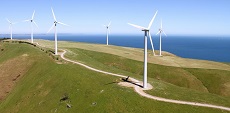
Elon Musk’s 100% clean energy vision is that the world’s energy needs will come from electricity – around one third transport, one third heating and manufacturing uses, and one-third electricity.
By the last category he clearly means everything else we use electricity for.
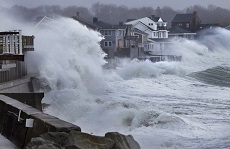
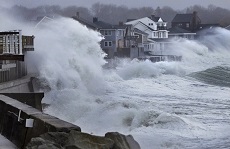
In the post Scoping long-term sea level rise I indicated the possibility of 25 metres (±5) of SLR with emissions of 380 (360-400)ppm and a temperature variance of 2.7 to 3.7°C. The question was really how long it would take, and what were the prospects for the next century or three.
The received wisdom seemed to be that we could expect about a metre, by 2100, and some studies limited SLR to about two metres in the next millennium. A new study suggests we could get close to two meters in total by 2100. Moreover the melting of ice on Antarctica alone could cause seas to rise more than 15 meters by 2500.Continue reading Ice sheet decay spells danger from sea level rise→
are detailed, professionally modelled and far more forward looking and sophisticated than anything so far produced by traditional Australian electricity consultants such as Jacobs, Frontier, IES, Ernst & Young or ACIL Allen.
Leitch, the principal of ITK says in their view:
Australia is being held back, in part, because consultants in Australia provide advice to federal and state governments based on expensive models that are basically out of date. The models don’t, and in fact can’t, take an integrated (whole of system) view.
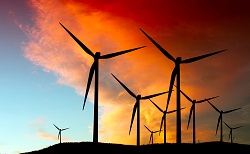
The Coalition government and the Murdoch press were already mounting a full-scale attack on renewable energy when the AEMO report on the SA blackout presented information in such a way as to cast further doubt on renewable energy. AEMO stands for Australian Energy Market Operator. That is AEMO is an operator in the game, not an independent watchdog. In fact an operator that may not itself have acted prudently.
On top of this Chris Uhlmann of the ABC has been virulently critical of the rush to renewables, using what turns out to be techno-babble to sound convincing. His views have skewed the ABC network coverage across all platforms.
Greg Hunt, a man clearly in a muddle, went in hard, as reported by Giles Parkinson at RenewEconomy:
In an opinion piece written for the Australian Financial Review, and reported as the front page lead “SA blackout could have been avoided” – Hunt claimed that a coal-fired generator could have kept the lights on in Olympic Dam and Whyalla and avoided much of the damage, and he also chastised the states for chasing unrealistic targets.
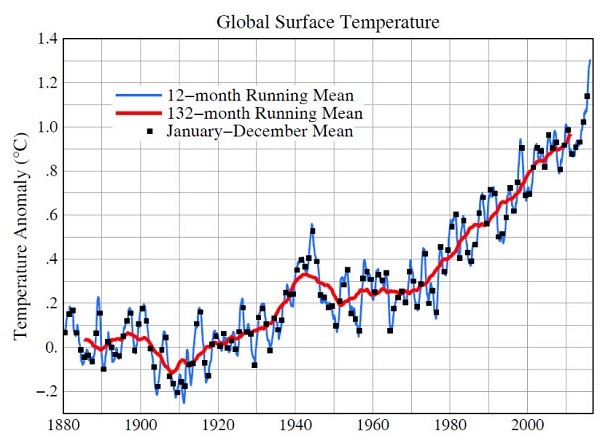
In what is called ‘attribution science’ climate scientists are getting better at analysing how much climate change has influenced particular extreme weather events.
In short, it is no longer a question of weather there is an influence, rather how much.
Tony Wood from the Grattan Institute is one of those lucky people who seems to know everything, and repeatedly sets us all to rights. So when he spoke about the Institute’s new report Keeping the lights on: lessons from South Australia’s power shock (Press Release, where you can download the report) my BS detectors were fully operational. On further investigation, however, the report has value, but there is a twist.
In brief, he points out that we have no climate policy that will reduce emissions in our power system beyond the RET to 2020, and that we need climate change and energy policies that combine to produce reliable, affordable and sustainable clean power. Continue reading Grattan weighs in on renewables→
The Arctic sea ice extent has just reached the second lowest ever, tied with 2007. I got the story from The Guardian, but here’s the story at NSIDC:
On September 10, Arctic sea ice extent stood at 4.14 million square kilometers (1.60 million square miles). This appears to have been the lowest extent of the year and is tied with 2007 as the second lowest extent on record. This year’s minimum extent is 750,000 square kilometers (290,000 square miles) above the record low set in 2012 and is well below the two standard deviation range for the 37-year satellite record. Satellite data show extensive areas of open water in the Beaufort and Chukchi seas, and in the Laptev and East Siberian seas.
Leaders from federal and state road and transport agencies, motoring clubs, local government and engineering and industry groups met in Brisbane in August to consider how government and industry can better collaborate to ensure a smooth transition to the world of connected and automated vehicles.
They are expecting partially automated vehicles on public roads before 2020, and highly automated and driverless vehicles within the ensuing decade. Continue reading Climate clippings 183→
Climate change, sustainability, plus sundry other stuff


 In the post
 The Coalition government and the Murdoch press were already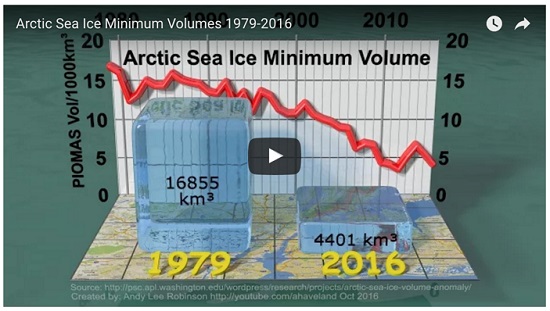
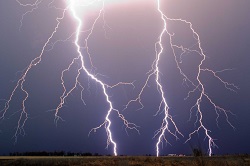 One of the more eye-catching comments on the SA blackouts was from AGL Energy’s CEO Andy Vesey telling the All Energy conference in Melbourne that