Category Archives: Sundries

Posts on sundry matters of life the universe and everything: Culture, Environment, Life, Politics & Government, Science, Social Science and Society, Technology etc.

Saturday salon 28/3

voltaire_230

An open thread where, at your leisure, you can discuss anything you like, well, within reason and the Comments Policy. Include here news and views, plus any notable personal experiences from the week and the weekend.

For climate topics please use the most recent Climate clippings.

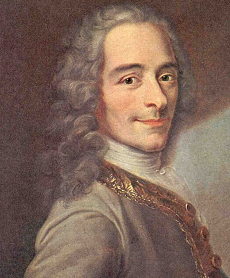
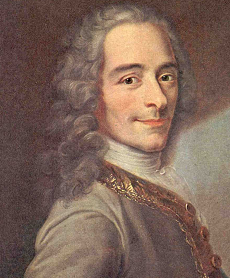
The gentleman in the image is Voltaire, who for a time graced the court of Frederick II of Prussia, known as Frederick the Great. King Fred loved to talk about the universe and everything at the end of a day’s work. He also used the salons of Berlin to get feedback in the development of public policy.

Fred would only talk in French; he regarded German as barbaric. Here we’ll use English.

The thread will be a stoush-free zone. The Comments Policy says:

The aim [of this site] is to provide a venue for people to contribute and to engage in a civil and respectful manner.

Here are a few bits and pieces that came to my attention last week.

1. Scientists at Large Hadron Collider hope to make contact with parallel universe

LHC_scc

The LHC is being fired up again after two years down time when it was refurbished and enhanced. In their first experiment they hope:

a completely new universe will be revealed – rewriting not only the physics books but the philosophy books too. It is even possible that gravity from our own universe may ‘leak’ into this parallel universe, scientists at the LHC say.

As mentioned at Mark’s Facebook, if they want a parallel universe a plane ticket to Australia might be cheaper.

2. Crazy polls

Either opinion is swinging wildly or the pollsters have lost it.

Two weeks ago there was a significant crossover of Newspoll and Morgan. Now they’ve crossed back again.

Morgan has a 2.5% swing to to ALP, putting them on 56/44 TPP.

Newspoll has a 4% swing the other way to leave Labor barely ahead on 51-49.

Essential has a 2% swing to Labor this week to leave it comfortably ahead on 54-46. Essential’s weekly poll has been reasonably steady over a four-week period.

3. ‘Supertide’ at Mont Saint-Michel
Mont St Micael_slide_411974_5196966_free_600

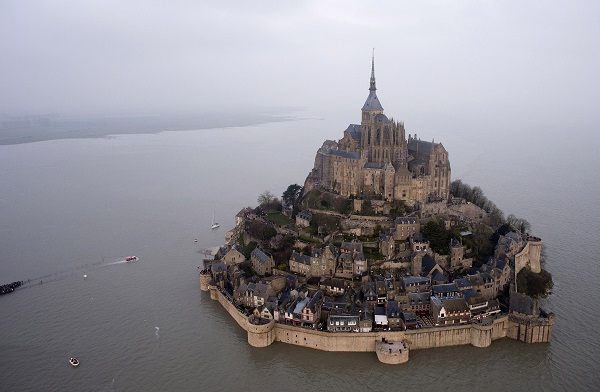
They call it the tide of the century, but it actually happens every 18 years. Mont Saint-Michel is a tidal island off the coast of Lower Normandy. Acessible by a causeway at low tide, the tide comes in at the speed of a galloping horse. Mont Saint-Michel receives over three million visitors each year.

4. Native title threatens Adani’s Carmichael mine

Adani’s Carmichael mine in the Galilee Basin is planned to mine 60,000 tonnes of coal per year, creating 10,000 direct and indirect jobs. Adrian Burragubba as spokesman for the Wangan and Jagalingou Family Council says that under native title they do not approve of mining in any shape or form and no amount of money will change their mind.

We’re concerned that it will devastate the land beyond repair.

It will destroy the waterways and our totemic animals and beings that are on that land and our ancestor dreaming stories and those things that are associated with our culture and heritage.

And it will also destroy it beyond repair to the point where we’ll be displaced forever from that land as the original custodians of that land.

It seems that the native title claim substantially overlaps with another native title claim lodged by the Bidjara people. If the claim cannot be settled between the groups then the Federal Court will test the matter at trial.
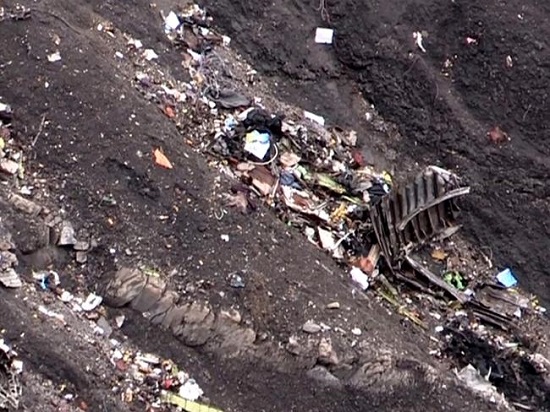

Germanwings crash: pilot locked out of cockpit

Germanwings_576141-56776a6c-d266-11e4-b8cc-103b9fcc00b7_550

First it was a leak, now officially confirmed, the pilot of the doomed flight was locked out of the cockpit by the co-pilot during the eight-minute descent prior to the crash in the French Alps. Apparently there was repeated knocking on the door without response and then an attempt to smash the door down. The co-pilot can be heard to be breathing to the end.

The co-pilot was a relatively experienced 28-year old officer, who lived with his parents.

On the 7.30 Report we were told that in the US if a pilot leaves the cockpit there must be a second crew member present, typically the chief flight steward. In Europe and indeed Australia that is not the case.

Since 9/11 and Twin Towers unauthorised entry into the cockpit is virtually impossible.

The Airbus A320 plane is designed with safeguards to allow emergency entry to the cockpit if a pilot inside is unresponsive, but the override code known to the crew does not go into effect and indeed goes into a five-minute lockdown if the person inside the cockpit specifically denies entry, according to an Airbus training video and a pilot who spoke to the Associated Press.

The case is looking like a pilot suicide.

Apparently air accidents have been low in the past year, but we’ve had more than usual high-profile events. The chances of something adverse happening are vanishingly small.

Nevertheless, I’m sure protocols and policies will now be reviewed.

Germanwings is a budget airline owned by Lufthansa, a competent air line.

Robots and computer automation will transform work within two decades

My first paid work was in the Automotive Plant division of the PMG – later to become Telstra and Australia Post. I copied figures from operators’ returns onto a summary sheet, added them by hand and had them typed up to be sent off somewhere. I was told they would contribute to the graphs on the wall of a controlling engineer in Melbourne.

There were no electronic calculators. Engineers used slide rules.

That was in 1963. In 1964 I worked in a university library, where they were automating their loan system with punch cards and knitting needles. When I joined the Education Department in 1969 we had small committees because the minutes had to be produced using extra sheets of carbon paper in a typewriter. Photocopiers had not yet arrived.

Since then robotics, automation and communications technology have brought vast changes to the work place in all sorts of fields. Another tsunami of change is about to hit us according to Oxford University expert Michael Osbourne. He said that 47% of jobs in the US were at high risk of being replaced by automation within a generation.

“Increasingly, algorithms are able to perform not just routine manual labour in the way they have done in the past but also cognitive labour in a way that makes it much more difficult to draw that line between what is automatable and not,” he told 612 ABC Brisbane.

Jobs linked to data entry, accountancy and heavy vehicle driving would dramatically decrease and in some cases vanish completely.

Driverless vehicles would be made possible as massive low-cost data storage capacities allowed for the creation of highly detailed 3D maps – an area already being explored by large mining companies, he said.

The more creative you are, the safer you are from automation.

He stresses that he is talking about technological capacity over a 20-year time period. What happens in reality will depend on social acceptability and other factors.

The construction industry is one sector being affected already. Modules of bathrooms and kitchens are being prefabricated offsite. In fact 30 stories of a building can be put up in 15 days as sections come pre-wired and pre-plumbed.

John D has also kindly sent me a link to ABC Fact Check which has detailed 11 ways the Australian workplace has changed. Since the statistics show that readers tend not to follow links, I’ve transported the text here, for your interest.

1.

Fifty years ago the expectation was that a man went to work and a woman stayed at home. But that has changed dramatically. In the years between 1961 and 2011, the proportion of women in the workforce almost doubled from 35 per cent to 59 per cent. Until 1966 married women were not employed by theAustralian Public Service and single women were forced to “retire” when they married.

2.
In the 1960s Australia was moving from being a primary producer still “riding on the sheep’s back” to an economy with a strong manufacturing base. In 1966 more than 25 per cent of the workforce were in manufacturing, but that’s fallen in the past few decades. Now just 8 per cent of workers are in manufacturing.

3.
The rise and fall of trade unions in Australia has been dramatic. In 1912, 30 per cent of workers were members of trade unions, by 1961 that had reached 61 per cent, but by 1999 that had fallen to 26 per cent, and by 2011 it had dwindled to around 18 per cent.

4.
Child labour was not uncommon for much of the 20th century. In 1940, 6 per cent of all factory workers were under the age of sixteen, fifteen in NSW. The number fell sharply after World War II to 2 per cent of factory workers in 1948 and less than 1 per cent by 1968 as higher levels of employment for adults let them keep their children in school and out of the workforce longer.

5.
One in 10 full-time workers in Australia earns more than an average of $2,548 per week, and one in 10 earns $800 per week or less. The rest are somewhere in between.

6.
The Australian workforce is split fairly evenly along gender lines. Of the approximately 10 million employees in Australia, 50.5 per cent are women and 49.5 per cent are men. But men still tend to earn a lot more than women – an average of $1,429.80 for male employees, compared with $940.20 for female employees. That in part is due to the number of hours worked: 76.6 per cent of men work full time compared with 43.7 per cent of women.

7.
Mining is the best paid industry, where average earnings are $2,499.60 per week, compared with the lowest paid industry, accommodation and food services, where workers make an average of $561.60 per week. The largest industry is health care and social assistance, making up 12.8 per cent of employees.

8.
Managing is the best-paid occupation, with average weekly earnings of $2,113.80. Sales workers get the lowest average pay, with just $628.60 per week.

9.
The occupations with the highest rates of work-related injuries and illness are machinery operators and drivers, followed by community and personal service workers. The industries with the highest rate of work-related illness or injury are manufacturing, followed by transport/postal/warehousing and agriculture/forestry/fishing.

10

Education matters. Of Australians with a tertiary or higher education, 83 per cent have a paid job, compared with 59 per cent of those without an upper secondary education.

11.
Australian jobs are pretty secure compared with other nations. Australian workers have a 4.4 per cent chance of losing their job, which is lower than the OECD average of 5.3 per cent.

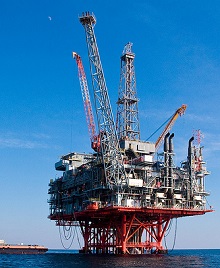
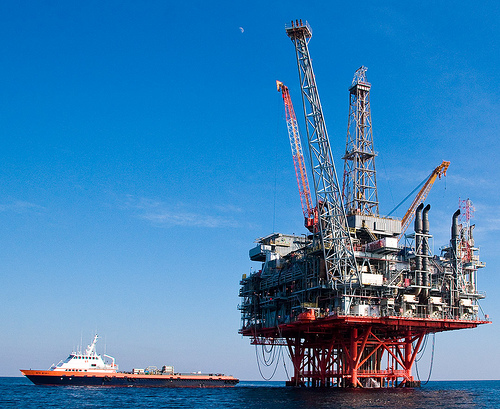
Big Oil’s business model – broken?

oil rig_6a00d8341d320d53ef0134855026ce970c-800wi

Michael T Klare in an article at Grist claims that Big Oil’s business model is broken.

I’m not so sure. An IEA (International Energy Association) update which he cites is titled A business-as-unusual outlook for oil in the medium term. Certainly there have been changes since the IEA’s World Energy Outlook 2014 (see my recent post).

Last September in the Outlook document the IEA saw oil prices rebounding, averaging $82.50 a barrel in 2015 and rising to near $100 in the coming years. Now they see prices recovering gradually to reach $73 a barrel in 2020.

The IEA now sees production as increasing by 5.2 million barrels per day over the same time period, which is substantially the same as forecast last September.

The IEA sees four main factors at play:

  • Emerging economies are reaching a less oil intensive stage of development.
  • The global economy is becoming less fuel intensive.
  • Concerns over climate change are affecting policies, for example the fuel economy regulations for motor vehicles in the US, which Klare says will reduce demand by 2.2 million barrels per day by 20125.
  • Globalisation of the natural gas market and the emergence of renewable technologies has led to inter-fuel competition beyond what would have been expected only a few years ago.

North American unconventional production (light tight oil, or LTO) has been greater than expected and has become the top source of incremental supply. Iraq supply increase is also beyond expectations.

Klare’s major point is that the oil industry assumed that demand would continue unabated no matter what the price, leading to massive investment in what he calls “tight oil” – oil from unconventional, hard to get at sources. His thesis is that production and consumption will increase, but only slowly, and to an extent and at a price that will not justify the investment necessary to extract tight oil.

The investment in tight oil dates from 2005, when production was 85.1 million barrels per day. At that time the IEA forecast that demand would reach 103.2 million barrels per day in 2015. In 2014 it was 92.9 with the forecast for 2015 only 93.2.

On the price recovery from $55 per barrel to $73 in 2020, Klare says:

Such figures fall far below what would be needed to justify continued investment in and exploitation of tough-oil options like Canadian tar sands, Arctic oil, and many shale projects. Indeed, the financial press is now full of reports on stalled or cancelled mega-energy projects. Shell, for example, announced in January that it had abandoned plans for a $6.5 billion petrochemical plant in Qatar, citing “the current economic climate prevailing in the energy industry.” At the same time, Chevron shelved its plan to drill in the Arctic waters of the Beaufort Sea, while Norway’s Statoil turned its back on drilling in Greenland.

In that sense Klare is right. Also profits like $32.6 billion in 2013 for Exxon (second only to Apple) and $21.4 billion for Chevron are unlikely to continue. Nevertheless these firms are not out of business. Some of the smaller producers in the sense of firms and countries may be, leading to possible failed states and security concerns. Russia will be producing less.

The bottom line, though, is that the crystal ball is clouded. Uncertainty prevails.

Abbott explodes his economic credibility

Barrie Cassidy has called it a breathtaking shift in economic management.

Laura Tingle took the gloves off in an article Being governed by fools is not funny:

A bit like the old story of the frog that gets boiled alive because the temperature of the water in which it sits rises only gradually, we don’t seem to quite be able to take in the growing realisation that we actually are being governed by idiots and fools, or that this actually has real-world consequences.

We finish the week with a Prime Minister who has lost his bundle and is making policy and political calls that go beyond reckless in an increasingly panicked and desperate attempt to save himself; a government that has not just utterly lost its way but its authority; and important policy debates left either as smouldering wrecks or unprosecuted.

When debt under Labor reached 13% of GDP Abbott characterised it as a “disaster”, likely to send the economy down the Greek path. Suddenly, with 20% of his 2014 budget savings stalled in the senate, we have “done the heavy lifting” and the prospect of debt 50 to 60 per cent of GDP “is a pretty good result looking around the world”.

Here’s the graph of the forecast underlying budget cash balance from the Intergenerational Report:

IGR_underlying cash balance_BCEEB43A56494316992285B7177270E5.ashx

It shows the “currently legislated” path reaching a deficit of 6% of GDP in 40 in years.

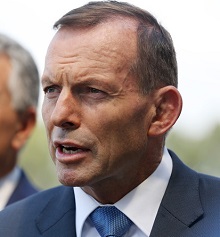
Here’s Abbott, pointing to the wrong line, showing us that we’ve done the heavy lifting:

IGR_Abbott_1426668009686_600

Standard and Poor have warned that if debt, federal and state, goes beyond $30 billion we can expect to lose our prized AAA credit rating.

Laura Tingle and Phillip Coorey say that the federal budget’s forecast bottom line has gone backwards by at least $80 billion since the Coalition came to office.

Abbott and Hockey would have us believe that the bottom line on that graph represents the legacy from Labor. In fact the following set of graphs from Tingle’s article shows the deterioration in the hands of Abbott and Hockey. The first set on the left represent Labor’s legacy:

Tingle Mr 15_1426753757023_600

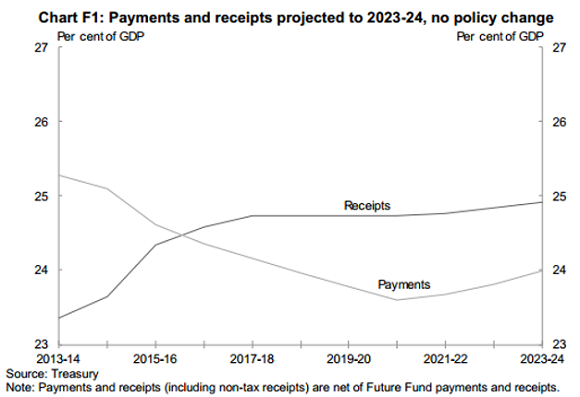
To emphasise the point about Labor’s legacy, this is the 10-year projection from the Pre-Election Fiscal Outlook (PEFO) prepared independently by Treasury and Finance and published under the charter of budget honesty in August 2013 before the last election is shown:

fcccad64-03b4-11e3-9d44-7643a0300d9c_chart1_580

That’s from this post.

Laura Tingle says that Labor’s focus groups keep throwing up the word “idiot” in relation to Tony Abbott. Swinging voters in Western Sydney in polling commissioned by Fairfax described the Prime Minister as “incompetent, an international embarrassment and a fool”. She thinks that there are “signs that our political system really is in deep trouble – not as a polemic point, but in a very real sense.”

Peter Martin tells us that:

In Labor’s last financial year in office, spending exceeded revenue by 5.4 per cent. This year it will exceed it by 13 per cent.

The budget does have to be fixed. The Reserve Bank Governor, Glenn Stevens, recently warned that in a recession a deficit of 3% of GDP will quickly balloon out to 6 to 7%. That allows no space for government stimulus of the economy.

Apparently Hockey has been sitting on a tax white paper for several months which is to be released next Monday, after the NSW election. Peter Martin looks to the savings available from super:

Treasury’s most conservative estimate has the concession for contributions to super funds costing $15.5 billion this financial year, climbing to $18 billion over three years. The tax concession for the earnings of funds costs $12 billion and is set to almost double to $22 billion. By way of comparison, Medicare costs $20 billion.

Peter Lloyd, Professor of Economics at University of Melbourne, puts forward some ideas, including:

  • Eliminating negative gearing for housing investments
  • Restricting the allowable deductions for depreciation and other business expenses
  • Revising rules relating to income from trusts
  • Tightening the rules for fringe benefit taxation
  • Reforming the taxation of super contributions and income
  • Reducing tax concessions for not-for-profit organisations

As he says, each one of these will meet objections from tax payers. But then the art of taxation was always plucking the goose without too much squawking.

A prime minister fighting for political survival appears to have thrown in the towel.

Update: I meant to mention that Labor had the budget remaining in surplus over the remaining part of a 10-year projection in order to show how Gonski and NDIS would be paid for, whereas Abbott/Hockey planned to slash schools and Hospital funding by $80 billion dollars.

Abbott is now saying that a surplus will be achieved within 5 years, whereas Mathias Cormann is saying “as soon as possible”.

See also They tell us lies, but are they clunkheads?

Malcolm Fraser bows out

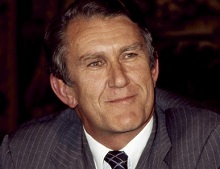
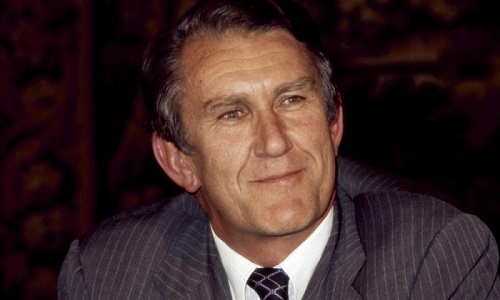
Former prime minister Malcolm Fraser has died aged 84. Here he is in his prime:

Fraser_1000_500

Former PMs have had nice things to say. Here’s Paul Keating:

“I always thought Malcolm would be around a lot longer. I must say, I wished he had been.

“Notwithstanding a controversial prime ministership, in later years he harboured one abiding and important idea about Australia – its need and its right to be a strategically independent country.

“His public life also enshrined other important principles: no truck with race or colour and no tolerance for whispered notions of exclusivity tinged by race. These principles applied throughout his political life.”

The same article summed his contribution as follows:

In office, Fraser was a staunch conservative on economic policies, an opponent of deregulation – and he was was criticised by his colleagues for lacking reform zeal. But he continued many of Labor’s progressive reforms.

In 1976 he established the family court of Australia and federal court of Australia; granted the Northern Territory self-government; passed the Aboriginal Land Rights (Northern Territory) Act; created the position of federal ombudsman and established the ABC’s FM radio service. The next year, he established the National Aboriginal Conference and SBS.

In 1979 the Fraser government established the Australian Refugee Advisory Council to advise it on the settlement of refugees – many of whom had been arriving as “boat people” from Vietnam since 1978.

After criticising the Liberal party’s direction during the years of the Howard government, Fraser finally quit the party when Tony Abbott came to the opposition leadership, unhappy with Abbott’s rejection of emissions trading. He said the Liberal party was no longer a liberal party but instead a conservative party.

Fraser campaigned assiduously for human rights and attacked the party’s stance on immigration and refugees.

Economics was perhaps his weak spot. Richard Holden summarises:

Australia can be justifiably proud of an approach to economics that is squarely between Europe and the United States. The US, on the whole, champions free enterprise despite the social costs; Europe sees a much larger role for the state, even if that inhibits free enterprise. The Australia in which we live today is somewhere in between.

When Malcolm Fraser became prime minister that was all up for grabs. We could have become “old Euope” or veered onto a radically individualist path in response to the debacle that came before. Fraser helped us chart a middle course, and we should be very grateful for that.

Perhaps he wasn’t quite up to the challenge, but he had a steady hand and did no great harm. The Guardian has a suite of articles, the titles of which tell a story:

Malcolm Fraser’s steady hand is in stark contrast to Tony Abbott’s chaotic manoeuvres Lenore Taylor

Malcolm Fraser had no Damascene conversion – he always championed human rights Katherine Murphy

Malcolm Fraser, a leader who believed there is a moral compass in our nation’s life Fred Chaney

Malcolm Fraser dared to dream of a truly original Australian foreign policy Margaret Simons


Fraser’s great conservative achievement: cementing Whitlam’s progress on race
Robert Manne


Fraser’s politics didn’t shift much after 1975, but the rest of Australia’s did
Julian Burnside

Tributes roll in – a prime minister who won three elections remembered

Malcolm Fraser: Australia’s former prime minister – in pictures

Fraser was ruthless in gaining power, first in the coup that unseated Gorton as PM, then doing over Billy Sneddon for the Liberal leadership and later in the famous dismissal of the Whitlam government. I hated him tribally for that, and disliked him for his apparent aloofness and arrogance, but later came to see him as a man of principle and values.

There’s more on his legacy at the ABC and heaps of articles just about wherever you look!

Probably the best article that takes you to the complexity of the personality and his politics is Guy Rundle at Crikey, unfortunately paywalled.

A remaining mystery is what really happened that night in Memphis, when Fraser turned up in the foyer of a seedy hotel without his trousers.

Update: Must read on Fraser at The Piping Shrike.

Saturday salon 21/3

voltaire_230

An open thread where, at your leisure, you can discuss anything you like, well, within reason and the Comments Policy. Include here news and views, plus any notable personal experiences from the week and the weekend.

For climate topics please use the most recent Climate clippings.

The gentleman in the image is Voltaire, who for a time graced the court of Frederick II of Prussia, known as Frederick the Great. King Fred loved to talk about the universe and everything at the end of a day’s work. He also used the salons of Berlin to get feedback in the development of public policy.

Fred would only talk in French; he regarded German as barbaric. Here we’ll use English.

The thread will be a stoush-free zone. The Comments Policy says:

The aim [of this site] is to provide a venue for people to contribute and to engage in a civil and respectful manner.

Here are a few bits and pieces that came to my attention last week.

1. Hockey defamed?

Politicians rate poorly in public esteem, as in fact do journalists and the press. Do you have to have a reputation before you can be defamed? Is it possible to defame a politician? Does anyone place any reliance on what the press say anyway?

I suspect Hockey has done himself some damage by pursuing Fairfax for defamation. Most people don’t read Fairfax, but I’m sure now most people know that he’s been up to something that caused comment.

His lawyers think too that the process has harmed him. They are after maximum damages for what was published, plus extra for the way Fairfax conducted the case.

Essentially they are saying that Fairfax lawyers continued their “smear campaign” against Hockey in court. Fairfax lawyers say their cross-examination of Hockey was “properly conducted” and “robust” but did not “cross any boundaries”.

2. Palmer Coolum resort closes down

One thing is for sure, Palmer Coolum Resort has closed its gates. 40 staff have been sacked. But:

The golf experience will carry on. The Palmersaurus Dinosaur Park, Motorama auto museum and Palmer Grill restaurant will remain open during redevelopment.

A large proportion of the accommodation was time-share. Investors are out of luck, at least for the time being.

This ABC report was positive about refurbishment and new investment, but the TV news on Thursday was negative, suggesting it had plain gone bust.

I keep expecting the whole Palmer phenomenon to blow up in a puff of smoke.

3. Poll news

According to Roy Morgan, Mike Baird will win comfortably on 28 March, 55.5 to 44.5 for the ALP.

In Queensland, however, the ALP under Annastacia Palaszczuk would go down 49-51. However, Palaszczuk is the preferred premier, and for the first time more men (56%) prefer her. Overall she wins 61-39 over Lawrence Springborg.

In Victoria the ALP under Daniel Andrews is surging and would win 56-44 over the LNP.

4. Cooktown dodges a bullet

Cyclone Nathan slammed into the coast north of Cape Flattery, with winds at Cape Flattery in the Category 3 classification. Cape Flattery is well north of Cooktown. The indigenous community of Hopevale, 49 km northwest of Cooktown, was the nearest polulation centre and received no destructive winds. Even their banana farm, flattened by Cyclone Ita last year, escaped this time.

Cyclone Ita hit Cape Flattery as a Category 4 system and mauled Cooktown. This time they escaped.

Cyclone Pam, however, is regarded as one of the worst natural disasters in the history of Vanuatu, and is up there as one of the strongest cyclone ever in the Southern Hemisphere.

Update: This post was originally published as Saturday salon 28/3 in error

The mystery of Flight MH370

About 10 days ago we had the anniversary of Flight MH370, when the Malaysian airliner disappeared from the skies.

There are broadly three categories of theories about the disappearance.

Firstly, something happened technically to the plane, perhaps a fire that rendered the crew unconscious.

Second, the pilot took deliberate and planned action – effectively it was an act of suicide which tragically took a plane load of passengers with him.

Third, any number of conspiracy theories, from the Americans shot it down, to the Russians stole it.

The second seems the likeliest. At the very least, human agency is suggested.

An international team established by the Malaysian government has recently issued a short report supported by 585 pages of supplementary information, which is summarised here. Apparently it offers few fresh insights into the disappearance, and no definite explanation. Heinrich Grossbongardt, an independent aviation expert, told German broadcaster Deutsche Welle:

“As of today there are absolutely no indications of what may have happened on board. What we can say, is that there is no known technical failure mode, which would explain the aircraft’s deviation from its planned flight path. So far as it’s humanly possible to tell, we have to assume that it is the result of deliberate action.”​

The report found no unusual behaviour by crew:

Investigators said they found no indications of unusual behaviour by the pilots or cabin crew before the plane took off. “There were no behavioural signs of social isolation, change in habits or interest, self-neglect, drug or alcohol abuse of the captain, first officer and the cabin crew,” said the report. The team looked at CCTV recordings of the captain and first officer and said “no significant behavioural changes” were observed. They added that the captain’s ability to handle stress at work and home was “good” and he had no known history of apathy, anxiety or irritability. “There were no significant changes in his lifestyle, interpersonal conflict or family stresses,” it added. Investigators found no unusual health issues or financial irregularities either.

The last voice transmission came from Captain Zaharie Ahmad Shah, which said “Goodnight Malaysian three-seven-zero” a minute or so before the aircraft’s transponder ceased transmitting.

The report found that the battery for the underwater locator beacon attached to the flight-data recorder expired in December 2012, more than a year before the plane’s disappearance. The report said there was a “definite possibility” that the battery could still operate past its expiry date, but said “it is not guaranteed that it will work or that it would meet the 30-day minimum requirement”.

However, the battery on the locator beacon of the cockpit voice recorder was working.

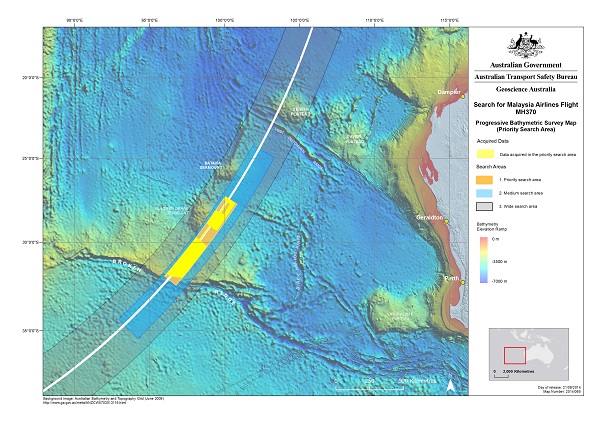
Last Friday week ago, I think, search co-ordinator Angus Huston told the 7.30 Report that 43% of the designated search area had been searched, some 26,800 square kilometres of the ocean floor. Each day about 1% of the search is completed, so it will cover the entire area sometime in May. The Australian Transport Safety Bureau has a handy site on the MH370 search.

This map indicates the location of the search area:

Flight MH370_21082014_ProgressiveWebMap_600

Captain Simon Hardy, a senior Boeing 777 captain with a major commercial airline, spent six months analysing satellite data and came to the conclusion that the missing Malaysia Airlines plane was intentionally landed on the water and sank intact about 100 nautical miles away from where ATSB is currently conducting its search.

He says that the flight path suggests that the pilot was taking a long, last emotional look at Penang.

Aviation commenter Jeff Wise originally argued that MH370 didn’t crash in the Indian Ocean but rather was hijacked by the Russians and flown to a remote airfield in Kazakahstan. Now he is sitting on the fence, and has formulated three categories of theory similar to those I outlined above. He claims that there is evidence for all, but also gaping holes.

“It’s like a baby beauty contest where all the contestants are ugly. The question is, which baby is the least ugly?”

He does suggest, however, that what he calls the Suicide Pilot theory is presently the default theory.

The latest is that a supervising air traffic controller was asleep on the job on the night. The Malaysian authorities have promised a speedy inquiry.

Elsewhere Wikipedia has a comprehensive entry.

The right to vote in the land of the free

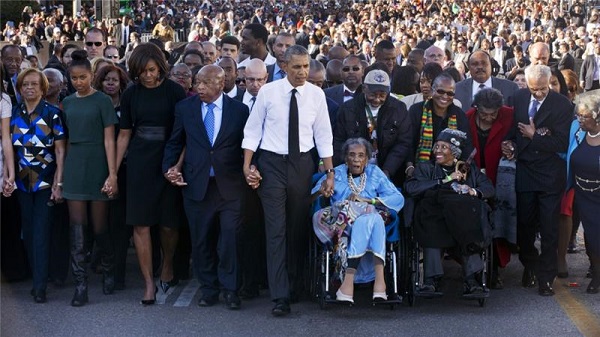
Obama_3b8b6c60b0d84bc5a3936082efd871ff_18_600

Several remarkable things happened during the 50-year anniversary celebrations of the “Bloody Sunday” march in Selma, Alabama. On that day in 1965 there was a violent confrontation between police and protesters during a march across the Edmund Pettus Bridge. That march is now considered a turning point in the Civil Rights Movement as it led to the passage of the Voting Rights Act.

The first remarkable thing was that President Barack Obama crossed the bridge holding the hand of Congressman John Lewis. As Patty Culhane of Aljazeera said:

It is remarkable symbolism. The first African American President walked the span alongside the man who led the march in 1965.

Himself now a Congressman. Progress has definitely been made.

In 2013, however, the Supreme Court weakened, some say gutted, the Voting Rights Act.

obama-selma-485x497

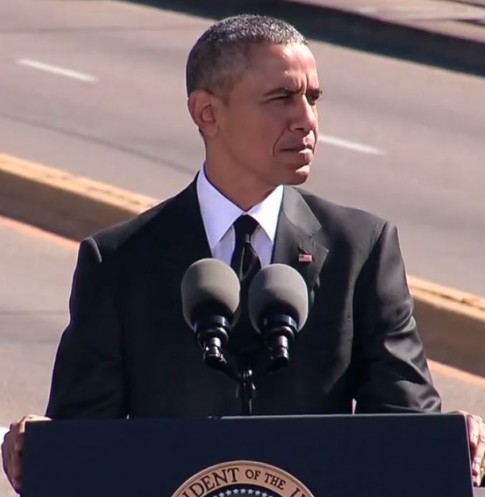
The second remarkable thing was that President Obama felt he had to make a call on Congress to renew the Voting Rights Act and to call to account the petty-minded partisans in state governments who see it as their civic duty to pass laws limiting the right to vote. Here is the relevant transcript of Obama’s speech, said to be one of his finest:

With effort, we can roll back poverty and the roadblocks to opportunity. Americans don’t accept a free ride for anyone, nor do we believe in equality of outcomes. But we do expect equal opportunity, and if we really mean it, if we’re willing to sacrifice for it, then we can make sure every child gets an education suitable to this new century, one that expands imaginations and lifts their sights and gives them skills. We can make sure every person willing to work has the dignity of a job, and a fair wage, and a real voice, and sturdier rungs on that ladder into the middle class.

And with effort, we can protect the foundation stone of our democracy for which so many marched across this bridge – and that is the right to vote. Right now, in 2015, fifty years after Selma, there are laws across this country designed to make it harder for people to vote. As we speak, more of such laws are being proposed. Meanwhile, the Voting Rights Act, the culmination of so much blood and sweat and tears, the product of so much sacrifice in the face of wanton violence, stands weakened, its future subject to partisan rancor.

How can that be? The Voting Rights Act was one of the crowning achievements of our democracy, the result of Republican and Democratic effort. President Reagan signed its renewal when he was in office. President Bush signed its renewal when he was in office. One hundred Members of Congress have come here today to honor people who were willing to die for the right it protects. If we want to honor this day, let these hundred go back to Washington, and gather four hundred more, and together, pledge to make it their mission to restore the law this year.

But then he also felt it necessary to call out the voters themselves, who, without discouragement from state laws, do not exercise their vote as much a people in other countries.

Of course, our democracy is not the task of Congress alone, or the courts alone, or the President alone. If every new voter suppression law was struck down today, we’d still have one of the lowest voting rates among free peoples. Fifty years ago, registering to vote here in Selma and much of the South meant guessing the number of jellybeans in a jar or bubbles on a bar of soap. It meant risking your dignity, and sometimes, your life. What is our excuse today for not voting? How do we so casually discard the right for which so many fought? How do we so fully give away our power, our voice, in shaping America’s future?

Fellow marchers, so much has changed in fifty years. We’ve endured war, and fashioned peace. We’ve seen technological wonders that touch every aspect of our lives, and take for granted convenience our parents might scarcely imagine. But what has not changed is the imperative of citizenship, that willingness of a 26 year-old deacon, or a Unitarian minister, or a young mother of five, to decide they loved this country so much that they’d risk everything to realize its promise.

That’s what it means to love America. That’s what it means to believe in America. That’s what it means when we say America is exceptional.

The reference to American exceptionalism is rather ironic (but see below). It is exceptionally dopey to leave voting in the hands of state administrations and not set up a statutory organisation like the Australian Electoral Commission. It is exceptionally dopey too to have the vote on a Tuesday, a working day.

The means states use to discourage minority voting are worth another post, but include ID requirements, challenges to voter registration and the uneven distribution of voting machines, leading to long queues in minority areas. There were even reports of partisans causing traffic jams in areas where minority voters predominate. The difference between black and white levels of voter registration improved after 1965, but are still quite stark.

Voluntary voting requires partisan effort to get out the vote. America is exceptional in that so much partisan effort is also put into preventing people from voting.

The Democracy Now report on the event takes a different perspective. The Selma march was organised because of a police killing of a young black male.

African Americans and their allies attempted to march from Selma to Montgomery, Alabama, demanding the right to vote. As soon as they crossed the Edmund Pettus Bridge in Selma, they were violently attacked by the Alabama State Police, beaten with nightsticks and electric cattle prods, set upon by police dogs and tear-gassed. They were chased off the bridge, all the way back to Selma’s Brown Chapel A.M.E. Church, where the march began. News and images of the extreme and unprovoked police violence, in contrast to the conduct of the 600 marchers, who practiced disciplined nonviolence, spread across the globe. Within months, President Lyndon Johnson would sign the 1965 Voting Rights Act, responding to the public outrage and to the pressure applied by a skillfully organized mass movement.

Edmund Pettus was a former Alabama senator, Confederate general and grand wizard in the Ku Klux Klan.

Three white people “were killed in or near Selma, along with many others, for supporting the struggle for voting rights.” President Obama was referring to them in the second last paragraph of the speech excerpt.

That is special, and once again, the issue of police violence, especially towards racial minorities, is absolutely current.

Double backflip, with Pyne

Today the obnoxious and juvenile Christopher Pyne has backed away from the threat to make science infrastructure funding contingent on support for the university deregulation bill. The science funding will be continued for 12 months, but it appears that cuts to that funding may be on the agenda. The total funding of $150 million for the 27 facilities employing 1700 people and supporting the work of some 35,000 scientists is small in the context of a budget of $414.8 billion. Any savings would be miniscule.

I believe that Pyne never seriously intended to cut the funds entirely. We have been told that within Cabinet Abbott, Hockey and Macfarlane had reservations about the linkage. Crossbenchers went ballistic. Senator Cory Bernadi was identified as one of the party who was upset. It’s a fair bet that he had plenty of mates.

Chief Scientist Ian Chubb told us on the box that science infrastructure workers were already actively making arrangements to find work elsewhere. The ethics of playing with people’s lives in this way is downright despicable. Moreover irreparable damage would already have been done to Australia’s reputation as a good place to do science.

Now the opportunity arises for Pyne to negotiate university deregulation with the crossbench, free of childish threats and blackmail. So far only Family First Senator Bob Day is on board and he has demanded that course fees charged students be capped at 70% of overseas student course fees.

The basic problem, according to Melbourne University Vice Chancellor Glyn Davis (on the 7.30 Report and the Fin Review), is that university education comes at a price that no-one wants to pay. University education funding is not high in the priorities of Australian voters or politicians. Funding for university teaching, already stripped to the bone by Swan and Gillard, was scheduled now to suffer a further cut of $1.9 billion.

Leaving aside free market ideology, Davis sees the deregulation of fees as the only way to prevent university teaching in Australia from becoming third rate. “Third rate” is not his language, but I think it’s a fair representation of what he said.

Now in a truly surprising second backflip, Pyne has found another $1.9 billion to continue the former rate of funding for the time being. That will tell you how arbitrary and hollow his complaint really was that he couldn’t find $150 million for scientific research infrastructure.

Count me confused, but I’m sure the cuts will reappear down the line, because it’s either that or higher taxes. Davis is right. University education comes at a price that no-one wants to pay.

Saturday salon 14/3

voltaire_230

An open thread where, at your leisure, you can discuss anything you like, well, within reason and the Comments Policy. Include here news and views, plus any notable personal experiences from the week and the weekend.

For climate topics please use the most recent Climate clippings.

The gentleman in the image is Voltaire, who for a time graced the court of Frederick II of Prussia, known as Frederick the Great. King Fred loved to talk about the universe and everything at the end of a day’s work. He also used the salons of Berlin to get feedback in the development of public policy.

Fred would only talk in French; he regarded German as barbaric. Here we’ll use English.

The thread will be a stoush-free zone. The Comments Policy says:

The aim [of this site] is to provide a venue for people to contribute and to engage in a civil and respectful manner.

Here are a few bits and pieces that came to my attention last week.

1. Away next week

This week the Simpson Desert crossing fellowship is meeting for a reunion at Glen Alpin near Stanthorpe, where two of the couples live, I gather in idyllic circumstances.

A splendid time is assured, but it will take three days out of my blogging life. I promise I’ll think of you all!

2. Queensland Alzheimer’s breakthrough

Queensland scientists have discovered a new treatment that could help restore the memory of people suffering from Alzheimer’s disease.

The process uses ultrasound technology to help clear a plaque that builds up in the brain of Alzheimer’s sufferers.

They’ve successfully trialled the plaque-removal technology on mice. Human trials are about two years away.

About 250,000 Australians suffer from Alzheimer’s disease, the most common form of dementia.

3. Gender pay gap hits a two-decade high

The gender pay-gap is getting worse, not better, with new figures out yesterday showing the wage disparity between men and women has blown out to a two-decade high of 18.8 per cent.

The figures show that full time workers, when averaged across all industries, will earn $298 less per week if they happen to be a woman.

At the same time that lovely man, Employment Minister Eric Abetz, watered down business gender reporting requirements.

4. Abbott at it again

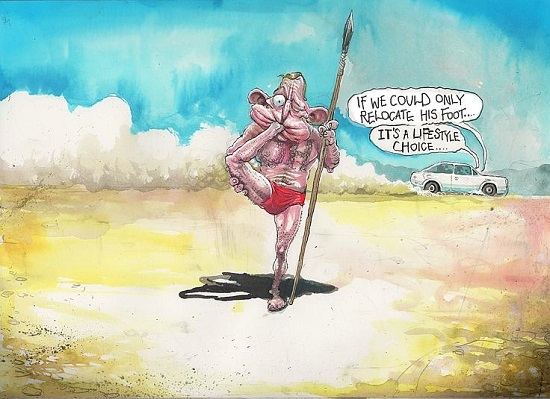
Every week we have at least one backflip, broken promise or gaffe. This week there were several but the prize goes to Abbott’s description of living in remote communities as a “lifestyle choice”, slammed by his own key indigenous advisers as “hopeless”, “disrespectful” and simplistic.

People are starting to make lists. The SMH reminds us of 10.

The AFR cartoonist David Rowe showed Abbott with foot firmly planted in mouth while advisers bemoan that “it’s a lifestyle choice.”

Rowe_c08dde44-c7d1-11e4-88b2-befebcebf2b0_syd-6jkrjh8mtvo3b8zaol9--550

Guy Rundle says Tony Abbott genuinely believes non-Christian societies are inferior.

Now I’d like to bring to your attention a poem by Graeme Henchel Why is Abbott a Dead Man Walking? It begins:

Was it justice, was it Karma?
Was it Murdoch, was it Palmer?
Was it lying and conceit?
Was it backbenchers fear of defeat?
Was it Mathias and Joe’s cigars?
Was it because we’ve stopped making cars?
Was it climate change denial?
Was it putting Julia on trial?
Was it the daughter’s scholarship prize?
Was it debt and deficit lies?

It goes on and on, ending with:

Was it the hubris and the swagger?
Was it Malcolm and Julie’s dagger?
Why will Abbott get the shove?
The answer is, ALL OF THE ABOVE.

5. Puzzling polls

Adrian Beaumont at The Conversation peers into the tea leaves, trying to make sense of the polls. Amongst the confusion is a cross-over between Morgan and Newspoll:

image-20150311-20517-eryfu1_march 11_600

Newspoll is said to be the one pollies watch. I reckon that if 8 days earlier we’d had Newspoll on 45-55, deteriorating from 47-53, instead of Fairfax-Ipsos on 49-51, we’d now have a new prime minister.

6. Fairfax axes rural staff

Some 80 positions are being cut from Fairfax media staff in regional Victoria. Reporters will file, sub-edit and edit their own work, plus do their own photography.

Fairfax said it was “building a modern, stronger rural and regional network”.

Let’s face it – Fairfax owns a large slice of the rural press in Australia, and it’s being gutted.

Abbott and the law

David Marr has turned his considerable forensic and rhetorical skills on Abbott in an article Tony Abbott running from the law in The Saturday Paper, the weekly version of The Monthly.

(You might be able to get free access to three articles a week by signing up. I took out a three-month sub to see how it goes.)

Rather than running from the law in then usual sense, Marr’s basic point is that Abbott has no feel for the law. In pursuit of political ends he actually shows contempt for it:

Abbott doesn’t set out to break the law. That’s not the point. But when the law stands between him and a quick win, he shows contempt for its values, its customs and the part they play in national life. (Emphasis added)

Abbott is pragmatic rather than principled – he does what it takes to win the contest at hand. What we expect from Abbott is:

minimum scrutiny by the courts, maximum power to government and close to nil concern for individual rights as Canberra pursues refugees in boats and lone wolf terrorists.

An example is the amendment last year of the Maritime Powers and Migration acts.

The amendment shreds our obligations under the Refugee Conventions and hands godlike powers to immigration ministers to decide the fate of refugees.

Malcolm Fraser called the bill: “The perverse creation of a government prepared to tear up the rule of law for its own political ends.”

Abbott’s attitude to the law can be seen in his response to a US court finding that there was no legal basis for holding David Hicks in Guantanamo Bay for five years:

“Whatever the legalities … he was up to no good.”

On several occasions now Abbott has ignored due process in declaring lone wolf terrorists guilty, using the most florid language. Within hours last September Abbott declared Omarjan Azari guilty of plotting random “demonstration killings” at the direction of a senior Islamic State figure linked to Australia.

Azari’s solicitor Steven Boland has attacked Abbott for “unprecedented intrusion by a sitting PM into criminal proceedings” and complained of “irreparable prejudice” caused to his client’s case. Abbott, he says, “has deliberately or otherwise spread misinformation that has no support in the evidence”.

The resu;t could well be Azari’s acquittal.

About a month ago Omar Al-Kutobi and Mohammad Kiad were arrested for planning a terrorist attack in Sydney with a knife and a machete. Immediately they were tried and found guilty by Abbott in parliament:

“I do not think it would be possible to witness uglier fanaticism than this, more monstrous fanaticism and extremism than this, and I regret to say it is now present in our country,” he told the house.

Marr says that respect for the law is a conservative value. Abbott is no conservative. PMs normally bridle at the restraints of the law.

Abbott has been willing to a remarkable degree to push the law aside to appease populist fears and populist contempt for human rights.

In responding to Gillian Triggs Abbott failed to recognise that the Human Rights Commission is one of the pillars of our justice system. Abbott descended into street-brawling mode in an attempt to win the point. In Abbott’s world inquiries are for stitching up an opponent. He thought he was being stitched. Forget the fact that children in detention are being damaged by public policy.

He forgets too, says Marr, that judges are trusted more than politicians. Abbott is playing to his base but with respect to the centre it looks like a losing strategy.