Ironically one of the biggest benefits to the environment could come from “Tony’s tradies” in the form of rooftop solar. One of the benefits to small business is the ability to write off immediately as a tax deduction business expenditure to the extent of $20,000. Continue reading Budget 2015: the environment
Category Archives: Climate Change & Sustainability
Posts on aspects of climate science, climate action and climate policy & planning.
Climate clippings 139
1. Melting Antarctica: the time to act is now
In the link above, Graham Readfearn goes into some detail on the likely melting prospects of East Antarctica in particular. The salient points are as follows: Continue reading Climate clippings 139
Climate clippings 138
1. Quiggin reckons Tesla battery can solve climate change Continue reading Climate clippings 138
RET deal struck, but policy bastardry continues
That’s the view of Giles Parkinson, and I agree with him. Continue reading RET deal struck, but policy bastardry continues
Climate clippings 137
1. Unburnable Carbon: Why we need to leave fossil fuels in the ground
That’s the title of a new report from the Climate Council.
To have a 75% chance of meeting the 2°C warming limit, at least 77% of the world’s fossil fuels cannot be burned.
Emissions reduction auctions: Dodgy Bros or the best thing since sliced bread
When I heard Greg Hunt spruiking the first auction under the Emissions Reduction Fund (ERF) last week, he sounded like a used car salesman. He has form on cherry picking statistics and imaginative accounting, so it’s best to ignore what he said and look to other sources (please note, there is other commentary in the link, including from Tim Flannery).
In the broad we need 236 million tonnes of CO2 equivalent emissions reduction to meet a 5% target. The Government has just spent $660 million (25.9%) of the $2.55 billion fund to purchase 47 million tonnes (19.9%) of abatement. Continue reading Emissions reduction auctions: Dodgy Bros or the best thing since sliced bread
Climate clippings 136
1. Will Hillary Clinton be too weak on climate change?

Campaign chair John Podesta tweeted:
Helping working families succeed, building small businesses, tackling climate change & clean energy. Top of the agenda.
Yet she herself has mentioned it only obliquely since announcing that she’s running. From the past we have this:
At the National Clean Energy Summit in September of last year, in her first major domestic policy address since stepping down from the state department, Clinton described global warming as “the most consequential, urgent, sweeping collection of challenges we face as a nation and a world”. Continue reading Climate clippings 136
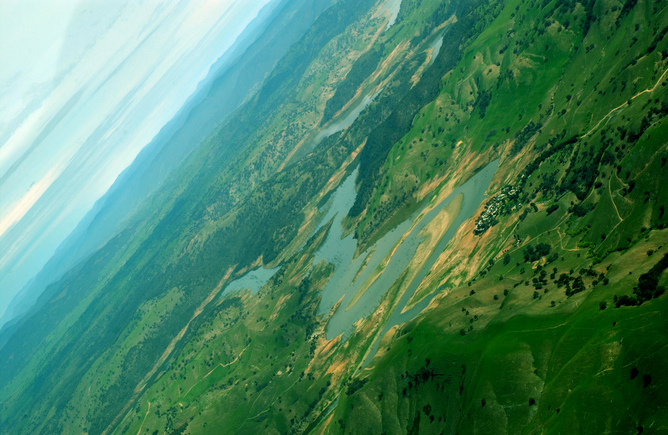
The Earth is getting greener
New research using satellite technology has found that overall, despite deforestation, the earth is getting greener.
For the period 2003-12, we found that the total amount of vegetation above the ground has increased by about 4 billion tonnes of carbon.
Deforestation in the tropics in South America, Southeast Asia and elsewhere “has been offset by recovering forests outside the tropics, and new growth in the drier savannas and shrublands of Africa and Australia.” Continue reading The Earth is getting greener
Abbott is making Australia a joke on climate change
Australia is increasingly drawing fire from other countries about its lack of ambition in climate change action, according to The Guardian and RenewEconomy. The Age has editorialised on the matter.
The context is this.
At its December meeting of ministers in Paris the UNFCCC will strike a post-Kyoto international deal on climate mitigation post 2020. Countries were asked to put forward their draft plans by the end of March. Abbott deliberately ignored the deadline, putting forward a discussion paper (see Emissions reduction the Abbott way) with a submissions deadline of 24 April. Australia will submit its proposals in May. In this way Abbott has the chance to look at everyone else’s homework before he writes his own. Continue reading Abbott is making Australia a joke on climate change
Climate clippings 135
1. Closing down dirty power
From Climate Code Red, a recent Oxford University report:
identified the most-polluting, least-efficient and oldest “sub-critical” coal-fired power stations. It found 89% of Australia’s coal power station fleet is sub-critical, “by far” the most carbon-intensive sub-critical fleet in world.
The International Energy Association, within a framework that itself is probably inadequate, says that one in four sub-critical power stations should close within five years. Hence 22% of our power stations should close within five years if we are to do our part. Continue reading Climate clippings 135
Parking Spaces to Protected Bike Lanes
There are lots of good health, environmental and economic reasons for using bikes as replacement for other forms of transport and recreation. However, on average, your chances of being killed or injured are much higher when riding a bike than travelling by car. This post looks at some of the advantages and disadvantages of riding a bike instead of travelling by car. Continue reading Parking Spaces to Protected Bike Lanes
100% renewable energy saves masses of money and lives
Switching to 100% renewables by 2050 would save major economies $500 billion and save the lives of 1.3 million people.
The study looked at how fossil fuel use and greenhouse gas emissions were linked to the economy, health and job market of the US, the EU and China, and then assessed how their current climate change commitments would benefit those areas.
According to the study:
if the US, the European Union and China started taking the steps towards using 100 percent renewable energy by 2050, they’d save a combined US$500 billion per year.
On top of that, moving in that direction would save the lives of around 1.3 million people who are killed prematurely by air pollution, and also create 3 million new jobs by 2030. And if that’s not enough reason, the study also predicted that if all countries started moving towards the 100 percent renewable target, global warming would not cross the 2 degrees Celsius threshold that many scientists believes is the ‘point of no return’ for climate change. (Emphasis added)
Here are the savings:
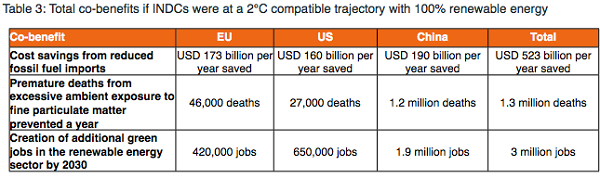
Notice most of the lives saved and the jobs would be in China, which has a major stake in global warming. The following image derived from the Firetree flood maps, shows eastern China with 9 metres of sea level rise:
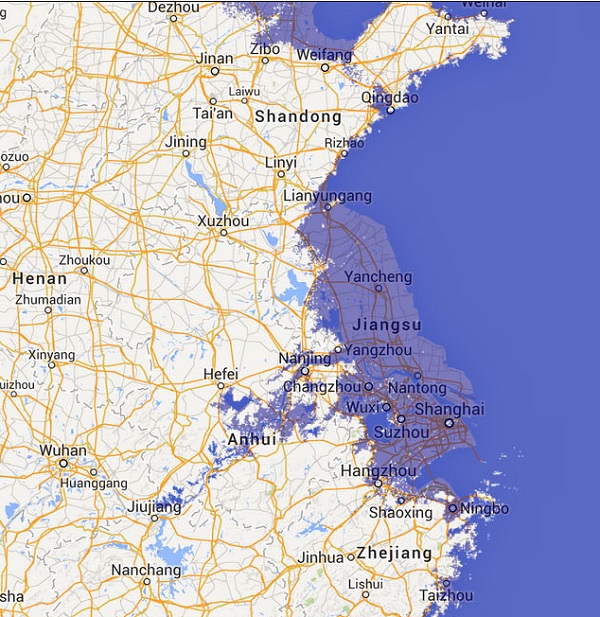
That whole Shanghai and Jiangsu basin goes squishy with only one metre rise. At 2 or 3 metres the area would become unlivable. From about 5 metres the sea would start to penetrate deep into Anhui Province.
The linked article contains information about other developments in renewable energy.
Costa Rica powered the whole country with renewable energy for 75 days straight.
If California covered its houses, buildings and urban spaces with small-scale solar installations, it would generate enough electricity to power the state three to five times over.
Meanwhile, fossil fuels are way more expensive than the immediate dollar costs would indicate. As noted in this article:
Experts in these fields who have published research on the subject have found that fossil fuels are incredibly expensive, when we account for all of their costs. For example, one recent study conservatively estimated that including pollution costs, coal is about 4 times more expensive than wind and 3 times more expensive than solar energy in the USA today.
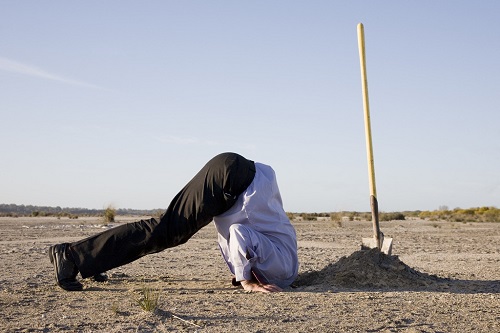
I’m confident the Greens appreciate the true situation, not sure that Labor really get it. Meanwhile as posted recently in Climate clippings, the Abbott government has its head completely buried in the sand: